With safe consumption sites in Ottawa now closed, activists have warned there may be more public use of opioids and other drugs. Megan Francoeur, a registered nurse with Ottawa Public Health’s addictions and substance use health team, and Paul Blahey, a harm reduction worker at the Ottawa branch of the Canadian Mental Health Association, explain how you can recognize an overdose and what you can do to help.
Common Signs of an Overdose
Common symptoms of opioid overdoses include slow, irregular or stopped breathing, a lack of movement, gurgling or snoring sounds, cold or clammy skin, blue or grey lips and nails, tiny pupils, unresponsiveness, or unconsciousness. “And it can happen really quickly, not getting oxygen to the brain; you can see damage within minutes,” Francoeur said.
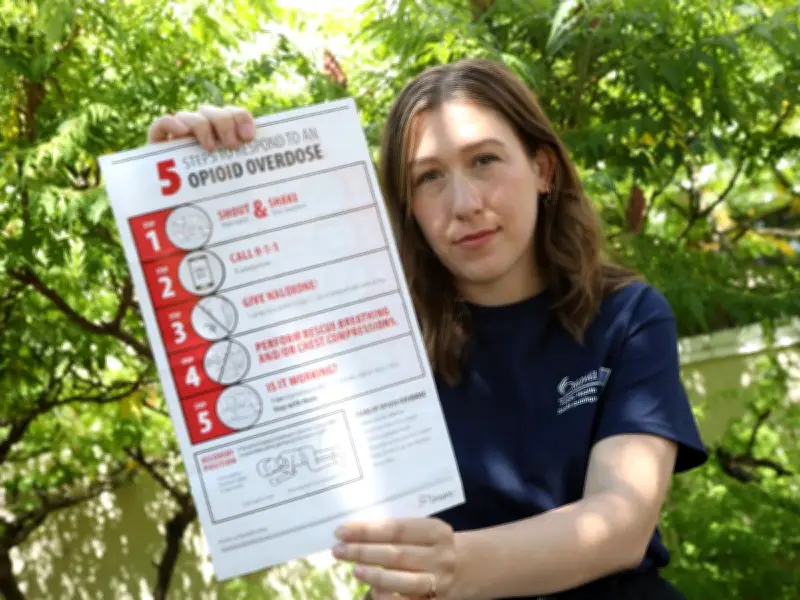
Five Steps to Respond to an Overdose
If you suspect someone is overdosing, follow these steps in order:

- Check your own safety first. Look for anything that might endanger you, like open needles or other equipment. Shout and shake the person’s shoulders.
- Call 9-1-1 if you don’t get a response.
- Give naloxone (also known as Narcan). This rapid overdose reversal kit is free in Ontario and available at many pharmacies, community centres, harm-reduction programs and outreach services. Naloxone comes in injectable and nasal spray forms. The Government of Ontario’s website provides a list of locations searchable by location.
- Perform 30 chest compressions and two rescue breaths if you have gloves and first aid training. While waiting for help, assess whether the steps are working. If it’s been two to three minutes and help hasn’t arrived, give more naloxone if you have a second dose.
- Put the person in the recovery position (on their side) if they start breathing. This supports their head, helps breathing, and reduces choking risk.
These five steps, along with images of the recovery position, come inside naloxone kits.
Why Carry Naloxone Even If You Don’t Use Drugs
Carrying these kits can be life-saving, even if you don’t use substances. “It’s a great way to take care of the community and others. Stigma is definitely the biggest barrier we see with people who use substances. Reducing that stigma, by all of us playing a part in that community of care and getting naloxone, is very important right now,” Francoeur says, adding that carrying naloxone in an accessible place, like in your bag, is essential.
What If You Don’t Have Naloxone?
After shaking and shouting and calling 9-1-1, if the person remains unconscious, stay with them until help arrives. Relay the signs of overdose you saw to emergency responders.
Additional Support Services
The National Overdose Response Service (NORS) is a confidential, anonymous, virtual safe-consumption service with a website, app, and phone call service. “Our staff has extensive experience in mental health first aid and psychosis de-escalation. Many of our calls involve supporting folks through challenging responses that can sometimes occur while using drugs,” their website reads. NORS has two support lines: the safer consumption hotline at 1-888-688-6677 and the peer wellness program line at 1-844-795-6677.
The “Harm Reduction Services in Ottawa” section of Ottawa Public Health’s website offers harm reduction services and information, such as its Site Needle and Syringe Program and naloxone training.