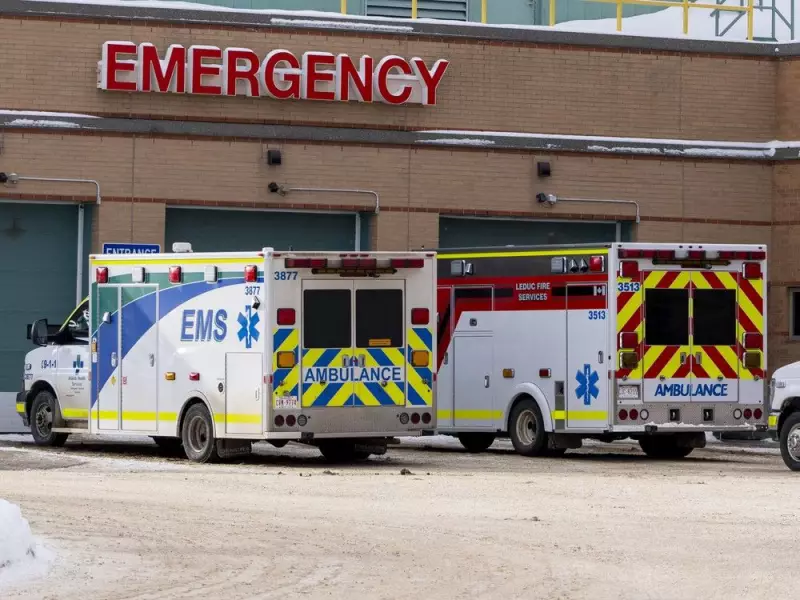
A profound and systemic healthcare crisis is gripping Alberta, stretching far beyond the crowded waiting rooms of its emergency departments. According to physicians, the province's General Internal Medicine (GIM) divisions and Emergency Departments (EDs) are now routinely operating at unsustainable levels, creating a domino effect that compromises patient safety and care quality across the entire hospital system.
The Reality of Hallway Medicine and Chronic Overload
In practical terms, this systemic failure means patients are increasingly receiving care in non-medical spaces. This includes hospital hallways, ED waiting rooms, EMS offload areas, and even repurposed surgical and labour and delivery units. The root cause is simple: all designated medicine beds are consistently full.
When inpatient wards exceed capacity, patients who require hospital admission are forced to remain on emergency department stretchers, waiting for a bed to open. This creates a critical bottleneck. Emergency departments become overwhelmed from both ends, struggling to manage new arrivals while also acting as a holding zone for patients who have already been admitted but have nowhere to go.

Unsafe Workloads and Compromised Patient Safety
This is not a temporary surge but a sustained, chronic operational shortfall. GIM teams, which care for the sickest and most medically complex patients in hospital, have become the default service for complex inpatient care as other specialties narrow their focus and surgical stays shorten.
The consequences are severe. Operating over capacity encroaches into surgical beds, leading to cancelled procedures. More alarmingly, individual physicians are now responsible for patient loads that far exceed safe limits. While a safe ratio is considered one physician to 18 patients, current loads often force doctors to manage 25 or more patients each. This results in less time per patient, delayed care and discharges, and a significantly increased risk of medical errors.
A System-Wide Flow Problem, Not Just an ER Issue
Experts stress that emergency room crowding is merely a symptom of a much larger crisis in patient-flow management and health-workforce optimization. When hospital wards are perpetually full, admissions stall and EDs lose their primary function as entry points, transforming into overcrowded holding zones.
So-called solutions like escalation and redistribution—activating overflow beds or spreading patients across the province—were designed as short-term crisis measures. However, these tactics are now in continuous use. Redistribution does not create new capacity; it merely disperses risk and strain across an already fragile provincial network.
This reliance on emergency measures has demonstrably failed. Physicians highlight the untenable position they face: continue accepting patients under unsafe conditions or refuse care to those who have literally nowhere else to go. A concrete, long-term solution with a clear implementation timeline has yet to be presented, leaving Alberta's healthcare system and its patients in a state of perpetual crisis.