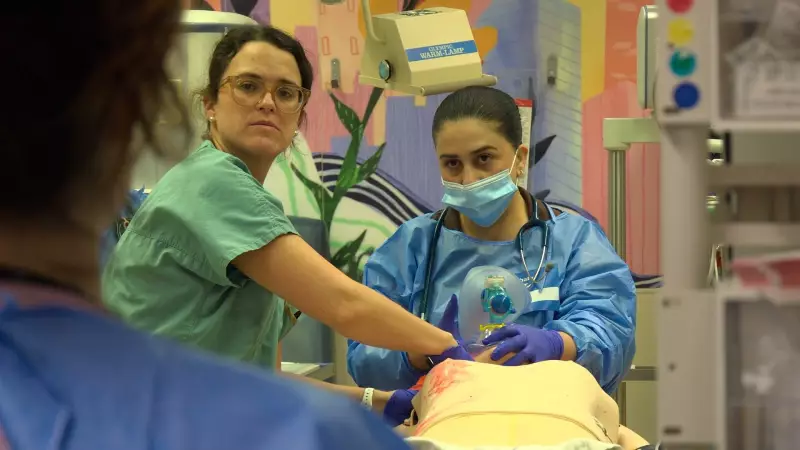
The Montreal Children's Hospital is taking medical training to new heights with intensive trauma simulations that prepare healthcare teams for real-life emergency situations. These high-pressure training sessions, documented in November 2025, showcase the rigorous preparation required for pediatric emergency care.
The High-Stakes Simulation Environment
Inside the hospital's training facilities, medical professionals face simulated trauma scenarios that mirror the intensity of actual emergency situations. The training, observed by journalists in mid-November 2025, involves complete medical teams working under pressure to stabilize critically ill children. These simulations replicate the chaotic environment of real trauma cases, allowing teams to practice coordination and decision-making when seconds count.
Medical staff participate in scenarios that test their technical skills, communication abilities, and emotional resilience. The training includes everything from initial patient assessment to complex medical interventions, with instructors observing and providing immediate feedback. This approach ensures that when real emergencies occur, the hospital's trauma team operates with precision and confidence.

Importance of Pediatric Emergency Preparedness
The Montreal Children's Hospital has developed these simulation programs specifically for pediatric cases, recognizing that children require different medical approaches than adults. Pediatric trauma presents unique challenges in terms of anatomy, medication dosing, and emotional care that demand specialized training.
Hospital administrators emphasize that this type of hands-on training directly impacts patient outcomes. By practicing in controlled environments, medical teams can identify potential weaknesses in their emergency response protocols and refine their techniques without risking patient safety. The program represents a significant investment in healthcare quality and patient care standards.
Building Team Coordination Under Pressure
One key aspect of the training focuses on team dynamics and communication during high-stress situations. Medical professionals learn to coordinate their efforts seamlessly, with clear role assignments and efficient information sharing. The simulations deliberately introduce unexpected complications to test how teams adapt to changing circumstances.
Participants report that the training not only improves their technical skills but also builds trust among team members. This trust becomes crucial during actual emergencies when clear communication and mutual understanding can mean the difference between life and death. The hospital continues to refine these programs based on feedback from participants and analysis of real emergency cases.
As healthcare demands evolve, the Montreal Children's Hospital remains committed to advancing medical training through innovative simulation techniques. These trauma training programs represent the cutting edge of pediatric emergency preparedness, ensuring that Montreal's youngest patients receive the highest standard of care when they need it most.