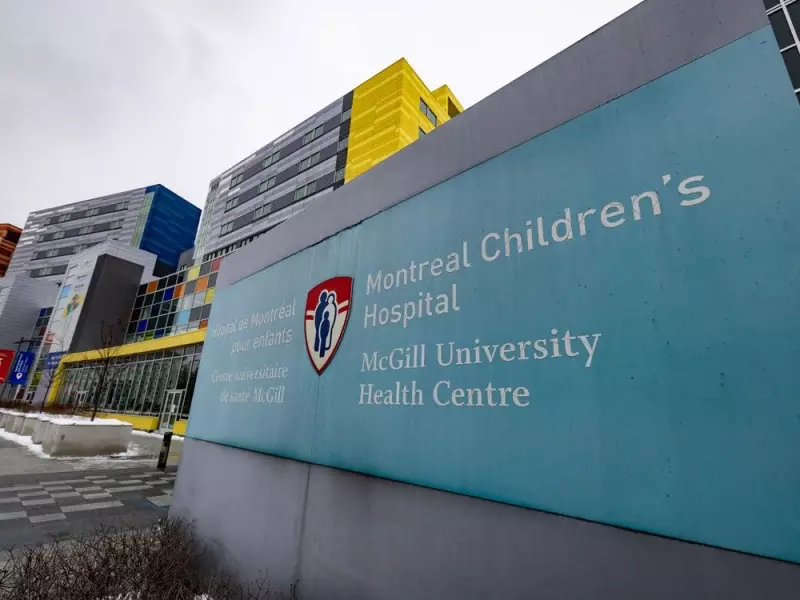
A potent and early-onset flu season, exacerbated by deep-seated problems within Quebec's healthcare network, is creating a state of crisis in the province's emergency departments. Medical professionals are raising urgent alarms, stating that patient safety is being compromised as overcrowding reaches critical levels, with some hospitals operating at 300% of their intended capacity.
A Perfect Storm of Pressure
The situation, described as "bleak" by frontline doctors, has been fueled by a confluence of factors. The flu season, driven by influenza A, arrived earlier and is hitting harder than in recent years. According to data from the Institut national de santé publique du Québec (INSPQ), flu positivity rates have neared 40%, with the H3N2 subtype becoming dominant in December. "Seasons with a majority of H3N2 strains tend to start earlier and have many cases," an INSPQ spokesperson noted.
This viral surge collided with the holiday period when many clinics were closed. Furthermore, icy conditions in Montreal just before New Year's Day led to an increase in fractures and concussions, adding to the patient load. Dr. Guillaume Lacombe, spokesperson for the Association des spécialistes en médecine d'urgence du Québec, described it as "the stars aligned to create more pressure in the ERs."

Alarming Occupancy Rates and Patient Risks
The strain on the system is quantifiable and severe. As of Wednesday night, January 6, 2026, stretcher occupancy rates were alarmingly high across multiple regions: 164% in the Laurentians, 190% in Laval, 143% in Montreal, and 159% in the Outaouais. Specific Montreal hospitals were even more overwhelmed, with the Royal Victoria at 212%, the Jewish General at 194%, and the Lakeshore General at 181%.
This translates into dire conditions on the ground. "You see patients in corridors, teams scrambling to assign patients, and sometimes patients separated only by a small sheet," Dr. Lacombe reported. Patients can wait on stretchers for 24 to 48 hours before being admitted to a proper room, a situation far from the standard of care.
The Fédération de la santé du Québec (FSQ-CSQ), which sounded the alarm on January 7, emphasized that while influenza is a factor, the crisis is multifactorial and has been worsening for months. President Déreck Cyr criticized the newly created Santé Québec agency, stating, "Apart from increasing the number of managers in the system, we see no improvement." He warned that the overwhelmed system is putting patient safety at direct risk.
Underlying Systemic Failures
Experts point out that ER overcrowding is often a symptom of hospital-wide congestion. A key bottleneck is the growing number of patients who have been discharged but are waiting for a spot in a long-term care home (CHSLD). That number has risen to approximately 2,250 this year, up from 2,000 last year and 1,700 the year before.
"This growing number of patients … affects hospital capacity, operating rooms, and can delay surgeries, including critical operations like lung cancer surgery," Dr. Lacombe explained. When asked about addressing this issue, Santé Québec stated that early management and supporting home care service teams are optimal but did not elaborate on specific actions.
On the public health front, Dr. Donald Vinh, an infectious-diseases specialist at the McGill University Health Centre, called current flu vaccination rates among the general population "abysmal." He argued that while vaccines are widely available, public health messaging needs to be far more clear and proactive. "You need to be on a soapbox with a town crier," he said, emphasizing that the vaccine benefits everyone, not just high-risk groups, and it's never too late to get the shot, even if you suspect you've already been ill.
Santé Québec responded that it has ramped up communication efforts this season and that processes are under constant review, but could not provide early-season vaccination data for the general population. As the crisis continues, healthcare workers and specialists are united in calling for real, systemic solutions rather than managerial changes, warning that the status quo is unsustainable and dangerous.