Groundbreaking Study Shows Brain Training Can Reduce Dementia Risk in People with HIV
Forty-five years after the first documented cases of AIDS emerged in New York, medical science has made remarkable progress in treating and preventing HIV infection. However, a new challenge has emerged for the millions of people worldwide who are now living longer with HIV: a significantly increased risk of dementia compared to their HIV-negative peers.
The HIV-Dementia Connection
Recent research has revealed that people living with HIV face dementia rates nearly double those found in the general population. This concerning trend has created what some experts describe as a "ticking time bomb" as the HIV-positive population ages into senior citizenship. The neurological effects of long-term HIV infection present a critical public health challenge that requires innovative solutions.
Promising Results from South African Study
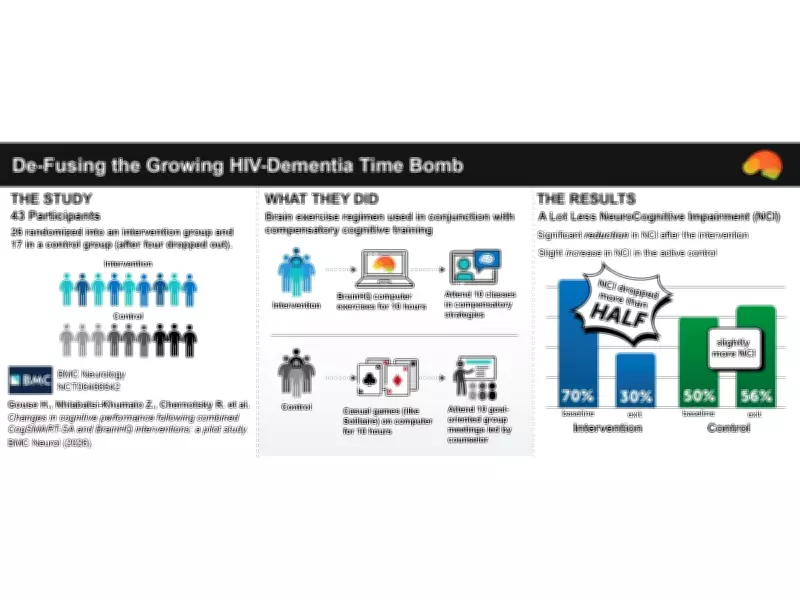
A novel study conducted in South Africa has demonstrated that cognitive interventions can significantly reduce neurocognitive impairment in people with HIV. The research involved 43 participants, with 26 assigned to an intervention group that used the BrainHQ brain training app for 10 hours while also participating in compensatory strategy classes. The control group of 17 participants engaged in casual computer games and goal-oriented meetings.

The results were striking: among the intervention group, the percentage assessed as cognitively impaired dropped dramatically from 70.4% to just 29.6% after the training. Meanwhile, the control group actually saw an increase in neurocognitive impairment from 50% to 56.4%.
Global Implications for HIV Care
What makes this study particularly significant is its demonstration that cognitive interventions developed in the Global North can be effectively adapted for the Global South. Researchers provided instructions translated into the native Xhosa language, showing that such strategies can work across cultural and linguistic barriers.
"The really good news is people with HIV are aging," notes Dr. David Vance, an HIV research expert at the University of Alabama at Birmingham School of Nursing and co-author of the study. "Of course, aging brings cognitive concerns and vulnerabilities. This study adds to strong evidence that cognitive training can improve cognitive abilities and reduce some of those concerns."
BrainHQ: A Multi-Purpose Cognitive Tool
The BrainHQ app used in the study has shown remarkable versatility in recent research. Over the past six months, studies have demonstrated that the app can rejuvenate brain chemical production in older adults, improve brain wiring after injuries, and reduce dementia risk for decades after use. For people with HIV, the benefits appear particularly significant.
Dr. Henry Mahncke, CEO of Posit Science which makes BrainHQ, observes: "There's an opportunity to not only address neurocognitive decline, but also to try to help defuse what some have called a 'ticking time bomb' of increased dementia risk, as people with HIV age into and advance as senior citizens."
Building on Previous Research
This South African study builds upon 11 prior studies and review articles examining BrainHQ's effectiveness for people living with HIV. Previous findings have included:
- Significant improvements in processing speed
- Correlation between higher processing speed and better medical adherence
- Notable improvement in global cognition
- Enhanced ability to perform daily activities
- Significantly reduced stress levels
The Path Forward
The challenge now lies in raising awareness among both people with HIV and their healthcare providers about the potential benefits of cognitive training. As Dr. Vance emphasizes, "Now, our challenge is raising awareness among people with HIV and their care providers and getting cognitive training into the hands of people who could benefit."
Healthcare organizations that have successfully transformed HIV into a treatable chronic condition may now play a crucial role in addressing dementia risk as a standard component of clinical care. This approach aligns with existing therapeutic lifestyle interventions that have become integral to comprehensive HIV management.

As the global HIV-positive population continues to age, innovative solutions like cognitive training offer hope for maintaining brain health and quality of life. The South African study represents an important step toward addressing the neurological challenges that accompany long-term HIV survival.