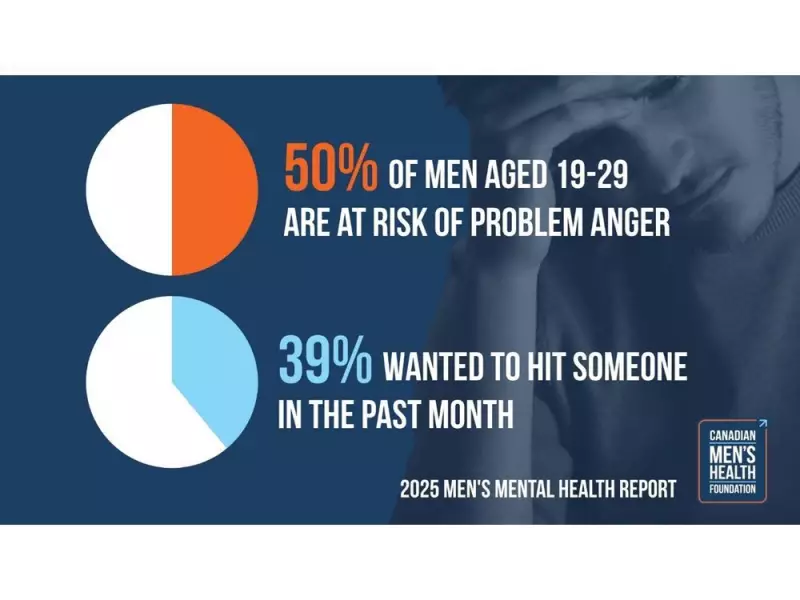
New research from the Canadian Men's Health Foundation has uncovered a startling mental health crisis among young Canadian men, with half of those aged 19 to 29 experiencing problem anger that interferes with their daily lives, relationships, and work.
Alarming Statistics on Young Men's Anger
The national survey of 2,000 men, conducted by CMHF and Intensions Consulting in November 2025, revealed that 50% of men aged 19 to 29 can be classified as being at risk of problem anger. This represents more than double the rate among all Canadian men, where only 22% show similar risk levels.
The study found even more concerning behavioral indicators. Among young men, 39% reported experiencing violent impulses when angry within the past month, compared to just 16% of all Canadian men. The research also highlighted that 36% of BIPOC men and 26% of men aged 30 to 44 face similar anger challenges.

Deeper Mental Health Crisis Revealed
These findings build upon previous CMHF research that showed half of Canadian men are at risk of social isolation. According to Kenton Boston, President and CEO of CMHF, men are suffering with higher levels of anxiety and depression but often feel ashamed to seek help or discuss their struggles openly.
"Men are suffering, living with higher levels of anxiety and depression and often are ashamed to say it out loud, or ask for help," Boston stated. "They tend to go it alone to try and solve their problems themselves. This research is a call to action on young men's mental health."
Organizational Response and Support
The Canadian Men's Health Foundation is planning to leverage its recent merger with Blueprint to enhance existing programs for men facing mental health challenges like problem anger. The organizations will develop scalable, research-backed programs designed to meet men where they're at in their mental health journey.
Dr. David Kuhl, President and Co-Founder of Blueprint, emphasized the importance of tailored approaches: "When we reach men with programs that respect men's reality, we can reduce harm, strengthen families, and lower the burden on our health and social systems."
The organizations will continue providing barrier-free digital resources and tools, including the MindFit Toolkit, to help men manage their mental health. The scale of their combined operations promises to reach more men and their families, making a tangible difference in addressing this critical mental health issue.
The research serves as a crucial warning about the underlying stress and disconnection from support systems affecting young Canadian men, highlighting the urgent need for targeted mental health interventions and increased awareness about available resources.