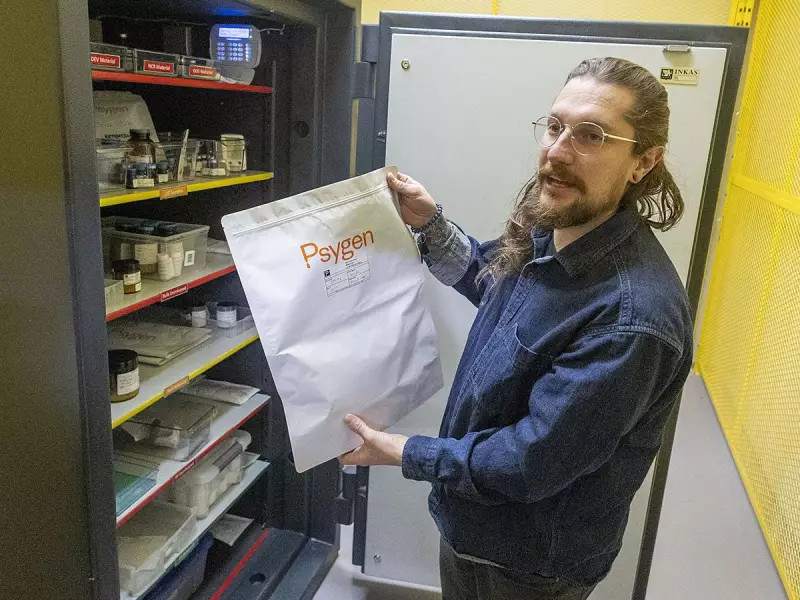
In a nondescript office park in northeast Calgary, a dream born from teenage adversity is now operating at an industrial scale. Psygen Labs Inc., a 17,000-square-foot facility, is one of Canada's premier manufacturers of pharmaceutical-grade psychedelic compounds, a venture its founder says was once met with widespread skepticism.
From Personal Healing to Industrial Production
The journey of Psygen's CEO and co-founder, Danny Motyka, began at age 15. Struggling with his mental health after his father's terminal brain cancer diagnosis, Motyka researched alternative treatments and discovered accounts of psilocybin's therapeutic potential. His first experience with the substance was, in his words, "transformative."
"I went into that experience pretty broken," Motyka recalls. "I came away with a shift in perspective and a gratitude for life." That moment planted a seed: a dream to one day open a psychedelics laboratory. "Everyone told me I was crazy. And now here we are," he says, reflecting on the path that led to the founding of Psygen in 2019.

A Pivot to Power Global Research
Initially, Psygen aimed to pair manufacturing with its own clinical research, targeting an LSD-based product. However, the company strategically pivoted to become a Contract Development and Manufacturing Organization (CDMO). This shift allows them to supply high-purity psychedelic substances as active pharmaceutical ingredients to other companies and researchers conducting clinical trials worldwide.
"It became really clear that if Psygen was going to succeed . . . we needed to figure out how to use the assets that we built to create value in the market," Motyka explains. The core of their work is now research and development, optimizing chemistry to scale up production of target molecules for commercial manufacture.
Operating under a strict Health Canada license, the company's team of 15 chemists produces a range of controlled substances, including:
- Psilocybin
- MDMA
- LSD
- Ibogaine
- DMT
Breaking Stigma with Science and Scale
Psygen's mission, as stated by Motyka, is ambitious: "to reconnect humanity" by improving access to these compounds. The work, once "seriously frowned upon," is now conducted with rigorous scientific and regulatory controls. The Calgary lab represents a significant part of a growing sector that views psychedelics not as recreational drugs but as potential tools to break cycles of addiction and address intractable mental health issues like depression and PTSD.
The facility, which opened its doors for this specialized work in the city's industrial landscape, stands as a physical testament to the changing perceptions and serious medical potential of psychedelic substances. By providing the essential, pure ingredients for global research, Psygen Labs positions Calgary at the forefront of a potential revolution in mental health and addiction treatment.