HHS Secretary Kennedy Jr. Deflects Blame for Measles Crisis in Tense Congressional Hearing
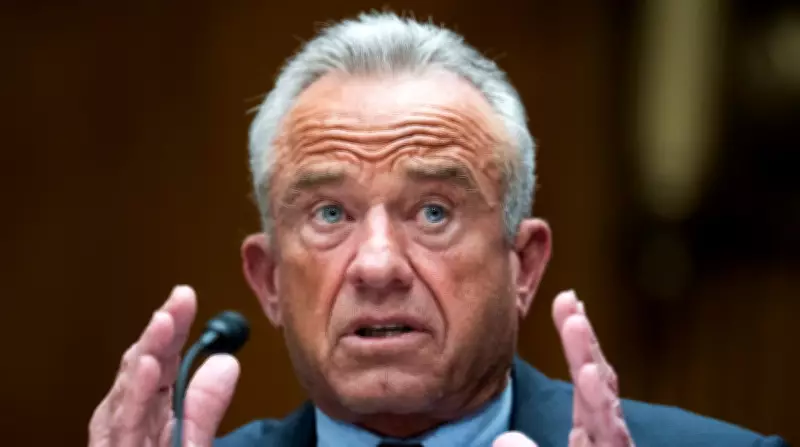
Health and Human Services Secretary Robert F. Kennedy Jr. steadfastly refused to acknowledge any personal or professional responsibility for the alarming surge in measles cases across the United States during a contentious congressional hearing on Wednesday. Kennedy, who has a decades-long history of spreading misinformation regarding vaccine safety, testified before Congress regarding President Donald Trump's 2027 budget request over two days. Throughout his testimony, he repeatedly dismissed suggestions that he should be held accountable for the measles outbreaks that have proliferated during his tenure.
Blaming Others for the National Health Crisis
Instead of accepting accountability, Secretary Kennedy pointed fingers at various groups and external factors. He attributed the nationwide measles crisis to Mennonite communities, immigrants arriving at the southern border, and conditions in other countries. This deflection occurred despite data showing that thousands of Americans have contracted measles under his leadership, with the vast majority of cases involving individuals who were not vaccinated. Critics note that even as the outbreak expanded, Kennedy continued to disseminate misleading information and minimize the severity of the virus.
A Direct Question Evaded
The hearing reached a pivotal moment when Senator Lisa Blunt Rochester, a Democrat from Delaware, confronted Kennedy directly. She referenced his pattern of avoiding accountability in previous hearings and posed a straightforward question he had consistently sidestepped.

"You've blamed the Mennonites. You've blamed immigrants. You've blamed the globe," Senator Blunt Rochester stated. "We've been part of the globe. And still, we are in this situation. Do you take any responsibility in your role for the situation we're in with this measles epidemic?"
Kennedy's response was unequivocal in its avoidance: "As I said, the measles epidemic began before I came into office." Senator Blunt Rochester interpreted this as a refusal, replying, "I'm going to take that as a 'no'."
Defensive Posture and Unrelated Statistics
Throughout the week, Secretary Kennedy exhibited a notably defensive attitude when questioned about vaccines and the measles outbreak, even when inquiries were not overtly critical of his management. Earlier in Wednesday's session, Senator Bill Cassidy, a Republican from Louisiana and the committee chairman, inquired about HHS preparations for the upcoming World Cup games in the U.S., including plans to address potential influxes of tourists carrying vaccine-preventable diseases.
Kennedy ignored this question entirely, instead asserting that he has performed "better" at controlling measles outbreaks compared to other nations. He volunteered an unsolicited statistic, claiming that 80% of unvaccinated children in the U.S. are over five years old, implying that their parents' decisions to forgo vaccination preceded his appointment. He concluded by insisting that the "global pandemic" of measles "doesn't have anything to do with me."
This testimony underscores ongoing concerns about leadership and public health communication at the highest levels of the U.S. government during a preventable health crisis.