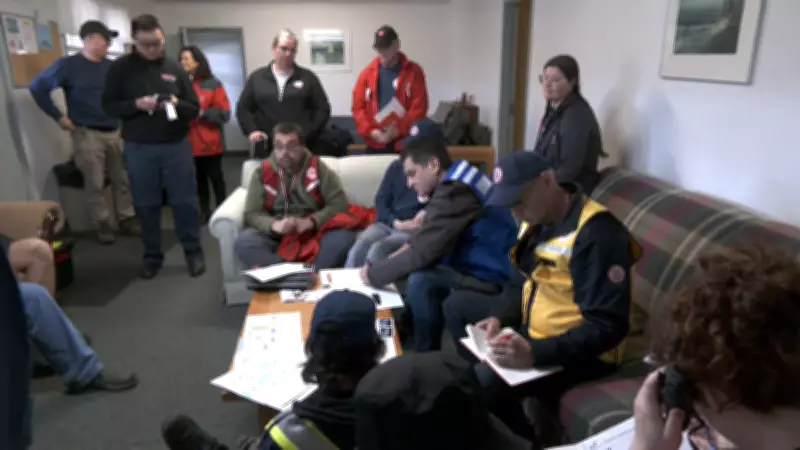
Salvation Army Volunteers Engage in Intensive Simulated Disaster Training Ahead of Minden Flooding Deployment
In a proactive move to bolster emergency response capabilities, Salvation Army volunteers recently undertook a comprehensive mock tornado response exercise at the Jackson's Point retreat. This rigorous training session was specifically designed to prepare volunteers for real-world disaster scenarios, with a particular focus on the ongoing flooding crisis in Minden, Ontario.
Simulated Tornado Exercise Enhances Volunteer Readiness
The training at Jackson's Point involved volunteers participating in a highly realistic simulated tornado response. This exercise allowed them to practice critical skills such as rapid deployment, emergency shelter management, and disaster assessment in a controlled environment. By simulating the chaos and urgency of a tornado aftermath, volunteers gained invaluable hands-on experience that directly translates to effective flood response operations.
"This type of training is essential for ensuring our volunteers are prepared to handle the unpredictable nature of natural disasters," explained a Salvation Army spokesperson. "The skills honed during these simulations are directly applicable to the challenges presented by flooding events like the one in Minden."

Direct Deployment to Minden Flooding Crisis
Following the completion of the training exercise, a contingent of Salvation Army volunteers was immediately deployed to assist with the flooding situation in Minden. This deployment underscores the organization's commitment to providing timely and effective disaster relief across Ontario. The volunteers are tasked with:
- Providing emergency food and water supplies to affected residents
- Assisting with temporary shelter arrangements for displaced individuals
- Offering emotional and spiritual support to those impacted by the flooding
- Coordinating with local emergency services to ensure a unified response effort
The flooding in Minden has necessitated a robust and coordinated emergency response, and the Salvation Army's trained volunteers are playing a crucial role in mitigating the impact on the community.
Importance of Pre-Deployment Training for Disaster Response
Emergency response experts emphasize that pre-deployment training, such as the exercise conducted at Jackson's Point, is vital for several reasons. Firstly, it ensures that volunteers are familiar with standard operating procedures and safety protocols, reducing the risk of injury or mishap during actual deployments. Secondly, it builds team cohesion and communication skills, which are critical in high-stress disaster environments.
Simulated disaster exercises allow volunteers to make mistakes and learn in a safe setting, thereby improving their performance when faced with real emergencies. The Salvation Army's investment in this type of training demonstrates a forward-thinking approach to disaster preparedness and community service.
As flooding continues to affect various regions, the role of well-trained volunteer organizations like the Salvation Army becomes increasingly important. Their efforts in Minden highlight the tangible benefits of rigorous pre-deployment training and the unwavering dedication of volunteers to support communities in times of need.