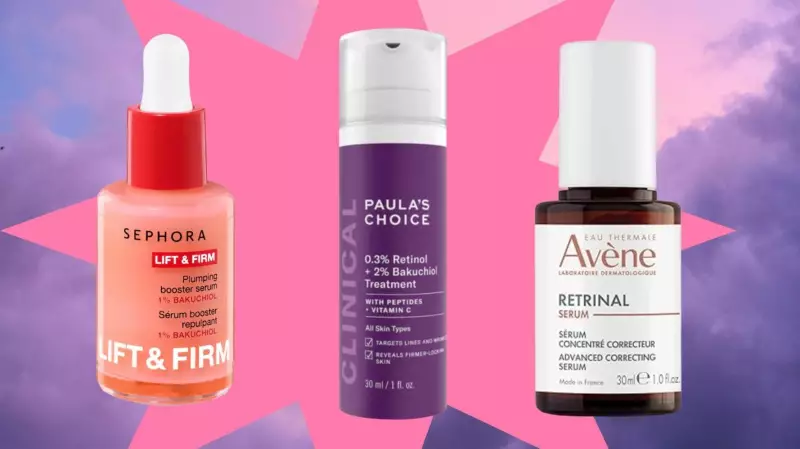
Retinoids have become the undisputed champion of anti-aging skincare, found in popular serums from Sephora, Amazon, and Paula's Choice. As derivatives of vitamin A, studies confirm they are one of the most effective topical defenses against premature skin aging. However, this powerful ingredient comes with a significant downside: potential irritation.
The Problem with Retinoids
Dr. Julie Karen, a board-certified dermatologist at Complete Skin MD in New York City and fellow of the American Academy of Dermatology, explains the common side effects. "While retinoids are often hailed as the gold standard of anti-aging topical therapy, they can very often cause irritation - dryness, redness, peeling, and sun-sensitivity," she said.
The concerns extend beyond skin irritation. Dr. Meghan Elkins, an optometrist and member volunteer with The American Optometric Association, warns that retinoids can contribute to chronic dry eyes. "Retinol used around your eyes has the potential to damage glands along your eyelids that create the oil layer of your tear film that locks in moisture and protects your eye surface," Elkins stated. In more severe cases, she noted this dry eye condition can even cause temporary vision decrease.

Bakuchiol: The Plant-Based Solution
Both dermatologists point to bakuchiol as a less irritating, plant-based alternative to traditional retinoids. Dr. Karen emphasizes that "[It] has anti-aging benefits that mimic those of retinoids, but lacks the potentially irritating effects." Like retinoids, bakuchiol promotes cell turnover, leading to improvements in skin smoothness, texture, tone, and the appearance of fine lines.
Dr. Paul M. Friedman, a board-certified dermatologist and director of Dermatology & Laser Surgery Center in Houston, highlights additional benefits. Beyond its retinol-like functionality, bakuchiol possesses antioxidant, anti-inflammatory, anti-acne and antibacterial properties.
The practical differences between these ingredients are significant. Retinoids require careful introduction with gradual dose escalation to build tolerance and prevent irritation. They cannot be applied before laser treatments or sun exposure due to increased burning risk. Bakuchiol, being photostable, can be used any time without sensitizing skin to the sun and is safe during pregnancy and breastfeeding.
"It also does not require dose escalation and is more effective at inhibiting matrix metalloprotease compared to retinol, which is the enzyme that attacks collagen in our skin," Friedman added.
Expert-Recommended Bakuchiol Products
Sephora Lift & Firm Plumping Serum offers a budget-friendly option at $24, containing 1% bakuchiol in a milky, unscented formula with sunflower seed oil and rosemary leaf extract.
Medik8 Bakuchiol Serum ($58 at Dermstore) combines 1.25% bakuchiol with brightening peptides and omega oil to support skin barrier health.
Paula's Choice Clinical Retinol and Bakuchiol Serum ($65) uniquely contains both 0.3% retinol and 3% bakuchiol, which Dr. Ciraldo notes can boost retinol's efficacy while mitigating irritation.
Beekman 1802 Dream Booster Serum ($29+) uses a blend of seed oils and squalane with bakuchiol, making it suitable for sensitive skin and safe during pregnancy.
Avène Retrinal Serum ($78) combines bakuchiol with hyaluronic acid and niacinamide for comprehensive anti-aging benefits.
Revision DEJ Night Cream ($185) pairs bakuchiol with microencapsulated retinol for delayed release, minimizing irritation while delivering potent results.
Herbivore Mood Fruit Serum ($51-68) features 1% bakuchiol with plant-derived peptides and schisandra berry extract for firming benefits.
Isdin Melatonik ($175) combines bakuchiol with vitamin C and melatonin to boost skin's antioxidant defenses against environmental stressors.
While bakuchiol shows great promise, Dr. Loretta Ciraldo, a Miami-based board-certified dermatologist, notes that as a newer ingredient, it lacks the extensive research supporting retinoids like retinol and tretinoin. More comparative studies are needed to fully establish its efficacy relative to traditional retinoids.