Ottawa Citizen Critic Makes Historic Culinary Move at National Arts Centre
In an unprecedented development within Canada's culinary landscape, Peter Hum, the esteemed restaurant critic for the Ottawa Citizen, has shattered traditional boundaries by assuming the role of resident chef at the National Arts Centre. This groundbreaking appointment marks the first time a non-chef has held this prestigious position since the program's inception in 2019, which typically highlights rising culinary talents from across the nation.
A Critic's Unconventional Kitchen Journey
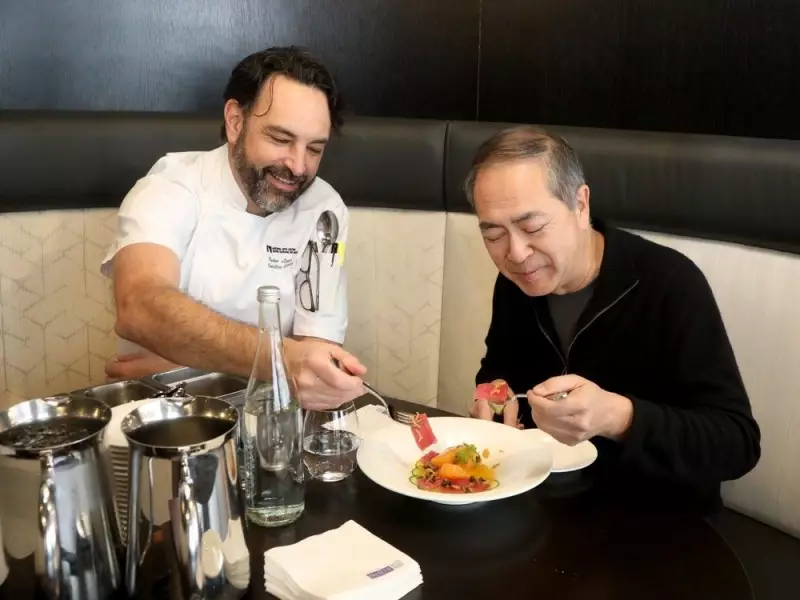
The scene unfolds on the first Monday afternoon of the new year at 1 Elgin, the National Arts Centre's distinguished restaurant. Hum finds himself seated across from NAC executive chef Kenton Leier, with executive sous chef Connor McQuay presenting dish after dish for evaluation. This tasting session represents a significant departure from traditional restaurant criticism, as Hum provides real-time feedback on creations destined for the restaurant's upcoming menu.
"I've never done restaurant criticism in real time, in front of the chefs responsible, no less," Hum reflects. "But there's a first time for everything."

The tasting features an impressive array of dishes including tuna crudo, beef tartare, roast pork belly, crispy pan-fried haddock, and a substantial duck breast capable of serving two people. These culinary creations, accompanied by two soups and three desserts, represent advance previews of items that will soon grace 1 Elgin's menu for a two-month engagement period.
Cultural Heritage Meets Culinary Innovation
Hum's appointment carries profound cultural significance as he becomes the first Chinese-Canadian resident chef in NAC history. This milestone connects directly to his family's remarkable journey, beginning with his grandfather who arrived from Southern China in 1900 and established one of Ottawa's earliest Chinese-run businesses on Rideau Street.
The menu development process represents a deeply personal exploration of Hum's heritage. Dishes draw inspiration from his recent travels through Hong Kong and China, childhood memories of meals prepared by his mother in Nepean, and even his father's former establishment, the Marco Polo Tavern Restaurant on Bank Street. This culinary narrative weaves together generations of family history with contemporary dining expectations.
From Chinese Village to National Institution
Hum's culinary philosophy gained profound perspective during an emotional journey to his ancestral village of Soon On Lee in China's Guangdong province. There, he organized a monumental gathering for approximately 150 people, including Canadian relatives and distant Chinese family members spanning three generations. The outdoor banquet, featuring traditional roasted pork and regional specialties, created powerful connections across continents and generations.
This village experience directly informs Hum's approach to his NAC residency. He envisions the upcoming sold-out gala dinner marking his chef's tenure as a Canadian counterpart to that village celebration—uniting people through exceptional food while honoring cultural traditions.
Signature Dishes with Personal Significance
The resident chef menu showcases several dishes carrying deep personal meaning for Hum. The wonton soup represents both childhood comfort and culinary excellence, inspired by Michelin-recognized versions sampled in Guangzhou. Hum insisted on specific preparation details, including coarse-chopped shrimp in the filling, mirroring his mother's traditional approach.
"I'd hate for wonton soup sold under my name to taste like a machine had whipped the wonton fillings into an over-manipulated farce," Hum explains. "Where's the love in that?"
The tuna crudo incorporates tangerines as a nod to Lunar New Year traditions and Southern Chinese culinary practices, where tangerine peels hold significant cultural and economic value. Meanwhile, the Cantonese roast pork belly pays homage to Hum's late father while pushing for authentic preparation methods, including the substitution of traditional hot mustard for more Western condiments.

Blending Critique with Creation
Throughout the development process, Hum has maintained his critic's discerning palate while embracing his new creative role. His feedback during tasting sessions has been both specific and constructive, addressing seasoning adjustments, ingredient substitutions, and presentation refinements.
The collaboration has already generated positive responses from early diners. Food and beverage general manager Nelson Borges notes that plates are consistently returned empty—the ultimate compliment in restaurant service. Esteemed commentator Paul Wells praised the menu on social media, highlighting its faithful execution of Cantonese cuisine with elevated refinement.
As Hum prepares for the January 29 gala dinner that will reunite many relatives who joined his China journey, he reflects on the circular nature of his culinary story. "I know we'll all be grateful to our ancestors, who came to Ottawa from the village that we'd visited together so that they could write their stories here," he observes. "We, in turn, continue them."
This historic residency represents more than just a temporary menu change—it signifies a meaningful convergence of cultural heritage, culinary excellence, and innovative thinking within Canada's national arts institution.