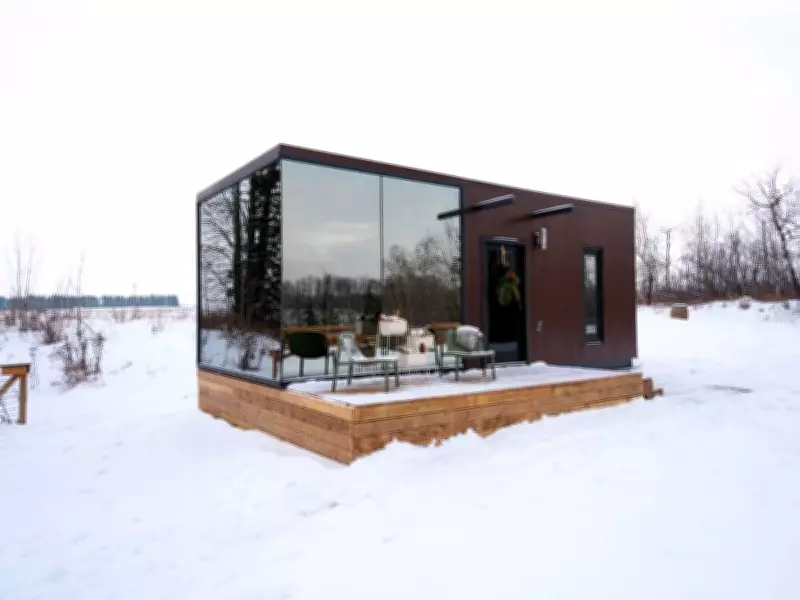
Steel Reframes the Modern Modular Home Design Landscape
What began as a business focused on converting old shipping containers has evolved into a full-fledged modular construction company, led by Modern Modular co-founder Dustin Anderson. This transformation marks a significant shift in the homebuilding industry, particularly in regions like Calgary and beyond.
From Shipping Containers to Steel Innovation
"For almost 12 years, we were converting shipping containers, and a lot of people were starting to ask us to build houses out of them," says Anderson. "We did a few to building code requirements, but we realized the deconstruction didn't make a lot of sense." This realization prompted Anderson and his partner to pivot, launching Modern Modular to construct homes using steel cladding instead.
"We build the frame and exterior from steel, which allows the design to be shipping-container inspired, but built from scratch," he explains. "Using steel results in a stronger home when you compare the rigidity with steel versus wood." This approach not only enhances durability but also addresses growing concerns in areas like Interior B.C., where wildfires are an increasing threat, making steel construction a safer alternative.

Rethinking Modular Designs with Biophilic Principles
For many, modular homes still bring to mind mobile homes, but Anderson emphasizes that his team focuses on modern designs rooted in biophilic principles. These designs incorporate natural light, greenery, and strong connections to the outdoors, creating living spaces that are both aesthetically pleasing and functional.
"One of the biggest reasons we got into it was to show people you can build something nicer and higher quality in a factory than right on site," he says. Streamlined layouts allow homeowners to personalize finishes without altering the home's core structure. Popular upgrades include larger kitchen islands, expanded pantries, various shower and tub combinations, and feature walls such as shiplap for a cabin aesthetic.
Built for Remote Locations with Speed and Accessibility
Speed and accessibility are major advantages of modular construction, particularly as many projects are located in remote regions such as the Kootenays, Shuswap, and Okanagan. "Many of our clients are quoted two or three years by traditional builders, and costs can be difficult to forecast because of the location," Anderson notes. "Typically for our homes, the order to move-in date is around six months."
The homes are insulated with high-quality spray foam that helps stabilize the structure during transport, ensuring safety and efficiency. This method not only speeds up the building process but also reduces on-site disruptions, making it ideal for challenging terrains.
Sustainability as a Core Priority
Sustainability remains a focus throughout construction and design. "Steel is one of the most recycled materials, and working within a shop environment produces less waste," says Anderson. Additionally, the insulation used is tighter and prevents significant heat loss, contributing to energy efficiency and lower environmental impact.
Anderson and his team will be onsite at the Calgary Home and Garden Show, where attendees can tour their mirror cabin unit, The Looking Glass, and speak with builders about the modular process. The show runs from February 26 to March 1 at the BMO Centre, Stampede Park, with tickets available online at calgaryhgs.com.
This innovative approach to modular home design not only redefines what is possible in residential construction but also sets a new standard for sustainability, durability, and modern living in Canada's diverse landscapes.