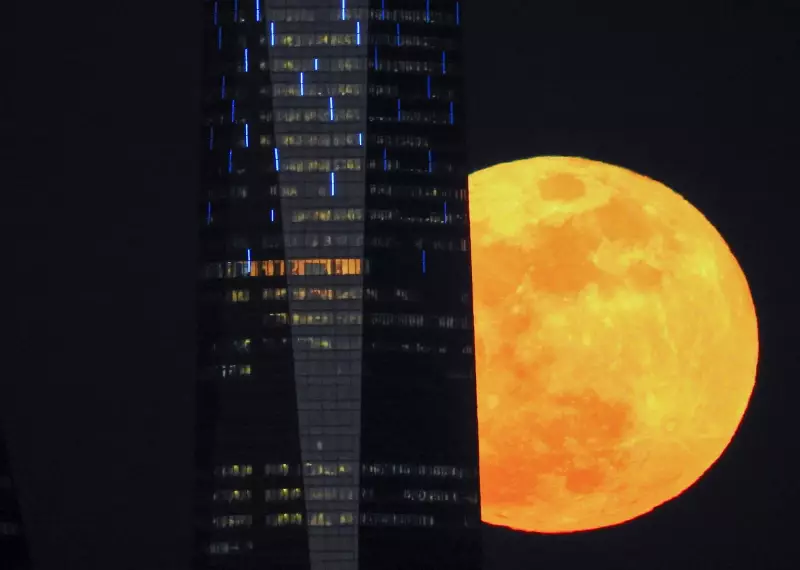
The new year of 2026 is set to begin with a dazzling display in the heavens, offering Canadians a celestial double feature. The month of January will be highlighted by the appearance of the first supermoon of the year, known as the Wolf Moon, alongside the peak of the annual Quadrantid meteor shower.
The First Supermoon of 2026
January's full moon, traditionally called the Wolf Moon, will also be a supermoon. This occurs when the moon's orbit brings it closest to Earth, making it appear slightly larger and brighter in the night sky. The visual impact is a more dramatic and luminous full moon, a phenomenon that always captivates skywatchers.
The term "Wolf Moon" has its roots in the folklore of various cultures, including some Indigenous traditions in North America. It is often associated with the time of year when wolf packs were heard howling outside villages during the deep winter.

The Quadrantid Meteor Shower Peak
Coinciding with this lunar event is the peak of the Quadrantid meteor shower, one of the year's most reliable and active showers. Known for producing bright fireballs, the Quadrantids can feature up to 40 to 100 meteors per hour under ideal, dark-sky conditions.
The challenge for 2026 will be the timing. Meteor showers are best viewed in complete darkness, away from city lights. The bright light of the nearly full Wolf Supermoon may wash out some of the fainter meteors. However, the Quadrantids are famous for their bright fireballs, which can still shine through the lunar glare.
How and When to Watch in Canada
For the best chance to see both events, plan your observation for the peak night of the Quadrantids in early January. The shower is typically most active around January 3rd or 4th. The supermoon will be visible all night as it rises in the east after sunset and sets in the west around sunrise.
To optimize meteor viewing despite the supermoon, try to position yourself so that the moon is at your back, and look towards the darkest part of the sky. The radiant point for the Quadrantids is in the constellation Boötes, near the handle of the Big Dipper.
This celestial pairing serves as a spectacular reminder of the dynamic nature of our night sky. It offers a perfect, free opportunity for individuals and families to engage with astronomy and start the new year looking upward. Whether you catch a brilliant fireball streaking across the sky or simply marvel at the oversized glow of the Wolf Moon, January's sky promises a memorable start to 2026.