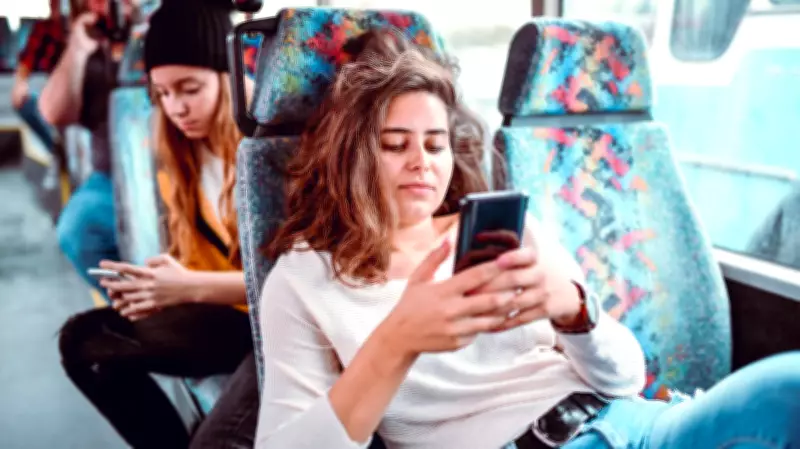
The Annoying Reality of Bare Beating in Public Spaces
Have you ever found yourself trapped on a train car with someone watching TikToks from their phone without headphones? Or seated on a plane next to a passenger blasting music? Perhaps you have been stuck in a doctor's office waiting room as a fellow patient broadcasts radio commentary on a sports stream? If any of these scenarios sound familiar, you have experienced what some are now calling "bare beating." This term refers to the act of playing music, videos, podcasts, or other audio out loud in public without headphones—essentially treating shared space like a personal living room.
Etiquette Experts Unanimously Condemn the Practice
"This. Is. Rude. There just is no other way to slice it," said Nick Leighton, an etiquette expert and host of the "Were You Raised by Wolves?" podcast. "You're imposing your choices on a captive audience. Nobody decided they wanted to listen to that YouTube video, and yet here we are all having to endure it without our consent."
Jodi R.R. Smith, the president of Mannersmith Etiquette Consulting, agreed, emphasizing that bare beating is "unequivocally rude." "The presumption that everyone wants to listen to what you are listening to is simply unacceptable," she said. "This is doubly so if others are unable to move away from you—at work, in an elevator, on public transportation, etc."

In those tight quarters, what might even seem like low or moderate volume to you can feel disruptive to someone sitting inches away. Diane Gottsman, the author of "Modern Etiquette for a Better Life" and founder of The Protocol School of Texas, explained: "Whether the distraction is visual, or noise related, when someone is intruding on another person's public space, it's not easy to look away and ignore."
Why Bare Beating Is Particularly Problematic
Children might get grace for this behavior because they aren't as aware of social norms, but for adults who should know better, it's simply rude. And depending on where you are, it might even be subject to legal penalties. "Some people just aren't mindful of how their behavior affects others and simply have no idea how far phone speakers can carry sound," Leighton said. "Spoiler alert: It's way farther than you think."
Indeed, "bare beaters" don't necessarily have negative intent and are sometimes blissfully unaware. "The reason people are doing this is because they are trying to pass the time or may not even realize their volume is offensive," Gottsman said. "But when you're sitting inches away from another person, even lower noises are amplified."
There may even sometimes be understandable reasons for the behavior. Someone with hearing difficulties may not realize how loud their device is, or they may be experiencing technical issues. Still, Gottsman said, unless it's an emergency, the courteous move is to wait to listen to the audio when you're in private. "Of course, using earbuds and utilizing captions is a reasonable option," she added.
A Historical Perspective on Public Audio Etiquette
While bare beating feels like a modern behavior, it's not entirely new. "Forcing strangers to become your unwilling audience has been an issue that's plagued humanity since the dawn of time," Leighton said.
Smith pointed out that methods and norms have shifted over the decades. "Back in the '80s, being a DJ to those in your surrounding area was actually considered the norm," she said. "The person with the giant boombox would play it so that everyone nearby could enjoy the sound. But times change and nearly everyone has the ability to listen to what they like almost anywhere—so long as they are wearing headphones or earbuds."

How to Address Bare Beating Respectfully
For those who flout modern etiquette rules by bare beating, sometimes all it takes is a gentle nudge. Smith recalled a recent experience at an airport gate where a man was loudly streaming a soccer game on his phone as it was time to board. "After a few minutes, I turned and asked him what he was watching," she said. "He excitedly told me his favorite team was playing. I told him that I was having a hard time hearing the boarding announcements and asked if he could use earbuds. He gave his head a quick shake and looked around sheepishly. He had not realized how loud his phone was or how many people were giving him 'the look.' He apologized to me and the others around him as he put in his earbuds."
Still, Gottsman emphasized that deciding whether to speak up is a judgment call. "Is it rude to intrude on other people's personal space? The answer is yes," she said. "But understand that we cannot determine another person's reaction, and if you can ignore it for a very short subway ride, it's probably best to do so."
Regardless of whether you choose to confront someone over this behavior, the important thing is to avoid bare beating yourself. Remember: Just because you can press play doesn't mean everyone else signed up to listen.