DHS Secretary's Corporal Punishment Comments Spark Expert Criticism
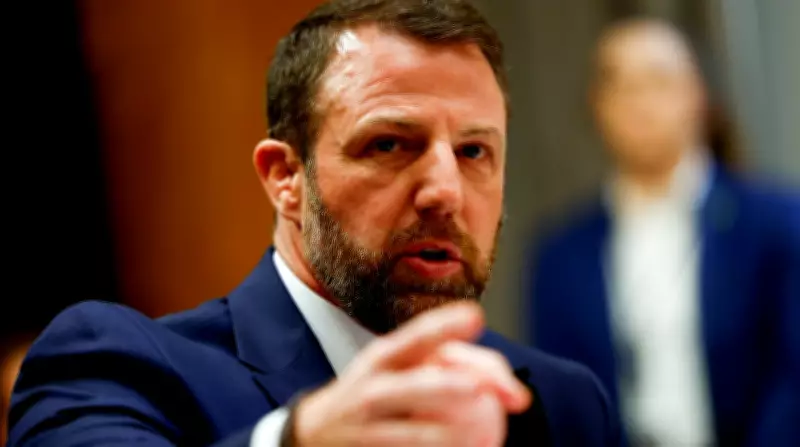
The Trump administration's newly appointed Department of Homeland Security Secretary, Markwayne Mullin, has drawn significant attention for resurfaced comments he made regarding corporal punishment as a parenting method. The former mixed martial arts fighter and father of six children previously addressed the Christian political activist group City Elders in October 2023, where he openly discussed his disciplinary approach with his children.
Mullin's Controversial Parenting Philosophy
"I do spank. I have no problem with that," Mullin declared during the meeting, receiving applause from attendees. He elaborated with personal anecdotes about physically disciplining his children, describing how they would return to him affectionately shortly after punishment. "You can't imagine how loving they are. ... I can spank them and I'm still upset and they'll come and crawl on my lap two minutes later and just hug on me," Mullin recounted.
He further shared a particularly disturbing story about one daughter's reaction to impending punishment: "No, Daddy. No, Daddy. No, Daddy! No! I'm sorry, Daddy. I'm sorry, Dad" when "she just couldn't bring herself to even bend over for [Mullin] to bust her butt."

Scientific Consensus Against Corporal Punishment
These comments directly contradict decades of scientific research on child development and effective discipline methods. Child development experts universally condemn corporal punishment as harmful and counterproductive.
Jessica Scher Lisa, founder and clinical psychologist at Empowering Minds Consulting, explained the research findings: "What we know from decades of research is actually very consistent. Spanking may stop a behavior in the moment, but over time it is linked to increased aggression, more defiance, higher rates of anxiety and depression, and a weaker parent-child relationship."
She emphasized that physical punishment fails to teach essential life skills: "It does not teach the skills we want kids to develop, like emotional regulation, communication or problem solving. Instead, it teaches that when you are frustrated or in control, you can use physical force."
Global Health Organizations Weigh In
The World Health Organization reinforced this position in a comprehensive 2025 report on corporal punishment. Etienne Krug, director of the WHO Department for Health Determinants, Promotion and Prevention, stated unequivocally: "There is now overwhelming scientific evidence that corporal punishment carries multiple risks to the health of children. It offers no benefits to the behavior, development or well-being of children and no benefit to parents or societies either. It's time to end this harmful practice to ensure that children thrive at home and at school."
International family psychotherapist Fiona Yassin, founder and clinical director of The Wave Clinic, highlighted specific research findings: "Smacking young children can impact their mental health as they journey through their childhood and teen years. In fact, research has shown that children who have adverse experiences, such as being smacked, at the age of three are more likely to suffer from poor mental health and behavioral problems."
Neurological Impact and Historical Context
Yassin further noted that Harvard research demonstrates how disciplinary hitting triggers brain responses similar to severe maltreatment, increasing children's perception of threat. This means young brains don't differentiate between punishment smacks and other forms of abuse, resulting in measurable neurological harm.
Despite research documenting these harms since the 1980s, corporal punishment persists in certain parenting circles, particularly among conservative groups that promote authoritarian parenting styles. Experts observe that some parents now openly discuss physical discipline as a point of pride rather than a private disciplinary choice.

Psychological Roots of Pro-Corporal Punishment Attitudes
Scher Lisa explained this phenomenon: "In my clinical work, this is usually not about a lack of care for their child. It is often about normalization. Many of these parents were raised with physical punishment themselves, so it feels familiar and effective. Over time, it becomes part of their identity as a parent. In certain environments, it can also signal being firm, in control, or 'doing it right,' which reinforces the behavior socially."
Psychotherapist and licensed clinical social worker John Puls added that some parents view corporal punishment as a "badge of honor" signaling their rejection of modern parenting techniques.
Breaking Intergenerational Cycles
Mullin himself demonstrated this normalization when discussing his own upbringing, expressing admiration for his father's speed with a belt: "I've never seen a man that can take the belt off so fast, double it up and still hit you. I don't know how in the world he done that. I tried it and I just can't."
Experts emphasize that breaking these cycles requires intentional effort from parents. Scher Lisa advised: "The most important message I would want parents to hear is that kids learn by watching us. If we want them to manage frustration, use words, and regulate their behavior, we have to model that for them."
She acknowledged the challenge but emphasized the possibility of change: "For many parents, especially those who were raised with spanking, this means intentionally doing something different than what feels automatic. That is not easy, but it is absolutely possible and it makes a meaningful difference in how kids grow and relate to others."
The controversy surrounding Mullin's comments highlights the ongoing tension between traditional disciplinary practices and evidence-based parenting approaches, with child development experts urging parents to adopt non-violent discipline methods that promote healthy emotional development and stronger parent-child relationships.