A Legacy of Trauma: Reckoning with a Surname Born from Assault
Most people sign their names on documents and correspondence without a second thought, but for Ciaran Short, every signature or introduction carries a weight of hesitation. His last name represents not family pride, but a painful history rooted in violence against his grandmother.
The Discovery of a Painful Truth
Last week, standing in a small East Village art gallery, Short found himself transfixed by his own name spelled out in black vinyl letters on a wall. While other visitors admired the artwork, he analyzed each letter of "Short" with a mixture of pride and disgust. The name connects him to a man who sexually assaulted his grandmother during World War II and never acknowledged the resulting pregnancy.
During the latter years of the war, his grandmother Josephine Jovino served in the WAVES program (Women Accepted for Volunteer Emergency Service). Born and raised in Sunset Park, Brooklyn, she was stationed at the Naval Air Station in Jacksonville, Florida, where she worked as an aviation mechanic. There she met Cecil Short. After a single date, he assaulted her, and they never spoke again.

When Josephine discovered she was pregnant, she wrote to Cecil about the pregnancy but received no response. Her son, William Jovino (affectionately called Billy), was born later that year. In 1947, mother and child returned to Brooklyn to live with Josephine's parents.
A Name Change to Conceal TruthBeing a single mother wasn't unusual in postwar America, but having a child outside of wedlock carried significant social stigma. Fearing how the neighborhood would receive young Billy, Josephine's parents encouraged her to change both her and her son's surname to Short—Cecil's last name. This created the appearance of a previous marriage and legitimate birth.
Seventy-nine years later, the Short surname has passed through multiple generations: to Ciaran's older brother, his mother, his brother's wife, his four-year-old nephew, and himself.
Growing Up with Questions
As a child, Ciaran focused more on correcting mispronunciations of his Irish first name than questioning his surname. He gradually adapted to being called everything from "Karen" to "Syrian," developing a sensitivity to the power of names in the process.
At age seven, while reading his grandmother's funeral biography, he discovered she was born Josephine Jovino. When he innocently asked about the different last name, his father reacted with unexpected animosity, sparking deeper curiosity.
"I knew my dad grew up without ever meeting his father," Short recalls. "From the ferocity with which he spoke of my absent grandfather whenever I asked, I learned early on not to bother him with questions about this mysterious figure in our lineage."
His mother offered only, "You'll understand when you're older," while his older brother suggested Short must have been their grandfather's surname. "But we don't have a grandpa," young Ciaran asserted.
The Middle School RevelationThe truth emerged when Ciaran was thirteen and taking a computer research class. Tasked with creating a family tree, he used Ancestry.com to trace his maternal lineage but found little about his father's side until he remembered the name Jovino.
"I didn't have to do much after that to get my mom to tell me the truth," he says. "I had no delusions about my paternal grandfather being a war hero or secret rock star, but I wasn't expecting him to be a monster."
Learning about his gentle grandmother—who spoke in whispers, greeted everyone on the street, and volunteered countless hours at her church—being assaulted and then forced to carry her assailant's name filled Ciaran with heartbreak and rage.
The Fight to Reclaim Identity
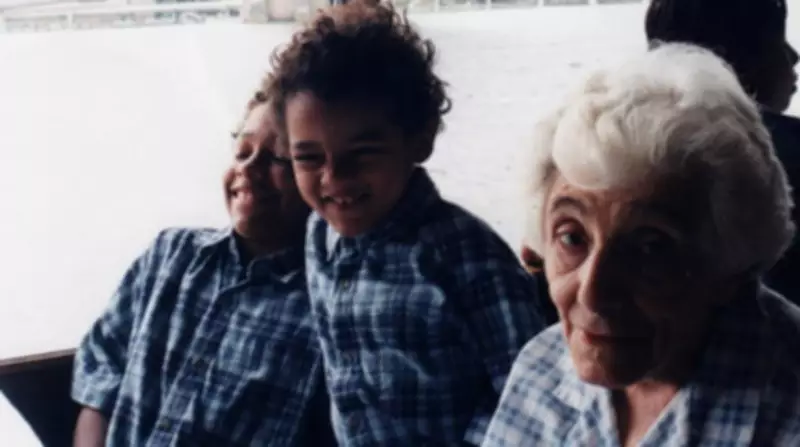
From that moment, Ciaran began pleading with his parents to change their surname back to Jovino. He printed official forms, researched the process, and even created matching shirts with "Jovino" printed on the backs for the entire family.
His enthusiasm met with somber indifference. While his parents shared his disdain for what the name represented, they saw little point in changing it after so many years. The harder Ciaran pushed, the sadder his father became, leading him to abandon the fight at age seventeen.

He then focused on a new goal: finding Cecil or his family and forcing acknowledgment of his family's existence. With only Cecil's name and military record as clues, he discovered multiple Cecil Shorts had served in World War II, complicating his search. Messages to potential relatives went unanswered, and eventually, Ciaran tucked his feelings away as his animosity receded into silent discomfort.
A New Generation, Renewed UrgencyThe birth of his nephew in 2021 brought the issue to a head again. "It felt completely unnecessary to have this brand-new, innocent baby be anchored down by a legacy of trauma and shame due to his last name," Ciaran explains.
Now twenty-three and equipped with what he describes as "a liberal arts post-grad moral superiority complex," he made more sophisticated arguments than in his youth, but once again encountered family resistance.
During college years that coincided with Donald Trump's first term, the MeToo movement, and George Floyd's murder, Ciaran became politically active, organizing protests and attending demonstrations for strangers. Yet within his own family, "it felt as though the ghost of a genuine villain was perpetually haunting us, and there was nothing I could do about it."
A Complex Cultural Heritage
The current Short family represents a rich cultural tapestry: Ciaran's father raised in a working-class Italian-American Brooklyn household during the 1950s; his mother born to Jamaican immigrants in the Bronx; Ciaran and his brother (mixed-race Upper West Siders who identify as Black); his brother's wife (a Chinese immigrant); and now his nephew, who is Chinese, Black, Italian, and whatever Cecil was.
"My family's complex cultural heritage has been completely flattened into the generic surname of a white man," Ciaran observes. Based on his research, Cecil was likely born in the South in the early 1920s.
While Ciaran knows nothing about Cecil's feelings on identity politics, he recognizes that his surname enduring through generations of racial amalgamation is hardly unique. "Through forced assimilation, slavery, prejudice faced by immigrants, and various other forms of colonization that have shaped our country, cultural erasure via altering or completely changing names is nothing new in America."
Reconciliation and Moving Forward
Now twenty-seven and engaged to be married, Ciaran faces the question of whether he wants his fiancée to share his last name. After years of struggle, he's reached a new understanding.
"I've come to realize that my biggest issue with our surname is what it conceals and, in turn, who it celebrates," he says. "Beneath every last name are hundreds of ancestors whose impact on a lineage gets a little bit dimmer and more obscured with every passing generation."
While he still feels deep-seated unease about carrying Cecil Short's name, Ciaran cannot escape being his descendant. "I've realized that to change my name would be to abridge my family's story. What feels far more resonant for me is to embrace and acknowledge the peaks and valleys in my lineage."
A New Perspective on LegacyRather than running from a shameful family secret, Ciaran now believes facing it head-on and chronicling it allows him to move forward and give new context to his name.
"I now believe that my surname doesn't represent shame but instead honors what my grandmother endured," he concludes. "By embracing her perseverance and maintaining a record of where my family has been and how we got to where we are now, I hope our story won't be forgotten, even when the names of my descendants inevitably change."
Ciaran Short is a multidisciplinary artist and writer born and raised in New York City. His work explores New York culture while tackling issues of race and masculinity. He co-founded All Street Gallery, an art collective with two Manhattan locations that exhibits work by emerging and underrepresented artists. He holds a master's degree in media studies from The New School.