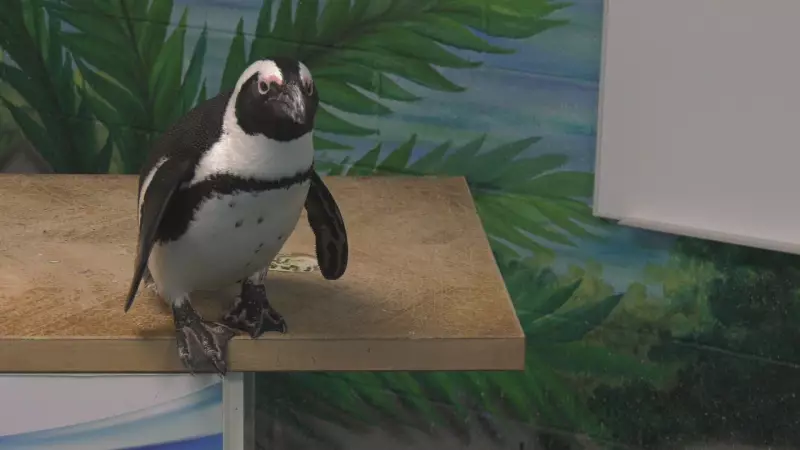
In the heart of a Canadian winter, a piece of unconventional advice often resurfaces: walk like a penguin to avoid slipping on ice. But is this quirky tip actually wise? We asked a professional for insights, inspired by a resident of West Edmonton Mall.
The Mall's Aquatic Ambassador
The prompt for this frosty inquiry is Millie, an African penguin who calls West Edmonton Mall home. On January 16, 2026, Millie went about her day, showcasing the natural, shuffling gait that penguins are famous for. This distinctive waddle, while charming, is a serious adaptation for stability on slippery surfaces in their natural habitat.
Decoding the Penguin Walk for Humans
So, should Edmontonians mimic Millie's movements during the city's infamous freeze? A marine animal trainer familiar with penguin biomechanics explains the science. The key, they note, is in the principles behind the waddle, not an exact imitation.

Penguins keep their centre of gravity low and over their feet, taking short, flat-footed steps. For humans, this translates to leaning slightly forward, bending the knees, and walking with feet pointed out slightly for a wider, more stable base. It’s about shifting your weight carefully with each step, not a side-to-side shuffle.
Safety First on Icy Pavement
While the core idea is sound, the trainer emphasizes that conscious movement is more critical than style. The "penguin advice" primarily serves as a memorable reminder to slow down, pay attention, and alter one's gait in hazardous conditions. Proper winter footwear with grip remains the most important factor in preventing falls.
So, the next time you encounter a slick sidewalk in Edmonton, think of Millie. Adopting a modified, mindful version of her waddle—keeping steps short and centred—can indeed be a wise strategy to navigate the ice safely, proving that sometimes, nature already has the best solutions.