Bill 21: A Contemporary Political Choice, Not Historical Inevitability
As Supreme Court hearings examine Quebec's controversial Bill 21 this week, a critical perspective challenges the prevailing narrative that the legislation represents the natural culmination of the province's historic Quiet Revolution. Rather than being an inevitable outcome of Quebec's secular evolution, Bill 21 emerges as a distinctly modern political response to contemporary anxieties about religious diversity and identity.
The Quiet Revolution Misinterpretation
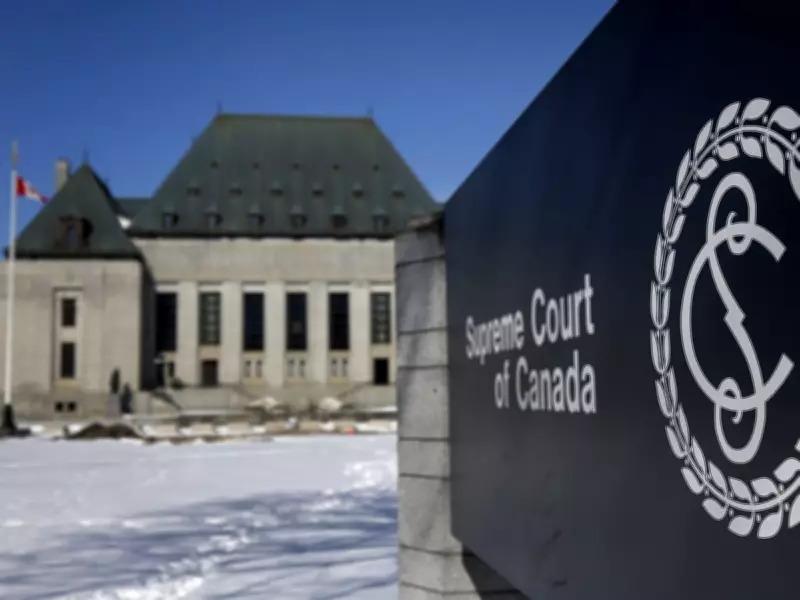
During recent Supreme Court proceedings, justices Malcolm Rowe and Richard Wagner suggested that Bill 21 must be understood through Quebec's "very distinct" path toward separating church and state. Justice Wagner specifically referenced the Quiet Revolution of the 1960s, while Justice Rowe drew comparisons to France's secular model.
This historical framing represents a significant misinterpretation, according to experts who argue that courts risk revising history to justify present-day policy decisions. The Quiet Revolution indeed marked a profound transformation in Quebec society, widely viewed as a "rattrapage" or catching up with North American norms regarding church-state separation. The Catholic Church's influence over public institutions diminished significantly during this period, with the state assuming greater control over education, healthcare, and social services.

Incomplete Secular Transition
However, claiming that this era established the ideological foundation for Bill 21 misunderstands both the nature of that transformation and Quebec's secular trajectory. If the Quiet Revolution had truly created a modern secular state, religious structures would have disappeared quickly from public institutions. This didn't happen. Quebec's confessional school system, divided along Catholic and Protestant lines, persisted until 1998—nearly four decades after the Quiet Revolution began.
This persistence is not merely a historical footnote but a decisive factor. For decades following the Quiet Revolution, Quebec maintained institutional arrangements based on Christian religious identities. The separation of church and state, as understood in contemporary terms, was neither fully articulated nor consistently applied during this period.
The Real Origins: Reasonable Accommodation Debates
Bill 21 does not emerge from this incomplete secular transition. Instead, it originates from much more recent and politically motivated developments—specifically the debates over "reasonable accommodation" that dominated Quebec discourse in the early 2000s.
These debates, driven largely by controversies surrounding religious minority accommodations, fundamentally shifted the focus of secularism discussions. The central question was no longer how to limit Catholic Church influence but how to respond to visible religious diversity, particularly among immigrant communities.
The Bouchard-Taylor Commission of 2007-2008 crystallized this shift, transforming isolated incidents into province-wide anxieties about identity, integration, and the limits of pluralism. This contemporary political context—not the Quiet Revolution—represents the true origin of Bill 21.
Misleading Comparisons and Evidentiary Gaps
Frequent comparisons to France's laïcité create additional distortions. French secularism emerged from a century-long struggle between a republican state and an entrenched Catholic Church. The 1905 law separating church and state focused primarily on dismantling clerical power, with religious symbol regulations developing later as secondary concerns.
Quebec's situation differs substantially. Restrictions on religious symbols do not represent the culmination of a long-standing secular doctrine but rather a contemporary response to selected expressions of religious pluralism—what some Quebec thought leaders describe as outcomes of problematic Canadian multiculturalism.

A significant problem with Bill 21 lies in its rarely examined assumption that religious symbols worn by public school teachers send harmful messages about societal values to students. To date, no persuasive empirical evidence demonstrates that hijabs, turbans, or kippahs worn by educators undermine state neutrality, influence student beliefs, or cause demonstrable harm.
Contemporary Political Choices and Judicial Responsibility
Bill 21 should therefore be understood for what it truly represents: not the fulfillment of the Quiet Revolution nor the expression of deeply rooted secular tradition, but a modern political response to anxieties about diversity. Framing it as historical inevitability doesn't enhance its legitimacy but rather obscures the deliberate choices being made in the present.
A genuine debate would acknowledge that Bill 21 concerns defining contemporary limits of diversity rather than completing a historical project. This discussion should be grounded in evidence rather than selective historical readings or untested assumptions about religious symbol impacts.
Precisely because Bill 21 reflects contemporary political choices rather than inevitable historical outcomes, its use of the notwithstanding clause to shield it from Charter challenges becomes particularly consequential. Quebec's recourse to this constitutional provision has yet to short-circuit legitimate debate, but it should not serve as a tool to shield governments from scrutiny or pre-empt judicial deliberation.
The clause must not provide a political exit strategy preventing Quebecers and all Canadians from hearing the highest court's perspective on such existential questions, regardless of their political difficulty. To do otherwise risks abdicating judicial responsibility on matters of fundamental rights and societal values.