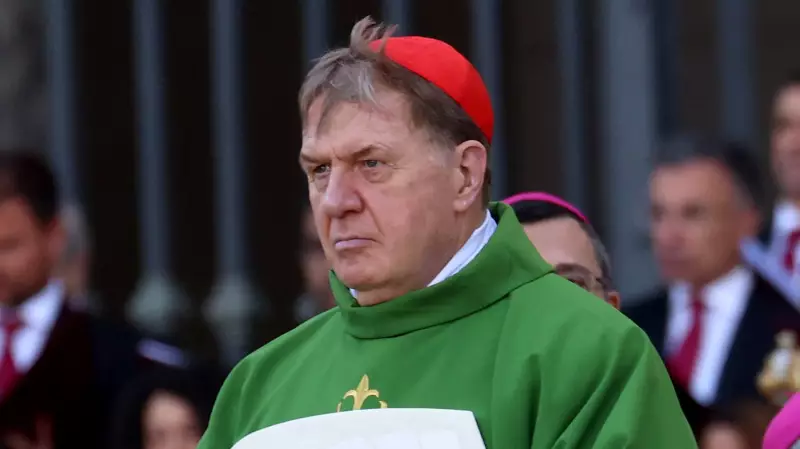
Prominent Catholic Cardinal Delivers Scathing Critique of Trump Immigration Policies
A senior Catholic leader and close ally to Pope Leo XIV has issued a forceful condemnation of President Donald Trump's immigration enforcement measures this week, calling on people of faith to vocally oppose what he described as unjust policies. Cardinal Joseph Tobin of Newark, New Jersey, joined several religious figures in an online prayer service organized by Faith in Action, responding to the January 24 shooting of Minneapolis resident Alex Pretti.
Strong Words Against Immigration Enforcement
In excerpts from his remarks during the virtual gathering, Cardinal Tobin made a direct appeal to Congress, urging lawmakers to "vote against renewing funding for such a lawless organization" in reference to U.S. Immigration and Customs Enforcement (ICE). The cardinal's comments represent one of the most pointed criticisms from a high-ranking Catholic official regarding the Trump administration's immigration approach.
"We mourn for a world, a country that allows 5-year-olds to be legally kidnapped and protesters to be slaughtered," Tobin stated during the service. "How will you say no to violence? Because as the great teacher Martin Luther King said, 'Hate cannot drive out hate. Only love can do that.'"

Literary References and Moral Questions
The cardinal enriched his message with cultural references, including Ignazio Silone's 1936 novel "Bread and Wine," written while the author lived in exile from Italy during Benito Mussolini's dictatorship. Tobin concluded his portion of the prayer service with a poignant question from the novel: "How will you help restore a culture of life in the midst of death?"
Standing Firm on Principles
In a subsequent interview with OSV News published Monday, Cardinal Tobin reaffirmed his position and expressed agreement with Minnesota Governor Tim Walz's characterization of the United States being at an "inflection point." The cardinal elaborated: "I would say that we do stand at an inflection point — or maybe I would just simply say a crossroad, where there are different alternatives."
Tobin further questioned government policies, particularly those highlighted by recent events in Minneapolis and elsewhere. "I think that some of the policies of the government, especially as showcased recently in Minneapolis — but not only in Minneapolis, in other places — certainly give question to what sort of oversight this particular branch of law enforcement is actually receiving," he told the outlet.
Broader Context of Catholic Criticism
The cardinal's remarks followed closely on his participation with two other U.S. cardinals in signing a statement critical of the Trump administration's foreign policy decisions, including the January 3 capture of Venezuelan President Nicolás Maduro. This pattern suggests growing institutional concern within certain Catholic leadership circles regarding multiple aspects of the administration's approach.
Media Response and Political Reaction
The day after the prayer service, John Grosso, digital editor of the National Catholic Reporter, published an opinion piece criticizing Vice President JD Vance's response to Pretti's death. Grosso's article, titled "Catholics must decide if they serve Donald Trump or the Gospel," accused Vance of choosing "the MAGA message of division and blame" over "the Gospel message of healing and human dignity."
Describing Vance's comments as "a moral stain on our collective witness of Catholicism," Grosso added: "Given its scandal, the vice president's cafeteria Catholicism must continue to be repudiated by people of faith." This media response highlights the deepening tensions within American Catholicism regarding political alignment and religious principles.
The cardinal's intervention represents a significant moment in the ongoing dialogue between religious institutions and political authority, particularly concerning immigration policy and enforcement practices. His call for congressional action and moral reflection from people of faith adds substantial weight to the debate surrounding immigration enforcement mechanisms and their human consequences.