In a landmark decision with significant political and legal ramifications, the Federal Court of Appeal has dismissed government appeals, upholding a ruling that former Prime Minister Justin Trudeau's use of the Emergencies Act to end the 2022 Freedom Convoy protests was unreasonable and unconstitutional.
A Judicial Rebuke of Government Overreach
The court's ruling, delivered on Friday, January 16, 2026, represents a final judicial confirmation of a lower court's finding. The Federal Court of Appeal agreed with Justice Richard Mosley's 2024 conclusion that the decision to invoke the powerful Emergencies Act did not bear the hallmarks of reasonableness—justification, transparency, and intelligibility. The court stated the legal constraints required for declaring a public order emergency were not satisfied.
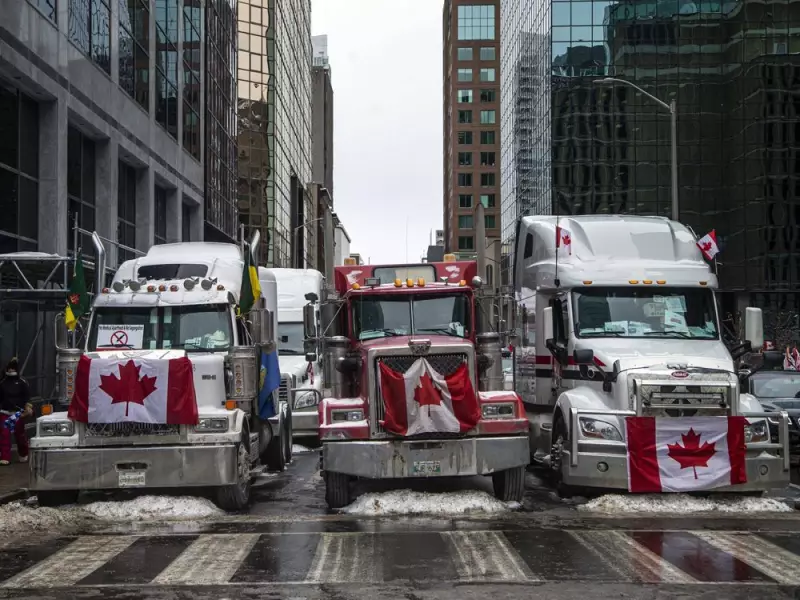
The ruling centers on the government's actions in February 2022, when it used the Act—the modern successor to the War Measures Act—to disperse the trucker-led protest in Ottawa against COVID-19 mandates. The measures included freezing protesters' and supporters' bank accounts and granting police extraordinary powers.

Key Figures React to the Verdict
The court's decision has been hailed as a vindication by convoy organizers and a stark indictment of the Trudeau government's approach. Organizer Tamara Lich, who spent 49 days in jail and remains under house arrest, called the ruling "bittersweet." While relieved by the win for "the rights and freedoms of all Canadians," she continues to face legal consequences and probation.
Opposition Leader Pierre Poilievre, who previously stated "Trudeau broke the highest law in the land," saw the appellate court's dismissal as confirmation of his critique. The ruling also casts a retrospective light on statements from key government figures. Then-Prime Minister Trudeau had labeled protesters as "extremists" and "often racists," while then-Deputy Prime Minister Chrystia Freeland warned that consequences for those with frozen accounts "will bite." Advisor Mark Carney had controversially called financial support for the convoy "sedition."
Lasting Consequences and Unanswered Questions
The appellate decision reinforces questions about the proportionality of the government's response to what the court has implicitly recognized as a lawful protest exercising a right to assemble. The protest, which featured bouncy castles and community gatherings, was met with police in riot gear, mounted units, and widespread arrests.
The ruling leaves unresolved the fate of individuals who suffered severe personal and financial consequences. These include people who lost jobs, had bank accounts frozen in winter, faced jail time, or were injured during the police clearance. The court's finding raises the issue of whether official apologies or restitution are now owed, though none have been forthcoming.
This legal endpoint underscores a deeply divisive chapter in Canadian history. It formally judges the government's emergency powers as an unreasonable overreach against its own citizens, setting a powerful precedent for the limits of state authority during times of civil dissent and solidifying the 2022 Freedom Convoy's complex legacy in the nation's constitutional narrative.