Mulcair Raises Concerns About New Language Commissioner's Qualifications
Tom Mulcair, former leader of the federal New Democratic Party, has voiced significant reservations about Canada's newly appointed official languages commissioner, Kelly Burke. In a detailed critique, Mulcair questions whether Burke possesses adequate understanding of the complex issues confronting Quebec's English-speaking minority community.
Background and Appointment
Kelly Burke, an experienced Ontario bureaucrat and lawyer, recently assumed the role of Canada's official languages commissioner. While her legal background may assist in administering the Official Languages Act, Mulcair suggests that her career as a civil servant might present challenges. "Career civil servants tend to have reflexes that are sometimes at odds with the need to push the government hard when rights are being denied or suppressed," Mulcair observes.
The former environment minister notes that the commissioner's position requires substantial autonomy and courage to effectively advocate for language rights. "The commissioner has a bully pulpit that requires strength, knowledge, skill and courage," Mulcair emphasizes, expressing concern that the Liberal government typically avoids appointing individuals who might "rock the boat" in such sensitive positions.

Specific Concerns About Quebec English Community
Mulcair's primary concern centers on Burke's apparent lack of familiarity with issues affecting Quebec's English-speaking population. "Unfortunately, for now, I see no evidence she has much of a grasp of the issues facing the English-speaking community of Quebec," he states bluntly.
The critique gains particular relevance in light of Quebec's Bill 96, which Mulcair argues makes it "virtually impossible to uphold the equality of English and French before the courts." He contrasts this with his own experience overseeing statute translation in Manitoba following a 1985 Supreme Court ruling, where equality between French and English in courts became constitutionally protected.
Mulcair finds it troubling that the federal government incorporated Bill 96 by reference into the new Official Languages Act, raising questions about whether the new commissioner will address this contentious issue.
Parliamentary Testimony Raises Red Flags
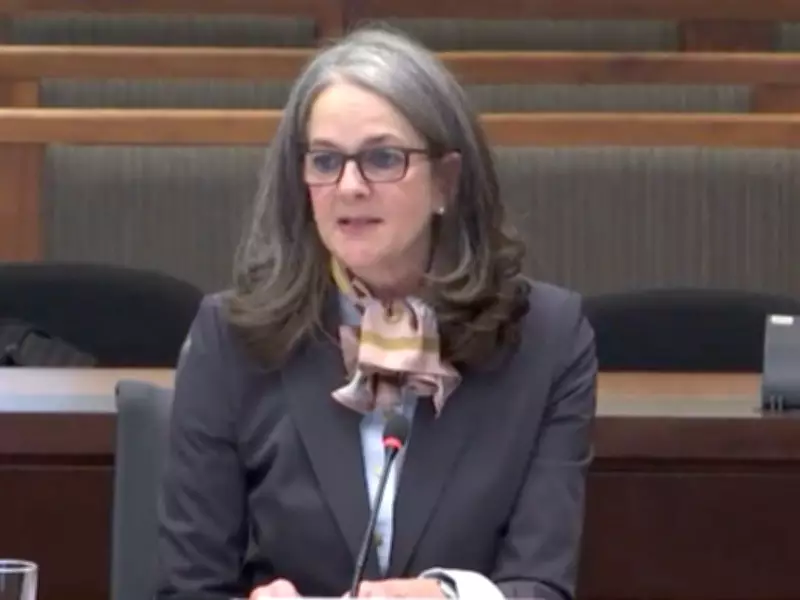
During recent House of Commons testimony, Burke's response to questions about defending constitutional rights for Quebec's English community raised additional concerns. When asked whether she would defend the constitutional right of Quebec anglophones to control and manage their own school boards, Burke reportedly hesitated, suggesting she needed "more time in the position" before addressing the matter.
Mulcair, who has extensive experience with language issues through his work with Alliance Quebec and the Conseil de la langue française, found this response particularly concerning. "I was shocked," he admits, noting that Burke "seemed unaware of what the CAQ has been up to" regarding language policies affecting English-speaking Quebecers.
Broader Context and Implications
The discussion occurs against a backdrop of ongoing language tensions in Quebec, including recent cases where businesses have faced official warnings for insufficient French content in social media posts. Mulcair references a Montreal bakery that received such a warning, illustrating the practical implications of language enforcement policies.
While acknowledging that Quebec's English community has developed strong institutions compared to francophone minorities elsewhere in Canada, Mulcair insists that "this is supposed to be about rights, not a race to the bottom." He expresses skepticism about whether Burke will become the articulate defender of all linguistic minorities that the position requires.
Mulcair concludes with tempered expectations, stating: "It would be nice to have a federal official languages commissioner who could put up an articulate defence of the language rights of all linguistic minorities in Canada, but I'm not holding my breath."