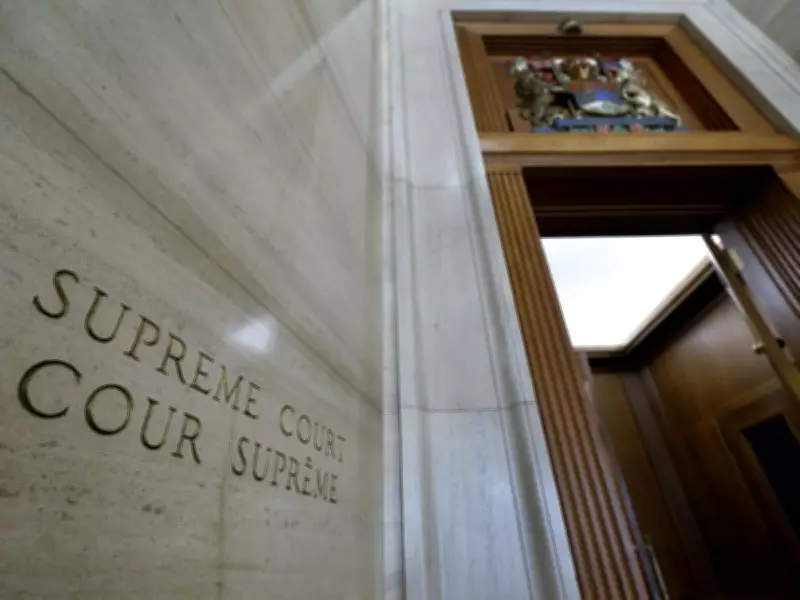
Quebec Political Leaders Signal Openness to Notwithstanding Clause After Supreme Court Ruling
The political landscape in Quebec is reacting swiftly to a landmark Supreme Court of Canada decision that struck down the province's policy excluding asylum seekers from its subsidized daycare network. In a ruling issued on Friday, March 6, 2026, the court found the policy discriminated against women, allowing people seeking refugee status to continue accessing the system and extending eligibility to those without work permits.
Cross-Partisan Consideration of Charter Override
Across Quebec's political spectrum, leaders are discussing the potential use of the notwithstanding clause to override the court's decision. The Parti Québécois, Coalition Avenir Québec, and even the Quebec Liberal Party have indicated varying degrees of openness to this constitutional mechanism, which allows provinces to temporarily bypass certain Charter rights.
Parti Québécois Leader Paul St-Pierre Plamondon, whose party leads in polls ahead of this year's general election, warned that the ruling could incentivize asylum seekers to come to Quebec specifically to obtain social services. "We can't tell billions of people on Earth that if you arrive claiming you have the right to asylum you automatically have the same rights as citizens," he stated in Montreal on Friday.

St-Pierre Plamondon argued Quebec should retain the option to limit access if the number of claimants exceeds service delivery capacity, though he confirmed children already enrolled would keep their places under a PQ government. He did not rule out using the notwithstanding clause.
Liberal Party's Cautious Stance
Charles Millard, new leader of the Quebec Liberal Party, took a more measured approach while leaving the door open to potential charter override. In a Facebook statement, Millard acknowledged the court found the policy violated charter rights but suggested a Liberal government might consider invoking the notwithstanding clause if significant effects on Quebec families emerged.
"The key here is to create places, better support the network and, above all, demand that Ottawa assume its fair share of the costs associated with receiving asylum seekers," Millard wrote, emphasizing the need for federal financial support.
Forceful Reactions from CAQ Leadership Contenders
The most vigorous responses came from members of the ruling Coalition Avenir Québec, which has faced declining popularity. Bernard Drainville, a CAQ cabinet minister and leadership contender, called the ruling a "slap in the face" to Quebec families waiting for subsidized daycare spots. He pledged to invoke the notwithstanding clause if elected leader to ensure Quebecers receive priority access.
Another CAQ leadership contender, Christine Fréchette, echoed this position, stating "I will use every means necessary to defend this principle" of prioritizing Quebec families for daycare spaces.
Supreme Court's Rationale and Historical Context
The court's decision stemmed from a seven-year legal challenge initiated by a mother of three from the Democratic Republic of Congo, who contested Quebec's Reduced Contribution Regulation that had excluded refugee claimants from subsidized daycare since 2018.
In its ruling, the court concluded the policy disproportionately harmed women, noting that "women are more likely to have primary child-care responsibilities, and access to affordable child care is closely tied to their ability to work." The exclusion of refugee claimants was found to "reinforce and worsen the disadvantage experienced by women refugee claimants."
Justice Andromache Karakatsanis rejected Quebec's argument that the rule was necessary to ensure subsidized daycare remained limited to people with sufficient connection to the province, finding no meaningful link between that goal and excluding refugee claimants.
Quebec's Unique Position and Program Challenges
Quebec's low-cost daycare system, established in the late 1990s, is internationally recognized as one of the world's most successful child-care programs, credited with enabling more mothers to enter the workforce. Even New York City's newly elected mayor, Zohran Mamdani, has cited Quebec's system as a model.

However, the program faces significant capacity challenges, with approximately 30,000 children on waiting lists for daycare spots according to provincial figures. About 6,000 of those spaces are currently used by children of refugee claimants, highlighting the tension between program accessibility and limited resources.
Solidaire's Defense and Historical Precedent
Only Québec solidaire offered a full defense of the court's decision. The party's immigration critic, Andrés Fontecilla, argued the ruling protects vulnerable families and prevents refugee claimants from descending into deeper precarity.
"We are talking here about the well-being of children and about preventing the isolation of women, who are primarily the ones who carry this responsibility," Fontecilla stated. He added that subsidized daycare centers help immigrant children learn French and integrate into society, calling attempts to target vulnerable populations "a cruel lack of humanity."
Historically, Quebec has invoked the notwithstanding clause more frequently than any other province. The Legault government used it pre-emptively in 2019 to shield its religious symbols law (Bill 21) and again in 2022 as part of its French-language legislation overhaul (Bill 96).
The current debate reflects ongoing tensions between provincial autonomy, charter rights, and resource allocation in Quebec's celebrated but strained daycare system, with political leaders positioning themselves ahead of this year's general election.