Supreme Court to Hear Landmark Case on Mail-In Voting Deadlines
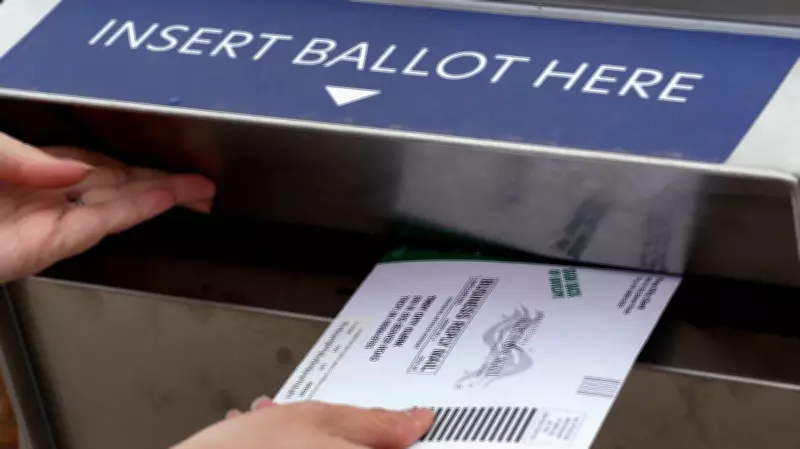
On Monday, the Supreme Court will hear arguments in a pivotal case that could dramatically alter the voting landscape for millions of Americans. The case, Watson v. Republican National Committee, centers on whether state officials have the authority to count electoral ballots that are postmarked by Election Day but received up to five days afterward.
Challenging Mississippi's Bipartisan Law
The lawsuit specifically targets a 2020 Mississippi state law, which was passed with bipartisan support and signed by Republican Governor Tate Reeves. This legislation permitted absentee voters to mail their ballots with a postmark as late as Election Day, allowing them to be counted if received within five days following the election.
However, the Mississippi Republican and Libertarian Parties filed suit, arguing that counting votes after Election Day violates federal law. They contend that Congress designated only a "singular day" for elections, encompassing both casting and counting ballots. In their petition, RNC political director James Blair claims the extended counting period harms the party financially, potentially forcing them to divert funds from traditional get-out-the-vote efforts to ballot-chase programs and poll-watching activities.

State Rights vs. Federal Interpretation
Mississippi defends its law, asserting its constitutional right to govern its own elections. Secretary of State Michael Watson warned in court filings that overturning the law could "invalidate laws in most States, spark nationwide litigation, and risk chaos in the next federal elections." He emphasized that neither political party disputes this assertion, highlighting the profound practical ramifications for election administrators who would need to receive and count all votes in a single day.
Lindsay Langholz, vice president of policy and programs at the American Constitution Society, noted that access to the ballot box was once a bipartisan issue. However, she observed that the debate over mail-in deadlines reflects how "voting rights in general have changed to become a very partisan issue."
Legal Battles and Historical Context
In 2024, a district judge upheld Mississippi's grace period, citing similar policies in other states and noting no impact on the electoral process. However, the RNC appealed to the Fifth Circuit, where a panel led by Trump-appointed Judge Andrew Oldham ruled that constitutional text, precedent, and historical practice indicate ballots must be both cast and received on Election Day.
In dissent, Circuit Judge James Graves pointed out that at least 28 states and the District of Columbia have ballot receipt laws that contradict the notion of a single election day. He referenced a 2004 Fifth Circuit ruling that expressed reluctance to impede citizens' right to vote through federal election day statutes.
The Influence of Political Messaging
Langholz attributes some of the shift in voting rights discourse to former President Donald Trump, who has promoted the "Big Lie" about widespread fraud in the 2020 election, particularly targeting mail-in voting. Despite Trump and many GOP allies using mail-in ballots themselves, they have baselessly claimed it leads to massive voter fraud.
This rhetoric has influenced Republican lawmakers to question the reliability of mail-in ballots, despite a lack of evidence. Langholz remarked, "It also seems to be hurting their own voters as well in a way I don't quite understand." Pew Research Center data from 2025 shows 58% of Americans support mail-in voting, down from 70% during the COVID-19 pandemic, with nearly half of Republicans in favor.
Potential Consequences of a Supreme Court Ruling
If the Supreme Court sides with the RNC, the reliability of mail ballots could be jeopardized for millions, including military personnel and overseas voters. A victory for Mississippi would maintain the tradition of mail-in voting, which dates back to the Civil War, allowing states to set their own rules.
Caren Short, director of legal and research at the League of Women Voters, emphasized that mail-in voting is crucial for various groups:

- People with disabilities
- Service members
- Individuals unable to get off work or find child care
- Elderly voters
- Those not present in their district on Election Day
She stated, "We're better as a country, as a nation, when more people can vote."
Support for Grace Periods and Legal Precedents
A brief from military-affiliated individuals, including retired defense officials and veterans, urged the Supreme Court to preserve grace periods, arguing that the Fifth Circuit's ruling would disrupt long-established laws aiding military and overseas voters. The League of Women Voters and 19 states have also filed briefs supporting Mississippi.
The Supreme Court has shown some sympathy for the RNC's claims. In a 2020 Wisconsin case, Justice Brett Kavanaugh argued that counting ballots after Election Day could "flip the results," though this ignores that not all ballots are counted on Election Day. More recently, in January, the court ruled 7-2 that Rep. Mike Bost could challenge state election procedures, indicating openness to such lawsuits.
Logistical Nightmares and Future Implications
Short expressed concern about a potential "logistical nightmare" if the RNC wins, as states might have to hastily adjust mail-in ballot rules before midterm elections. She warned that eliminating grace periods could effectively disenfranchise millions of voters, stating, "You can't say 'it's unconstitutional' and wait until next year. It's either constitutional or not."
The outcome of Watson v. RNC will not only determine the fate of Mississippi's law but could set a precedent affecting election procedures across the United States, with far-reaching implications for voter access and electoral integrity.