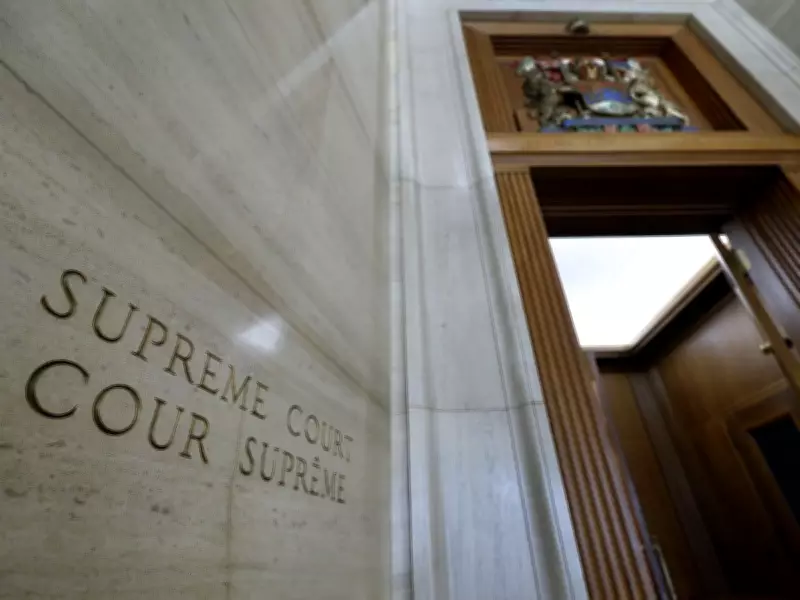
Supreme Court Faces Historic Challenge to Quebec's Secularism Law
As the Supreme Court of Canada began four days of historic hearings on Monday, opponents of Quebec's controversial secularism law argued the legislation represents an unjust attack on religious freedoms and could force the court to fundamentally reconsider the Charter's notwithstanding clause.
Broad Constitutional Implications at Stake
The case before Canada's highest court extends far beyond the specifics of Quebec's Bill 21, which prohibits certain public sector workers from wearing religious symbols at work. At its core, the proceedings will determine whether there should be constitutional limits to how provinces can invoke the notwithstanding clause—a foundational element of the Charter of Rights and Freedoms that convinced most provinces to sign the document in 1982.
"Bill 21 states that there exists something fundamentally wrong and harmful with religious practices, some of them in particular, from which we must protect the public," argued Olga Redko, lawyer representing Ichrak Nourel Hak and other Muslim teachers affected by the legislation.

Multiple Charter Rights Allegedly Violated
Six groups opposing the province's secularism law told the Supreme Court that Bill 21 violates numerous Charter rights, including religious freedoms, language protections, multiculturalism principles, and gender equality provisions. They contend that Quebec's invocation of the notwithstanding clause cannot legally suspend all the rights affected by the controversial legislation.
The law, formally known as Bill 21, specifically prohibits judges, police officers, teachers, and prison guards from wearing religious symbols while performing their duties and requires them to work with their faces uncovered. To pass this flagship legislation in 2019, Quebec Premier François Legault invoked section 33 of the Charter—the notwithstanding clause—which allows governments to override certain Charter rights for up to five years before requiring renewal.
Growing Use of Constitutional Provision
The notwithstanding clause has seen increasing use by Alberta, Quebec, and Ontario in recent years, raising questions about its original intent and appropriate limitations. In 2024, Quebec's Court of Appeal upheld virtually all aspects of the secularism law based on the province's invocation of this constitutional provision.
Quebec, Ontario, Alberta, and secularism advocacy groups maintain that the Charter's text establishes no limits on invoking the notwithstanding clause and that imposing restrictions would effectively amount to a constitutional amendment by judicial fiat.
Federal Government Advocates for Restraint
In written submissions, the federal government argued that the notwithstanding clause was never intended for repeated invocation to the point of indefinitely suspending Charter rights. While acknowledging the provision's legitimacy, Ottawa suggested the Supreme Court should establish limitations on its use, though it left the specifics of such limitations to judicial discretion.
The diverse array of participants in this landmark case includes the English-Montreal School Board, the World Sikh Organization, teacher associations, and a group representing Jewish jurists opposing the law. Defenders include the Quebec government and state secularism advocacy groups, who will present their arguments on Tuesday.
Originally conceived as a necessary balance between legislative authority and judicial power during constitutional negotiations, the notwithstanding clause now faces its most significant judicial examination in decades. The Supreme Court's eventual ruling could reshape how Canadian governments interact with fundamental rights protections for years to come.