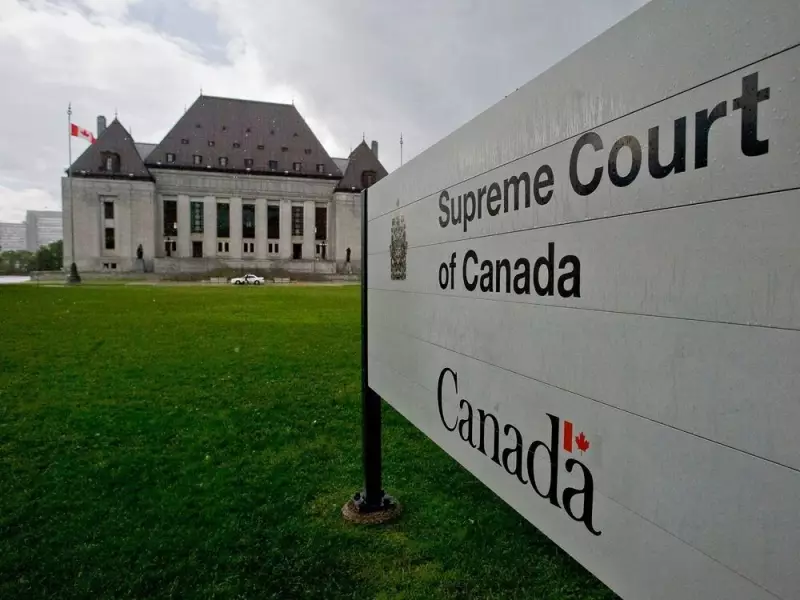
Supreme Court Decisions on Quebec Legislation Could Shape National Future
The Supreme Court of Canada finds itself at a critical juncture as it prepares to rule on two of Quebec's most contentious laws: Bill 21 concerning secularism and Bill 96 regarding language protection. These decisions carry implications that extend far beyond provincial boundaries, potentially influencing the trajectory of Quebec sovereignty movements and the very fabric of Canadian federalism.
Constitutional Interpretation and Political Consequences
From a legal perspective, the notwithstanding clause within the Canadian Charter of Rights and Freedoms presents a complex framework for provincial governments. A detailed examination of this constitutional provision reveals that nothing in its wording explicitly prevents provincial authorities from employing it pre-emptively. This interpretation suggests that both Bill 21 and Bill 96, despite their controversial nature, may withstand constitutional scrutiny due to what some legal experts describe as inherent flaws within the Charter itself.
However, the Supreme Court's deliberations extend beyond pure legal interpretation into the realm of political calculation. The court must consider how its rulings might be perceived within Quebec's political landscape, particularly with the Parti Québécois positioned as a likely contender in the next provincial election. Should the court strike down these laws, separatist forces could potentially frame such decisions as federal interference in Quebec's cultural and linguistic autonomy.

Potential Impact on Sovereignty Movements
The political ramifications of these Supreme Court decisions could prove substantial. Legal analysts suggest that unfavorable rulings from federally appointed judges might provide ammunition for sovereignty advocates seeking to advance their cause. Specifically, such outcomes could potentially shift public opinion toward supporting independence in a future referendum or, at minimum, strengthen demands for enhanced provincial powers that would fundamentally reshape Quebec's relationship with the federal government.
This delicate balance places extraordinary responsibility upon the nine Supreme Court justices, whose collective wisdom may determine whether separatist movements gain renewed momentum or whether national unity remains intact. The court's challenge lies in rendering decisions that respect constitutional principles while avoiding interpretations that could be weaponized by political actors seeking to advance sovereignty agendas.
Broader Implications for Canadian Federalism
Beyond the immediate question of Quebec's laws, these Supreme Court cases touch upon fundamental questions about the distribution of powers within Canadian federalism. The outcomes may establish important precedents regarding provincial autonomy, minority rights protections, and the appropriate boundaries between federal and provincial jurisdictions. Legal scholars across Canada are closely monitoring these developments, recognizing their potential to reshape constitutional interpretation for generations to come.
As the Supreme Court deliberates, Canadians nationwide await decisions that could significantly influence the country's political landscape. The intersection of legal interpretation, cultural protection, and national unity creates a complex tapestry that the justices must navigate with both legal precision and political awareness.