Defense Experts Call for Strategic Shift from Heavy Armor to Drone Technology
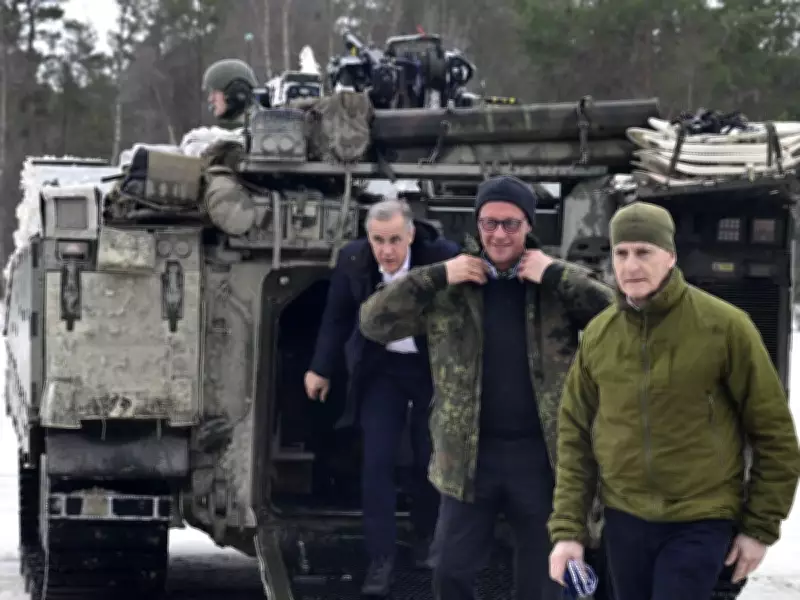
In a rapidly evolving global security landscape, defense think tanks are issuing a clear warning to Canada: the era of heavy armor dominance is ending, replaced by the ascendancy of drone warfare. The recent Arctic military discussions led by Prime Minister Mark Carney in Norway highlighted this critical juncture, where traditional symbols of military power like tanks and armored personnel carriers now face unprecedented vulnerabilities.
The Drone Revolution Transforming Modern Battlefields
The conflict between Russia and Ukraine has provided stark evidence of this transformation. A single $500 drone can neutralize a $10-million tank within minutes, creating a fundamental shift in military economics and tactics. Open-source battlefield data reveals that Russia has lost over 4,000 tanks in the Ukraine conflict, with drones and precision strikes accounting for significant portions of this destruction.
Ukraine has emerged as the primary laboratory for this military evolution, dramatically scaling its drone production capabilities. The country delivered approximately three million first-person view drones to its armed forces in 2025, representing a 150% increase from the previous year. By early 2026, Ukraine's defense industry reported capacity to manufacture more than eight million FPV drones annually across all categories.

These inexpensive unmanned systems perform multiple critical functions including reconnaissance missions, artillery guidance, vehicle strikes, and logistics disruption. Along front lines and increasingly in rear areas, drones now account for substantial portions of battlefield damage and casualties, forcing both sides to completely rethink traditional military approaches.
Beyond Manufacturing: The Human Element of Drone Warfare
The transformation extends beyond production facilities to encompass new approaches to military training and personnel development. Ukraine has pioneered programs that blur traditional boundaries between soldiers and digital operators through innovative training systems.
Drone-pilot simulators and remote training platforms allow volunteers to practice targeting and navigation from home before operating live-fire systems at the front lines. These initiatives form part of Ukraine's comprehensive "Army of Drones" program, which integrates procurement, training, and battlefield deployment into a cohesive strategy.
NATO's Artillery Dilemma and Canada's Strategic Opportunity
While artillery continues to play a significant role in modern conflicts, ammunition shortages across NATO countries have exposed vulnerabilities in Western defense supply chains. Security analysts from prominent think tanks warn that NATO nations are struggling to replenish artillery stockpiles depleted by support for Ukraine.
Canada faces similar challenges with limited domestic munitions production, maintaining only a few facilities capable of manufacturing NATO-standard 155-millimeter artillery shells. Poland confronts comparable pressures despite rapidly increasing defense spending, responding by expanding ammunition manufacturing and positioning itself as a crucial defense production hub on NATO's eastern flank.
Rather than attempting to rebuild every component of the defense supply chain domestically, Canada could pursue a pragmatic strategy centered on international cooperation. Poland's emergence as a European defense manufacturing center presents significant partnership opportunities, while Canada offers complementary strengths in aerospace engineering, artificial intelligence applications, advanced materials development, robotics innovation, and simulation technologies.
This collaborative approach would allow Canada to leverage existing production capabilities while contributing specialized expertise, creating a more resilient and technologically advanced defense ecosystem. As military strength increasingly depends on adaptation speed rather than traditional armor, such partnerships could prove crucial for maintaining Canada's security interests in an uncertain global environment.