Canadian Defense Experts Examine Hypothetical U.S. Invasion Scenarios
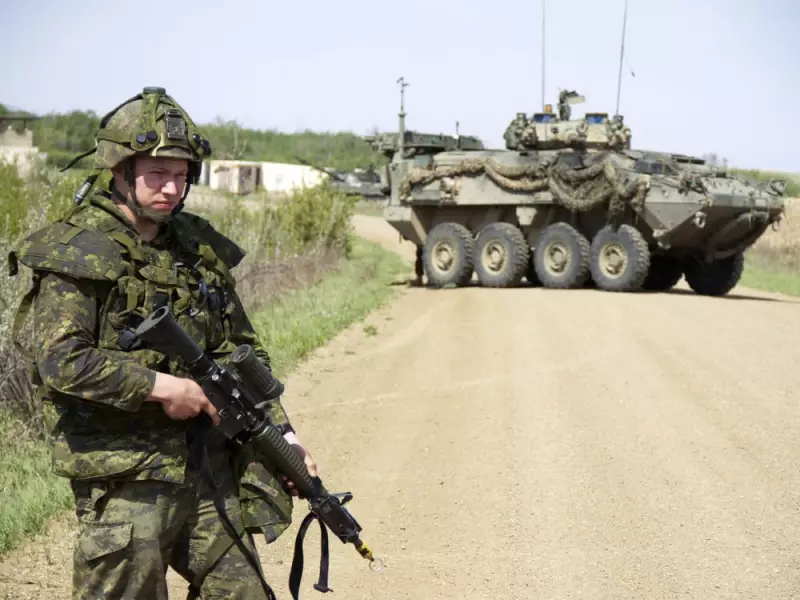
The Canadian Armed Forces would be "foolish" not to develop contingency plans for responding to a potential American invasion, according to leading experts on Canada-U.S. relations. While such an event remains "very, very, very unlikely" according to analysts, military strategists are reportedly examining insurgency-style tactics similar to those employed in Afghanistan as part of comprehensive defense planning.
Historical Context and Modern Concerns
Perhaps the most famous Canadian military plans regarding an American invasion originated in the 1920s, developed by Lieutenant Colonel James 'Buster' Sutherland Brown. This historical precedent continues to inform contemporary defense thinking as geopolitical dynamics evolve.
"They'd be foolish if they didn't plan, if only because Donald Trump has expressed concerns about Greenland and threats from Russia and China in the Arctic," explained Asa McKercher, the Hudson Chair in Canada-U.S. Relations at St. Francis Xavier University's Brian Mulroney Institute of Government. "Substitute Greenland for Baffin Island or Iqaluit or any other northern location, and you have potential for American military presence."

Military Planning and Operational Security
The Department of National Defence maintains its standard position regarding operational planning. "As is routine, the Department of National Defence and the Canadian Armed Forces conducts analysis on a variety of scenarios, both real and hypothetical, to ensure readiness," stated spokesperson Kened Sadiku. "As a matter of operational security, and as a critical element of our defence, we do not confirm such matters in public."
Canada's top military official, General Jennie Carignan, was unavailable for comment on Tuesday, being out of the country at the time of inquiries.
Geopolitical Tensions and Rhetorical Concerns
Following his 2024 election, former President Donald Trump repeatedly referred to Canada as "the 51st state," though his annexation rhetoric has diminished in recent months. However, Trump recently posted a doctored image on his social media platform showing Canada, Greenland, and Venezuela covered by the American flag, reigniting concerns about territorial ambitions.
"Donald Trump is treated in some ways like a toddler," McKercher observed. "He does silly things and people don't believe him until he follows through."
Insurgency Strategy and Domestic Implications
Experts suggest that a Canadian insurgency could prove effective because many Americans would oppose invading their northern neighbor. "This would create big problems potentially within the United States itself," McKercher noted, adding that resentful Canadians "could make life difficult for Americans" through unconventional warfare tactics.
"If it came to that, what would prevent Canadian military members or insurgents from going across the border at any of the many, many points along our border that aren't patrolled, and blowing up bombs in American cities?" McKercher questioned. "It's inconceivable, but a crazy thing that I think clearly is on the mind of very serious people."
Military Capability Assessment
According to The Globe and Mail, citing two unnamed senior government officials, the military framework being developed represents "a conceptual and theoretical framework, not a military plan," which would require actionable, step-by-step directives for operational execution.
McKercher realistically assessed that Canada's military would likely struggle to withstand a U.S. invasion for more than a day or two given the disparity in military capabilities. "We have a very small military; they have a very effective military," he explained. "They have the ability to destroy our command-and-control centres, target our logistics networks, they're aware of where all our bases are. There's not a lot of hiding that we could do, probably, from American cruise missiles and drones."

Expert Perspectives on Probability and Preparedness
Vincent Rigby, former national security and intelligence advisor to the prime minister from January 2020 until June 2021, characterized a potential U.S. invasion as falling into "the category of very low probability, but very high impact."
"Trump talks a lot of smack," Rigby commented. "It's part of his playbook. It's destabilizing." However, he emphasized that military planning for all scenarios represents standard procedure. "They're very good at it and given the current situation in the world, given the current state of Canada-U.S. relations, given the current state of U.S. foreign policy, I'm not completely surprised that they're looking at possible scenarios."
This comprehensive examination of hypothetical invasion scenarios reflects the Canadian military's commitment to preparedness while acknowledging the extreme improbability of such events actually occurring. The planning represents prudent strategic thinking rather than anticipation of imminent conflict, maintaining Canada's defense readiness amid evolving global political landscapes.