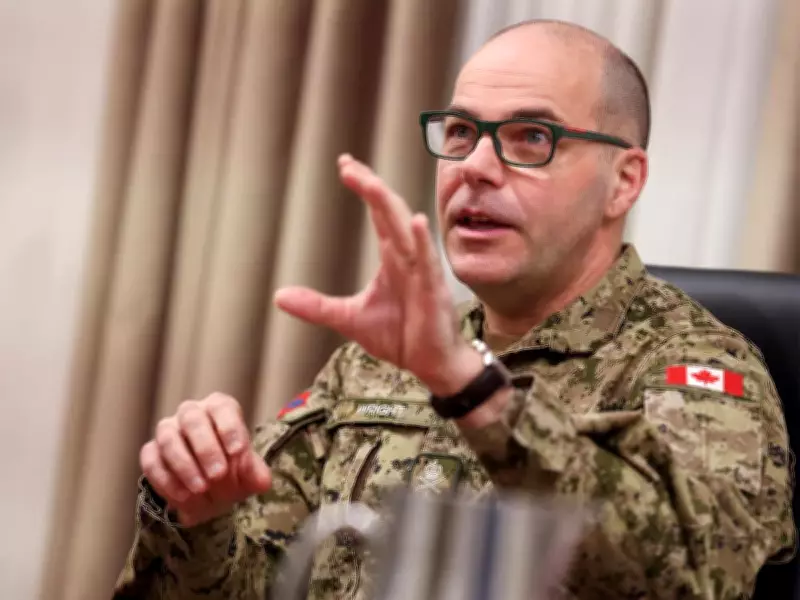
In an exclusive interview with Postmedia conducted in Calgary, Lieutenant-General Michael Wright, Commander of the Canadian Army, provided detailed insights into a comprehensive and far-reaching modernization initiative currently reshaping the nation's ground forces. This transformation is propelled by a rapidly changing global security environment and the emergence of new threats that demand a more agile and capable military structure.
A Critical Inflection Point for Canada's Military
"The army that we have is not the army that we need," declared Lt.-Gen. Wright, emphasizing the central theme behind the ongoing push for substantial reform. His statements coincide with the federal government's preparations to inject billions of dollars in additional funding into national defense, as part of long-term strategies to significantly boost military expenditures across the country.
The commander explained that recent geopolitical developments have created an urgent need for a stronger domestic military presence. He highlighted growing global instability and what Prime Minister Mark Carney has termed a "rupture in the rules-based international order," alongside critical lessons learned from contemporary conflicts such as the war in Ukraine.

Drivers of the Modernization Push
"What has changed is a recognition that Canada's position in the world has changed," Wright stated. He pointed out that the nation's prosperity has historically been underpinned by a stable international framework, making it imperative to adapt to new realities. "So, how do we position ourselves as a middle power, moving into the future?" he questioned, underscoring the strategic recalibration underway.
Since assuming his command role in the summer of 2024, Wright has overseen meticulous planning efforts to chart the army's future direction. In November of that year, a dedicated modernization team was established to spearhead these initiatives, recognizing that such profound changes could not be managed casually. "We realized we couldn't do this off the corner of our desk," he admitted.
Structural Reforms and Strategic Realignments
The Canadian Army formally articulated its case for change in a document titled Inflection Point 2025, published last September. Wright described this publication as a "call to action" for reform, outlining the necessity for a major restructuring and significant capital investments to address critical shortages in both personnel and equipment.
As part of this sweeping overhaul, the army has already begun reorganizing its operational framework. In September, it transitioned from four regionally focused divisions to three, now structured according to specific tasks and purposes. This shift aims to enhance efficiency and responsiveness, ensuring that the force is better prepared to defend Canadian sovereignty and contribute to international security efforts.
The army's "inflection point" will see it assume a much larger domestic role in safeguarding Canada, marked by these structural adjustments and targeted investments. Wright's comments reflect a broader commitment to ensuring that the Canadian Army remains robust and relevant in an era of unprecedented challenges and opportunities.