The commander of Colombia's Revolutionary Armed Forces of Colombia (FARC) has issued a stark call to action, urging various guerrilla factions across the nation to forge a unified front. The stated goal is to confront what the leader describes as U.S. interventionism in the region.
A Call to Arms Amid Regional Tensions
The appeal for solidarity was made public on January 09, 2026. It represents a significant rhetorical escalation from one of the country's most prominent insurgent groups. The FARC, a Marxist-Leninist revolutionary organization, has a long and violent history in Colombia, though it signed a peace deal with the government in 2016. This new statement suggests a potential hardening of positions among dissident factions that rejected the peace process.
The leader's message explicitly frames the struggle as a defensive one against external influence. By highlighting U.S. interventionism as the primary threat, the appeal seeks to create a common cause among disparate armed groups. This tactic is often used to legitimize insurgent activities and rally domestic and international sympathy.

Historical Context and Lasting Conflict
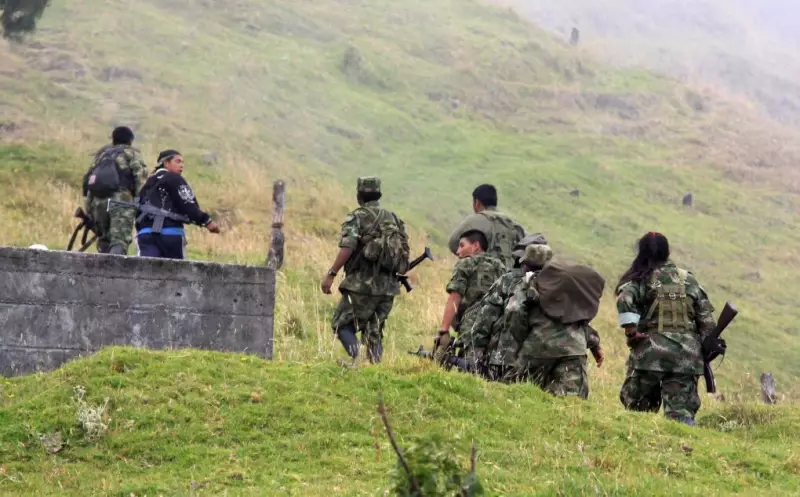
The FARC's history is marked by decades of conflict with the Colombian state. The group, founded in 1964, was involved in a complex war involving drug trafficking, kidnapping, and attacks on infrastructure. The referenced image from July 12, 2012, in Jambalo, southern Colombia, depicts FARC guerrillas on the move after a clash with troops—a snapshot of the intense fighting that characterized the period before the peace accord.
While the 2016 agreement led to the disarmament of the majority of FARC combatants and their transformation into a political party, splinter groups have continued to operate. These factions, often involved in illicit economies like cocaine production, remain a serious security challenge. The recent call for unity indicates an effort to consolidate these remnants into a more potent political and military force.
Implications for Colombia and Beyond
This development has immediate implications for Colombia's internal security. A unified guerrilla bloc could complicate government efforts to maintain stability and implement the peace agreement fully. It may also lead to increased violence in rural areas where these groups vie for territorial control.
Regionally, the rhetoric taps into longstanding Latin American sensitivities regarding U.S. foreign policy. It aligns the FARC's cause with broader anti-interventionist sentiments, potentially seeking to draw diplomatic or material support from other actors sympathetic to this view. The call comes at a time of shifting geopolitical dynamics in the Western Hemisphere, making it a pointed message to multiple audiences.
For the United States and its allies, including Canada, which often supports stabilization efforts in Colombia, this represents a destabilizing pronouncement. It underscores the fragile nature of the Colombian peace process and the persistent threat posed by non-state armed groups. Observers will be watching closely to see if this verbal appeal translates into tangible alliances and increased operational coordination among Colombia's remaining insurgent factions.