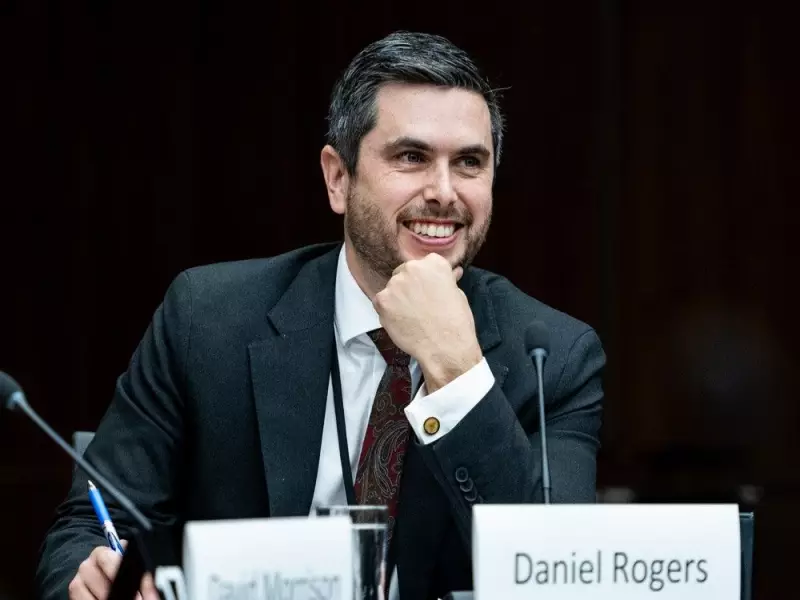
Canada's top spy chief has issued a stark warning about a dangerous and growing trend: the violent radicalization of the nation's youth. In his first major public address, Canadian Security Intelligence Service (CSIS) Director Daniel Rogers expressed deep concern that nearly one in ten of the agency's terrorism investigations now involves at least one minor.
A Disturbing New Front in National Security
Daniel Rogers delivered his sobering assessment to an audience of government officials, law enforcement, academics, and reporters. He detailed how children and teenagers are becoming increasingly susceptible to violent extremist ideologies spread online. The driving forces behind this radicalization are diverse, including anti-Semitism, xenophobia, misogyny, 'extreme interpretations' of religion, and accelerationism—a desire to hasten society's collapse.
Rogers emphasized that the digital landscape allows these harmful ideologies to spread faster and more easily than ever before. "Worryingly, nearly one in ten terrorism investigations at CSIS now includes at least one subject of investigation under the age of 18," Rogers stated, highlighting the scale of the problem.

From Online Rhetoric to Real-World Threats
The speech was not just about abstract concerns; Rogers provided concrete examples of how this online radicalization is translating into tangible threats. He revealed that this year alone, two minors were arrested on suspicion of planning serious violent acts.
The first case involved a minor in Montreal who was allegedly planning an attack on behalf of Daesh (ISIS). The second was a 15-year-old in Edmonton whom police suspected was preparing to commit attacks for an online transnational violent community.
Rogers also disclosed that since 2023, CSIS intelligence contributed to the arrests of two 15-year-olds in Ottawa who were allegedly planning a mass casualty attack against the Jewish community. The agency also provided information that led to the arrest of a man planning a Daesh-inspired attack on the Jewish community in New York.
A Pattern of Violence and Disruption
The CSIS Director provided a grim tally of the consequences of violent extremism in Canada. Over the past 11 years, he noted, there have been 20 violent extremist attacks on Canadian soil, resulting in 29 deaths and 60 injuries.
On a more hopeful note, Rogers highlighted CSIS's role in preventing further bloodshed. In just over three years, the agency has helped disrupt 24 "violent extremist actions" that led to arrests on terrorism peace bond charges. A significant number of these involved individuals suspected of planning attacks either for Daesh or against the Jewish community, or a combination of both.
"Fortunately, only a small number of youth or adults with extreme views resort to violence. But when they do, the consequences are devastating," Rogers warned, underscoring the critical importance of early intervention and prevention.
Beyond the threat of homegrown radicalization, Rogers also pointed to a "particularly alarming" increase in cases involving plots by Iranian intelligence to repress—and in some instances, murder—critics and dissidents of the regime who are living in Canada. The spy agency is dedicating more resources to counter this specific foreign threat.