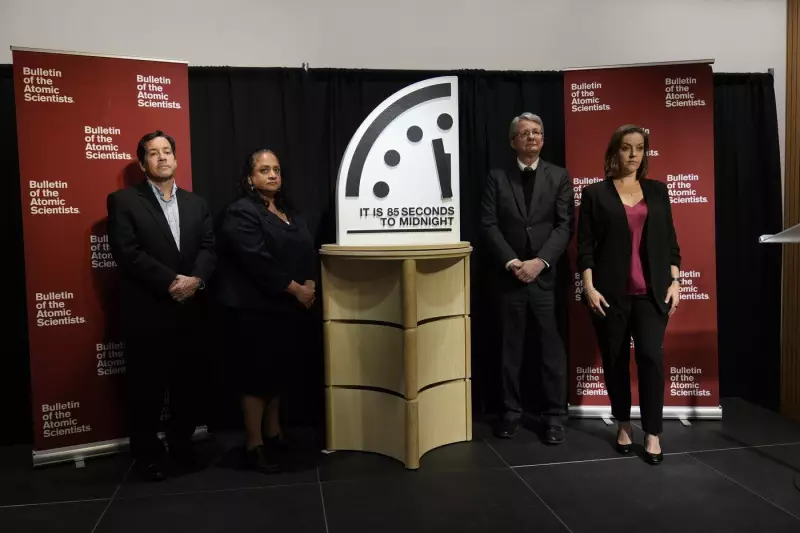
Doomsday Clock Advances to 85 Seconds to Midnight, Signaling Unprecedented Global Peril
The Bulletin of the Atomic Scientists has set the symbolic Doomsday Clock to 85 seconds to midnight, marking the closest it has ever been to global catastrophe in its history. This adjustment, announced during a news conference at the Carnegie Endowment for International Peace in Washington on January 23, 2026, reflects heightened concerns over nuclear proliferation, climate change, and emerging disruptive technologies.
Escalating Threats Drive Historic Clock Movement
Scientists and experts from the Bulletin, including members such as Jon B. Wolfsthal, Asha M. George, Steve Fetter, and Alexandra Bell, cited multiple factors for moving the clock forward. The ongoing risks of nuclear conflict, exacerbated by geopolitical tensions and arms races, remain a primary driver. Additionally, the accelerating impacts of climate change, including extreme weather events and environmental degradation, contribute significantly to the global threat assessment.
Emerging technologies, such as artificial intelligence and biotechnology, also pose new challenges to international stability and security. The Bulletin emphasized that these combined threats create a volatile and dangerous landscape, necessitating urgent action from world leaders and policymakers.

Historical Context and Global Implications
The Doomsday Clock was first established in 1947 to symbolize humanity's proximity to self-destruction, primarily from nuclear weapons. Over the decades, it has been adjusted in response to various global events, including the Cold War, climate crises, and technological advancements. The current setting of 85 seconds to midnight surpasses previous records, such as 100 seconds to midnight in recent years, underscoring the severity of contemporary risks.
This announcement comes amid a backdrop of other global news, including environmental assessments, political developments, and social issues, but the Bulletin's focus remains on the overarching dangers that threaten civilization. The scientists called for enhanced diplomatic efforts, stronger international cooperation, and proactive measures to mitigate these threats before it is too late.
Call to Action for a Safer Future
In their statement, the Bulletin of the Atomic Scientists urged governments, organizations, and individuals to take immediate steps to address the root causes of these global perils. Recommendations include renewing arms control agreements, accelerating climate action, and establishing ethical guidelines for emerging technologies. The clock serves as a stark reminder that time is running out, and collective action is essential to turn back the hands of time toward a more secure and sustainable world.