Carney's Davos Warning: A World Order in Crisis
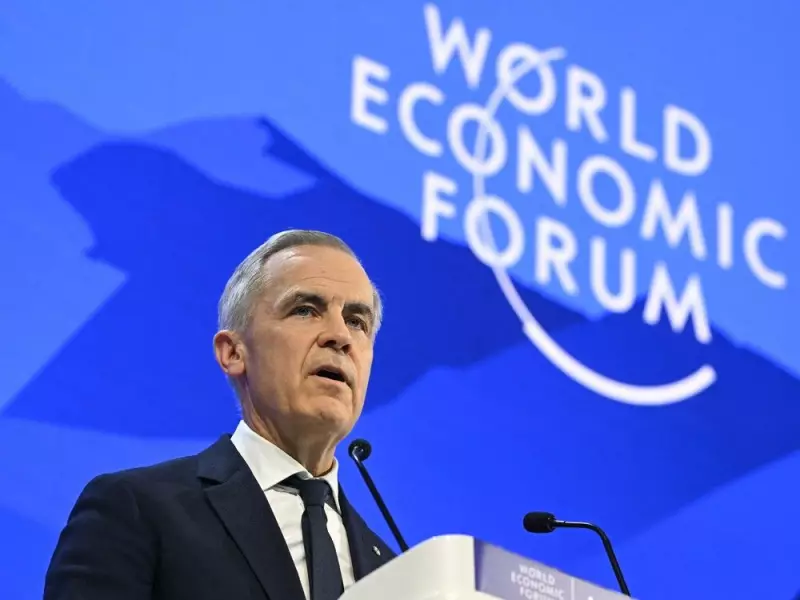
In a sobering address at the World Economic Forum in Davos on Tuesday, January 20, 2026, Canadian Prime Minister Mark Carney articulated a grim reality that has been quietly unsettling citizens for months. Without directly naming specific actors, Carney described the "breaking of the world order; the end of a pleasant fiction and the beginning of a brutal reality where the geopolitics of the great powers is not subject to any constraint."
Trump's Escalating Rhetoric and Direct Threats
Just hours after Carney's speech, U.S. President Donald Trump held a press conference marking one year since his return to the White House. In remarks that sent shockwaves through diplomatic circles, Trump vowed there is "no going back" on his claim over Greenland. When pressed about how far he would go to seize the semi-autonomous Danish territory, he ominously growled: "You'll find out."
The following day in Davos, Trump demanded immediate negotiations for the U.S. to acquire Greenland, though he tempered his words slightly by stating, "I don't have to use force." More chilling for Canadians was his direct message to Carney: "Canada lives because of the United States. Remember that, Mark, next time you make your statements."

The Canadian Reality: Daily Life Amid Global Upheaval
For most Canadians, the contrast between ordinary daily routines and these extraordinary global developments creates a surreal disconnect. While people focus on work, family responsibilities, and household chores, the international landscape undergoes tectonic shifts in the rules-based order that has prevailed since World War II.
The early weeks of 2026 have seen unprecedented actions, including the United States arresting Venezuelan dictator Nicolás Maduro and taking control of that oil-rich nation. Trump has intensified his Greenland demands while threatening punishing tariffs on European allies who oppose him.
Canada's Vulnerable Position and Military Preparations
Lest Canadians believe these developments are distant concerns, Trump has repeatedly referenced his threat to make Canada the 51st state. Before departing for Davos, he posted a doctored social media image showing Venezuela, Greenland, and Canada stamped with the U.S. flag. According to aides, he has been complaining about strategic vulnerabilities in the Far North.
The Globe and Mail revealed Tuesday that the Canadian military is conducting run-throughs on how a hypothetical U.S. invasion might unfold—the first time such preparations have been seriously considered in over a century. The modelling suggests Canada would have to rely on guerrilla tactics like drones, roadside bombs, and ambushes to pressure invading U.S. forces, with the Canadian Armed Forces unlikely to hold ground more than a week.
The Carney Doctrine: Middle Powers Must Unite
In response to these threats, Carney has articulated what is being called the Carney doctrine. "Middle powers must act together because if you are not at the table, you are on the menu," he declared in Davos. "This is not naive multilateralism. Nor is it relying on diminished institutions. It is building the coalitions that work, issue by issue, with partners who share enough common ground to act together."
Canada is already pivoting under Carney's leadership, forging new trade ties with China, India, Qatar, and others. The prime minister has increased defence spending, joined Europe on military procurement, and reiterated Canada's "unwavering" commitment to NATO's Article 5 collective defence principle. He is contemplating sending Canadian soldiers to Greenland to reinforce its defences with European allies.
Confronting a New Reality
The anxiety generated by these developments is palpable, yet Canadians cannot afford complacency. As Carney noted, the rules-based international order on which Canada has relied for 80 years is "not coming back" anytime soon. While war may not be imminent or likely, the possibility has grown substantially, and occupation by a "power-drunk neighbour" is no longer inconceivable.

Canadians face a sobering reality: they must prepare for the worst while hoping for the best, continuing with daily life even as the dependable international framework of the past eight decades has been shattered. The time has come to confront this brutal new geopolitical landscape with clear-eyed determination.