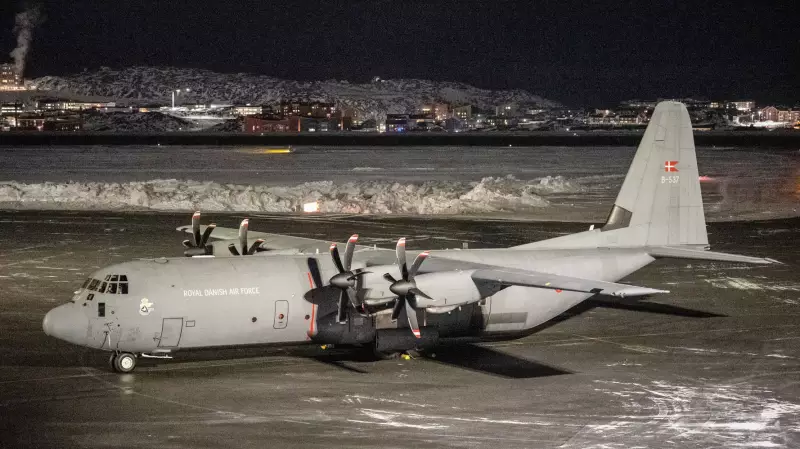
Troops from several European nations began arriving in Greenland this week, in a direct show of support for Denmark amid ongoing diplomatic tensions with the United States over the future of the vast Arctic island. The military movements coincide with high-level talks in Washington that concluded with officials acknowledging a "fundamental disagreement" persists regarding Greenland's sovereignty.
Show of Force and Stalled Diplomacy
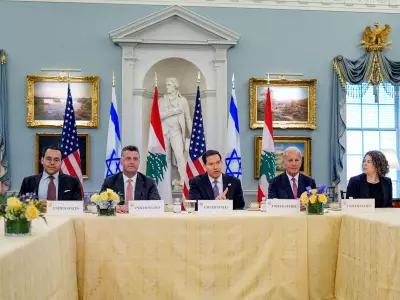
Denmark announced plans to bolster its military presence in Greenland on Wednesday, just as foreign ministers from Denmark and Greenland prepared for a critical meeting at the White House. The talks involved U.S. Vice President JD Vance and Secretary of State Marco Rubio. Following the discussions, Danish Foreign Minister Lars Løkke Rasmussen, standing alongside Greenlandic counterpart Vivian Motzfeldt, stated that while dialogue would continue, a clear divide remains with President Donald Trump, who has repeatedly expressed a desire for the U.S. to acquire Greenland.
In response, European NATO partners moved swiftly to demonstrate unity. France confirmed that its first military personnel, about 15 soldiers from a mountain infantry unit, had already arrived in Nuuk for an exercise, with more to follow. Germany announced it would deploy a 13-person reconnaissance team on Thursday. The United Kingdom, Norway, and Sweden also pledged to send symbolic numbers of troops. Danish Defense Minister Troels Lund Poulsen clarified the intent is to establish a more permanent, rotating military presence involving multiple allies.

Greenland's Firm Stance and Local Anxiety
The political maneuvering has stirred complex feelings among Greenlanders. While there is anxiety about U.S. intentions, there is also relief that European support is becoming tangible and that diplomatic channels remain open. Greenland's Prime Minister, Jens-Frederik Nielsen, was unequivocal in a statement on Thursday. "Greenland is not for sale," he declared. "Greenland does not want to be owned by the United States. Greenland does not want to be governed from the United States. Greenland does not want to be part of the United States."
Residents in the capital, Nuuk, viewed the increased military presence from Denmark and other European nations as a form of protection. Maya Martinsen, 21, told The Associated Press it was comforting to see Nordic reinforcements, suggesting the underlying dispute was less about security and more about the island's untapped oil and mineral resources. Greenlandic MP Aki-Matilda Høegh-Dam emphasized that her people feel at a pivotal point in global affairs, but requested military activities not disrupt daily life near schools and kindergartens.
Path Forward and International Reactions
Despite the stalemate, a diplomatic pathway was established. Rasmussen announced the creation of a U.S.-Denmark working group tasked with addressing American security concerns while respecting Denmark's sovereignty over Greenland. Danish officials cautiously welcomed this as a step forward, though Defense Minister Poulsen warned it did not mean "the danger has passed."
The situation has drawn sharp criticism from Russia. The Russian embassy in Brussels condemned the Western military plans as "bellicose" actions based on "phantom threats," accusing NATO of pursuing an anti-Russian and anti-Chinese agenda in the Arctic, a region Moscow insists should remain a zone of peaceful cooperation.
For now, the people of Greenland and Denmark are watching closely. As Copenhagen resident Line McGee, 38, noted, seeing diplomatic progress is positive, but the underlying threat from U.S. ambitions has not vanished. The coming weeks of dialogue, set against the backdrop of a growing allied military footprint, will be crucial in determining the Arctic island's future.