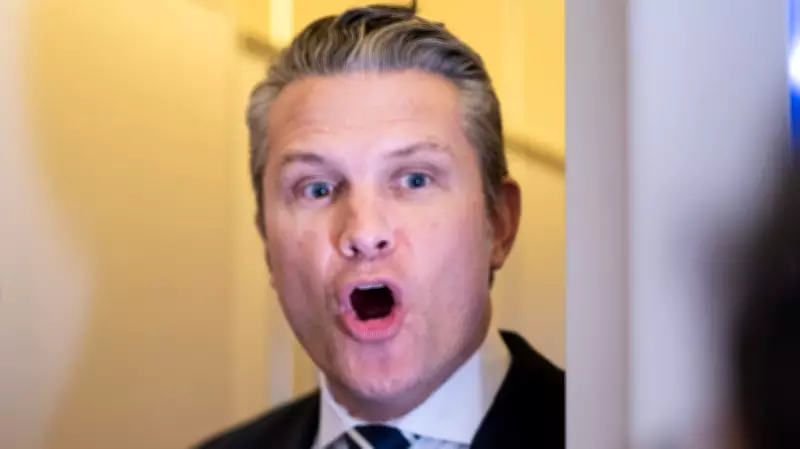
Defense Secretary Pete Hegseth ignited a firestorm of criticism this weekend with his latest aggressive statements regarding the Iran conflict, drawing widespread condemnation on social media platforms. During an appearance on the Sunday broadcast of "60 Minutes," Hegseth was questioned about whether U.S. troops face heightened risks following reports that Russia provided intelligence assistance to Iran, potentially targeting American forces.
Hegseth's Controversial Remarks
In response to the inquiry, Hegseth dismissed concerns about increased danger to American troops. "No one's putting us in danger," he asserted. "We're putting the other guys in danger. That's our job. So we're not concerned about that." He then escalated his rhetoric by adding, "The only ones that need to be worried right now are Iranians that think they're going to live." This statement quickly became the focal point of the ensuing backlash, with many interpreting it as a broad and indiscriminate threat against the Iranian population.
Social Media Erupts in Criticism
The reaction on social media was swift and severe. Critics lambasted Hegseth, describing his comments as "sickening," "grotesque," and indicative of a lack of moral compass. Adam Schwarz, a prominent commentator, posted on X, "A grotesquely indiscriminate threat against the entire Iranian population," accompanying a clip of the interview. Other users echoed this sentiment, with Prof Francois Balloux noting the rapid shift in tone from earlier discussions about liberation to what he called a "dark" turn.

Hemant Mehta added, "Take that, Iranian kids. He's coming after your schools next," while Janice Blake questioned, "What a heartless thing to say. Does this man have any moral compass whatsoever?" The criticism extended to accusations of genocidal language, with Jake Scott, MD, stating, "That's not a military objective. That's genocidal language - a direct threat to kill indiscriminately. Secretary Hegseth is unhinged and needs to be stopped."
Analysis of Propaganda and Public Messaging
MS NOW's Chris Hayes offered a nuanced perspective, arguing from a propaganda standpoint. "Purely in propaganda terms it seems to me, admittedly just an amateur observer when it comes to war fighting, that it may be useful to send the message to the 91+ million Iranian civilians that we are not trying to kill them," Hayes remarked. This highlights the broader implications of Hegseth's rhetoric on public perception and international relations.
Further criticism came from Diana Rivera, who accused Hegseth of "looking forward to leveling Iran the way Israel leveled Gaza. It's sickening, and a betrayal of American values." The Decoding Fox News account added a political dimension, tweeting, "When a religious extremist runs the Pentagon," while KP summarized the sentiment with, "This is some really dark shit."
Context and Implications
The backlash underscores ongoing tensions in U.S. foreign policy and the volatile nature of rhetoric surrounding the Iran conflict. Hegseth, often self-described as a "war secretary," has a history of using inflammatory language, but this latest incident has amplified concerns about the potential consequences of such statements. Critics argue that his remarks could escalate hostilities and undermine diplomatic efforts, while supporters may view them as a strong stance against adversarial nations.
As the debate continues, the incident raises questions about the role of military leaders in shaping public discourse and the ethical boundaries of wartime rhetoric. The widespread condemnation suggests a growing unease with what many perceive as reckless and dehumanizing language in international affairs.