Houthi Rebels Escalate Middle East Conflict with Missile Launch Toward Israel
In a significant escalation of the ongoing Middle East war, Iranian-backed Houthi rebels claimed responsibility for a missile launch targeting Israel early Saturday. This marks the first direct involvement of the Houthi group since the conflict erupted a month ago. The Israeli military confirmed intercepting the projectile, but the attack underscores the widening scope of hostilities that have already disrupted global air travel, oil exports, and fuel prices.
Expanding Warfronts and Economic Fallout
The war began after the United States and Israel initiated attacks on Iran, prompting retaliatory strikes from Tehran against Israel and neighboring Gulf Arab states. Iran's control over the Strait of Hormuz, a critical waterway for global oil shipments, has exacerbated economic turmoil worldwide. On Friday, Israel intensified its campaign by striking Iran's nuclear facilities, including the Shahid Khondab Heavy Water Complex in Arak and the Ardakan yellowcake production plant in Yazd Province. Iran vowed retaliation and subsequently attacked a base in Saudi Arabia, wounding over a dozen U.S. service members and damaging aircraft.
Before Saturday's Houthi attack, there appeared to be a diplomatic breakthrough as Iran agreed to allow humanitarian aid and agricultural shipments through the Strait of Hormuz, following a United Nations request. This move aimed to alleviate threats to global food security, given the strait's role in handling a fifth of the world's oil and nearly a third of fertilizer trade. However, Israeli airstrikes continued into Saturday, with Associated Press footage showing smoke rising from northeastern Tehran and missiles fired toward Israel, causing loud booms in Jerusalem.

Houthi Involvement and Regional Implications
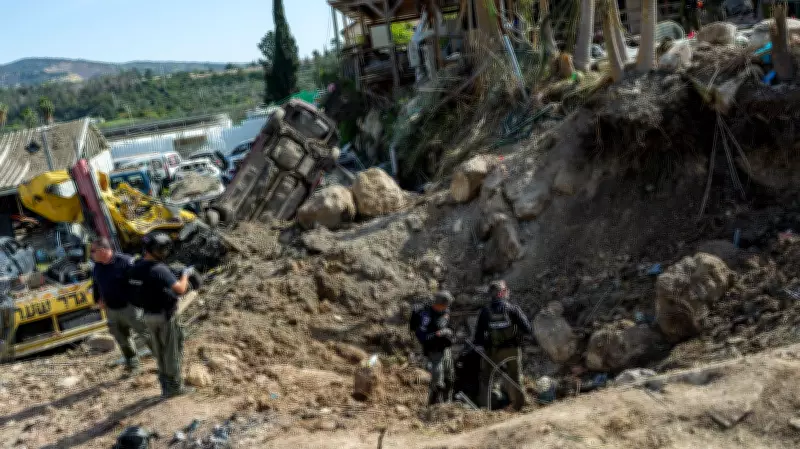
Houthi Brigadier General Yahya Saree announced on the rebels' Al-Masirah satellite television station that they launched ballistic missiles at "sensitive Israeli military sites" in southern Israel. This attack followed a vague statement from Saree on Friday signaling the group's entry into the war. Sirens sounded in Beer Sheba and near Israel's main nuclear research center as Iran and Hezbollah also fired on Israel overnight, with explosions reported in Tel Aviv at 11 impact sites.
The Houthis' involvement raises concerns about potential attacks on commercial shipping in the Red Sea corridor, similar to their actions during the Israel-Hamas war. Before the conflict, about $1 trillion worth of goods passed through the Red Sea annually, with 10% of global maritime trade, including 40% of container ship traffic, relying on the Suez Canal. Any disruptions could severely impact oil, gas, and goods transport to the Mediterranean Sea. Historically, Houthi rebels have attacked over 100 merchant vessels with missiles and drones between November 2023 and January 2025, sinking two vessels.
This development complicates U.S. military strategy, particularly the deployment of the USS Gerald R. Ford aircraft carrier, which arrived in Split, Croatia, on Saturday after repairs in Crete. Sending the carrier to the Red Sea could expose it to attacks like those experienced by the USS Dwight D. Eisenhower in 2024 and the USS Harry S. Truman in 2025. The Houthis, who have held Yemen's capital, Sanaa, since 2014, had previously stayed out of the conflict due to a ceasefire with Saudi Arabia, but their entry now adds a new layer of complexity.
Diplomatic Efforts and Casualty Reports
Amid the violence, diplomatic initiatives are underway. Pakistan announced that Saudi Arabia, Turkey, and Egypt will send their top diplomats to Islamabad for talks aimed at de-escalating tensions. U.S. special envoy Steve Witkoff presented a 15-point "action list" to Iran for a possible ceasefire, including restrictions on Iran's nuclear program and reopening the Strait of Hormuz. However, Iran rejected this proposal and countered with its own five-point plan demanding reparations and recognition of sovereignty over the waterway. Iranian Foreign Minister Abbas Araghchi expressed skepticism about recent diplomatic efforts, accusing the United States of "unreasonable demands."

Casualty figures continue to climb, with Iranian authorities reporting over 1,900 deaths in Iran, while 19 have died in Israel. In Lebanon, where Israel has invaded the south, more than 1,100 people have been killed. At least 13 U.S. troops have died, and in Iraq, where Iranian-supported militias are involved, 80 security force members have perished. The U.N.'s International Organization for Migration noted that 82,000 civilian buildings in Iran, including hospitals, have been damaged, affecting 180,000 people.
As the conflict intensifies, the United States is bolstering its military presence in the region, with ships carrying 2,500 Marines and 1,000 paratroopers from the 82nd Airborne ordered to the Middle East. Secretary of State Marco Rubio emphasized that the U.S. aims to achieve objectives without deploying ground troops, but the situation remains volatile with no immediate end in sight.