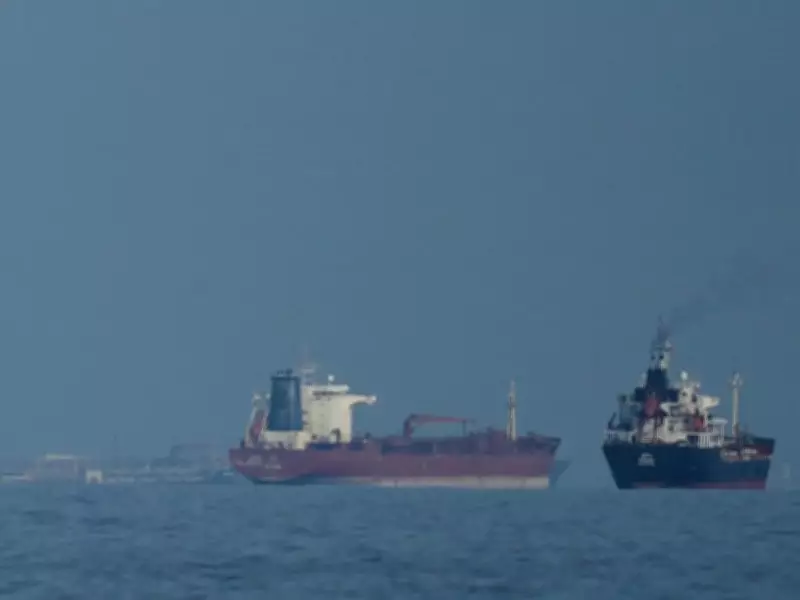
Iran Moves to Establish Permanent Control Over Critical Strait of Hormuz
Iran is actively working to implement a comprehensive system of approved passage for vessels traveling through the strategically vital Strait of Hormuz. This initiative represents a significant tightening of Tehran's control over the crucial waterway, with Iranian officials suggesting these measures could extend well beyond the current military conflict with the United States and Israel.
New Maritime Order Proposed by Tehran
Iran's foreign ministry announced this week that only "non-hostile" vessels would be permitted to navigate through the strait, and even those would require coordination with Iranian authorities. The ministry explicitly stated that ships from the United States, Israel, or any other nations participating in what Iran terms "the aggression" would be denied passage entirely.
Foreign Minister Abbas Araghchi emphasized Iran's position during a state television appearance, declaring that the country intends to establish a new maritime order in the strait following the conclusion of hostilities. "In the future, we seek to establish new arrangements for safe passage," Araghchi stated, while insisting that Iran exercises sovereignty over the waterway "even if some might like to view it as international waters."

Geographic Challenges and Security Implications
The Strait of Hormuz presents unique navigational challenges, measuring just 21 nautical miles at its narrowest point and divided between Iranian and Omani territorial waters. The waterway's tight bends and mountainous Iranian coastline provide the Islamic Revolutionary Guard Corps with advantageous positions to monitor and potentially target passing vessels.
Tom Sharpe, a former United Kingdom naval commander, highlighted the strategic complexity, noting, "It's the least straight strait ever. When you are going through, your threat direction is all around."
Economic Impact and Fee Structure
The economic consequences of Iran's actions have been substantial. Prior to the conflict, approximately 135 ships transited the waterway daily, but traffic has plummeted dramatically since the onset of hostilities. Between March 1 and 25, only 116 transits occurred—representing a staggering 97 percent decrease compared to the same period in February, according to data from S&P Global.
Vessels that have successfully navigated the strait have primarily been linked to Chinese, Indian, or Gulf state owners, including several "dark fleet" vessels previously sanctioned by Western powers for trading Iranian oil. Multiple sources indicate that some ships have paid fees as high as $2 million to Iran to ensure safe passage through the Gulf.
Alaeddin Boroujerdi, a senior member of Iran's parliament, confirmed on state television that any vessel passing through the strategic waterway was paying a $2 million fee, declaring, "A new regime is being implemented in the waterway."
International Response and Practical Considerations
U.S. President Donald Trump has repeatedly demanded that Tehran reopen the narrow strait, through which approximately 20 percent of global oil exports passed before Iran restricted access at the war's outset. Trump recently extended a deadline for Iran to open the strait to April 6, threatening strikes on Iranian energy infrastructure if compliance isn't achieved.
Martin Kelly, head of advisory at crisis management firm EOS Risk Group, explained that the approval process involves government-to-government negotiations with Iran conducted through embassies in relevant countries. This creates complex practical issues for shipping companies attempting to navigate the new requirements while maintaining global supply chains.
Iran's assertions raise profound questions about long-term access to one of the world's most critical shipping routes, potentially establishing precedents that could reshape international maritime law and global energy markets for years to come.