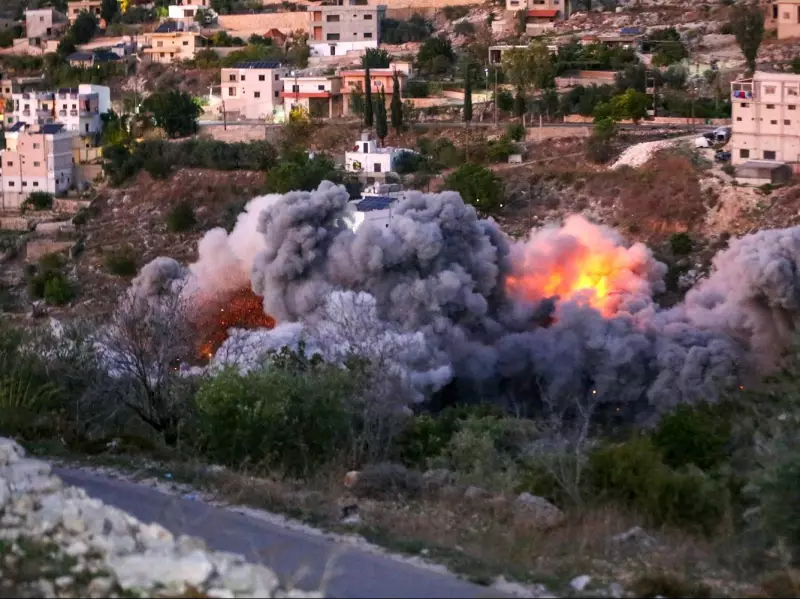
The Israeli military launched extensive airstrikes across southern Lebanon on Wednesday, targeting what it described as Hezbollah infrastructure in one of the most significant escalations since last year's ceasefire agreement.
Deadly Strikes Across Multiple Fronts
Israeli forces conducted barrages of airstrikes on the towns of Shehour and Deir Kifa after issuing warnings for civilians to evacuate the areas. The military claimed it was targeting weapons storage facilities operated by the militant group Hezbollah, alleging the organization was attempting to rebuild its military capacity in southern Lebanon.
The violence began earlier Wednesday when an Israeli drone strike hit a car in the village of Tiri, killing one person identified by Israel as a Hezbollah operative. The attack wounded eleven others, including students on a passing school bus, according to Lebanese health authorities and state media.

Refugee Camp Attack and Gaza Violence
This latest wave of strikes follows Tuesday's deadly airstrike on the Ein el-Hilweh Palestinian refugee camp near Sidon, which killed thirteen people in what represented the deadliest Israeli attack on Lebanon since the ceasefire.
Meanwhile in Gaza, health officials reported at least 25 Palestinians killed in Israeli strikes, marking one of the bloodiest days since the October 10 ceasefire took effect. Hospital officials from multiple facilities confirmed receiving casualties from both sides of the demarcation line established in the recent truce agreement.
The Israeli military stated its strikes in Gaza responded to militants firing on Israeli forces in Khan Younis earlier in the day, though Hamas denied launching any attacks toward Israeli troops.
Regional Tensions and Diplomatic Fallout
The escalating violence comes amid increased U.S. pressure on Lebanon to disarm Hezbollah. Washington recently canceled a planned visit by Lebanese army commander General Rudolph Haikal, with a senior Lebanese military officer revealing that American officials were angered by an army statement blaming Israel for destabilizing Lebanon.
In a provocative move, Israeli Prime Minister Benjamin Netanyahu visited a buffer zone within Syrian territory that Israel seized last year following the fall of President Bashar Assad's government. Netanyahu emphasized the strategic importance of the area, stating that defensive and offensive capabilities there could develop "at any moment."
Syria's Foreign Ministry condemned the visit as a "grave violation of Syria's sovereignty and territorial integrity" and an attempt to entrench Israeli control over disputed territories.
The recent violence threatens to unravel the fragile ceasefire that ended last year's Israel-Hezbollah war, which killed more than 4,000 people in Lebanon and 127 in Israel while causing an estimated $11 billion in destruction according to World Bank figures.