Federal Authorities Probe Terrorism Link in Nevada Power Substation Assault
In a disturbing incident that has heightened national security concerns, officials are actively investigating a terrorism-related event after a driver intentionally rammed a vehicle into a power substation in Boulder City, Nevada. The attack, captured on video and disseminated by local news outlets, represents a direct assault on critical infrastructure, prompting a swift and coordinated response from multiple law enforcement agencies.
Details of the Deliberate Attack
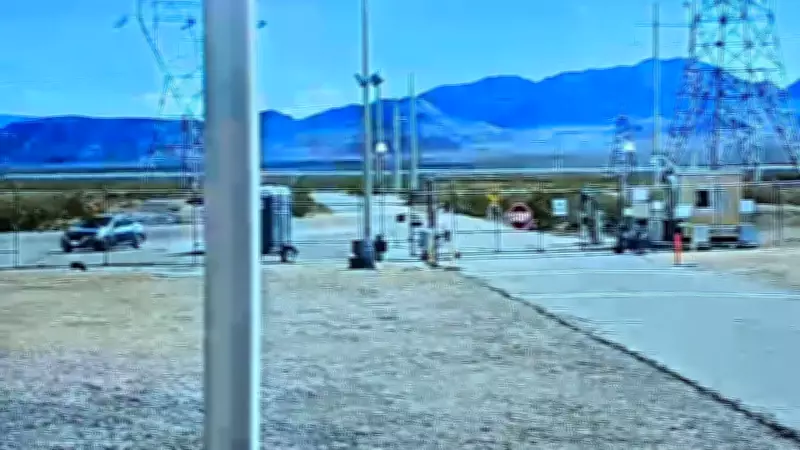
Surveillance footage shows a vehicle approaching the substation at speed before colliding with the facility's perimeter. The impact caused significant damage to the substation's equipment, though the full extent of the operational disruption remains under assessment. Authorities have not released specific details regarding the driver's identity or potential motives, but the investigation is being treated with the utmost seriousness due to the target's importance to the regional power grid.
This event underscores the persistent vulnerability of essential utilities to physical attacks. Power substations are crucial nodes in the electrical distribution network, and their compromise can lead to widespread blackouts, economic disruption, and public safety risks. The Nevada incident follows a pattern of similar attacks on energy infrastructure across the United States in recent years, though not all have been classified as terrorism.

Broader Implications for Infrastructure Security
The investigation is being led by federal agencies, including the FBI, in collaboration with local Nevada law enforcement. Their focus is on determining whether the act was an isolated incident or part of a broader, coordinated threat. Critical infrastructure protection has become a paramount concern for homeland security officials, who continuously assess and mitigate risks to power grids, water systems, and communication networks.
Experts in security and energy policy warn that such attacks, regardless of scale, can have cascading effects. They advocate for enhanced physical security measures, such as improved fencing, surveillance, and rapid response protocols at substations nationwide. The Nevada case will likely renew debates in Congress about funding and regulations to harden these vital assets against both physical and cyber threats.
Community and Official Response
Residents in the Boulder City area have been advised to remain vigilant and report any suspicious activity. While power was reportedly restored relatively quickly thanks to redundancy in the grid, the psychological impact of the attack lingers. Local officials have emphasized that there is no immediate, ongoing threat to the public, but the investigation remains active and dynamic.
This incident serves as a stark reminder of the complex security landscape facing modern societies. As the probe continues, authorities are meticulously analyzing evidence, interviewing witnesses, and exploring all possible angles to ascertain the perpetrator's intent and any potential connections to extremist ideologies or groups. The classification of the event as terrorism-related signifies the gravity with which officials view the deliberate targeting of infrastructure essential to daily life and national stability.