Russian hardliners, angered by Ukrainian drone strikes and what they view as a failed US promise to broker a favorable end to the war, are pressing President Vladimir Putin to abandon diplomacy and escalate the conflict, Reuters reported on June 26.
Growing Demands for Tougher Action
Nationalist voices have long called for full mobilisation, the destruction of Kyiv's government quarter, the assassination of President Volodymyr Zelenskiy, and strikes on European drone factories. Some hawks have even urged Putin to consider using tactical nuclear weapons. However, Ukraine's deep strikes this month—targeting Moscow, St Petersburg, and Crimea, as well as two deadly attacks on passenger buses—have intensified these demands.
Analysts say the increasingly strident rhetoric reflects growing unease over the reach and impact of Ukrainian drone attacks and a broader debate about how Russia can defend its vast territory while pursuing its war aims in the conflict it launched in 2022.

Nuclear Threats and Calls to Abandon Peace Talks
Konstantin Malofeyev, a nationalist tycoon, asked after a Ukrainian strike set fire to a Moscow oil refinery: "Why are we not using nuclear weapons, which our forebears developed and stockpiled with the full might of the nation precisely for this purpose?" Nationalist commentators have urged Moscow to adopt what they cast as Iran's effective military and diplomatic tactics against the United States. The Obsessed by War blog, with over 650,000 followers, has called for rendering major Ukrainian cities unliveable through bombing. Others say it is time to abandon US-brokered peace talks and pursue the outright destruction of the Ukrainian state.
Nationalist blogger Yuri Baranchik, who has nearly 90,000 followers, said on Telegram: "The start of systematic air strikes on Moscow by the (Ukrainian) junta would have been impossible without the go-ahead from Washington. And why did Trump give Zelenskiy such a green light? The answer is very simple – Iran had Trump by the balls, and he was forced to sign a humiliating agreement. Now he needs to take it out on someone quickly ... So we’ve got no choice – either we’ll get the better of Trump, or he’ll get the better of us."
Kremlin's Calculated Tolerance
Sources close to the Kremlin say Putin can tolerate such rhetoric, as he sits atop a tightly-controlled political system built over 26 years, and nationalist bloggers must conform to certain rules. Analysts say such statements can still complicate decision-making by inflaming public sentiment and raising expectations of a more expansive military campaign, even as Moscow wants to keep the door open for a potential diplomatic solution.
So far, the Kremlin has resisted the hawks' calls to abandon negotiations, though three senior government officials said this week that talks with the US had gone nowhere and accused Washington of not following through on peace proposals made at last year's Putin-Trump summit in Alaska. Putin has also avoided endorsing the nationalists' most extreme proposals, although the Defence Ministry in April published the addresses of factories in several European countries it alleged made drones for Ukraine, in what appeared to be a warning they could be targeted. Russia's Foreign Ministry also signposted an escalation last month when it said Moscow intended to launch "systematic strikes" on military targets in Kyiv. Heavier bombing runs followed, including one that damaged a 1,000-year-old monastery in Kyiv.
Putin's Current Strategy
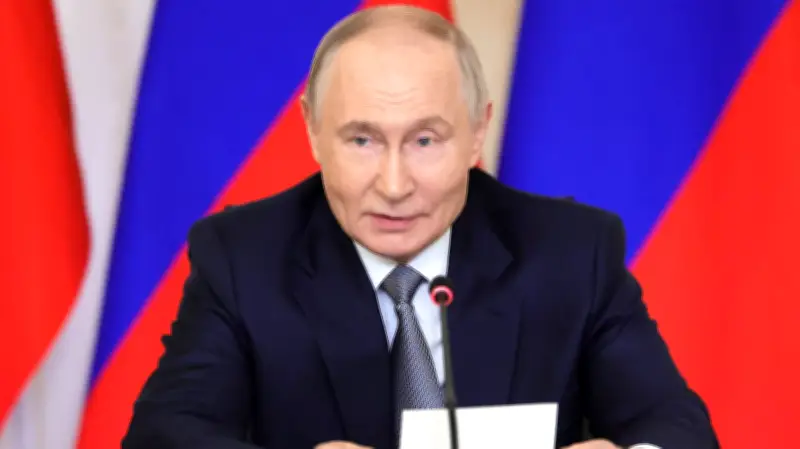
Putin appears confident in the current strategy. He told military academy graduates on Tuesday that Russia was close to seizing the city of Kostyantynivka in eastern Ukraine as part of its push to control the Donbas region. He also said political forces in Europe hostile to Russia looked likely to be eclipsed by rivals he cast as more reasonable. "Those who want to restore normal relations with us, to stop this endless drive for a strategic defeat of Russia, are on the rise," said Putin. "It’ll all work out in the end."