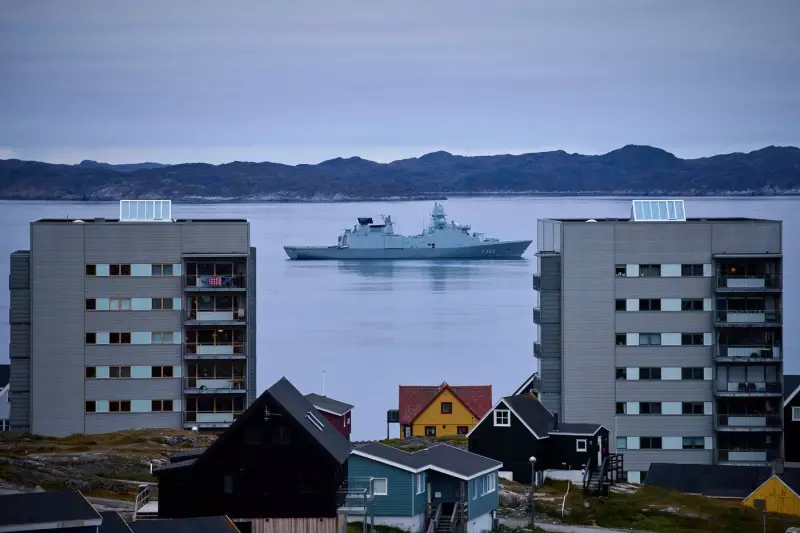
U.S. President Donald Trump has reignited a geopolitical debate by publicly advocating for American control over Greenland, framing the move as a critical step for national security in the face of growing threats from China. The proposal, however, continues to meet firm resistance from the government of Denmark, which holds sovereignty over the vast Arctic island.
The Strategic Rationale Behind the Push
President Trump's interest in Greenland is not a new development, but his administration has recently given it renewed emphasis. The core argument centers on national security and the rapidly changing dynamics of the Arctic region. As climate change opens new shipping lanes and access to untapped resources, global powers are increasing their polar presence.
Trump officials have pointed specifically to the expanding activities of China in the Arctic as a primary concern. Beijing, declaring itself a "near-Arctic state," has invested heavily in polar research and infrastructure projects, which Washington views as a long-term strategic challenge. Controlling Greenland, with its strategic location between North America and Europe, would provide the U.S. with a dominant position to monitor and counter influence from rivals in this increasingly contested space.

Denmark's Firm Stance and Historical Context
The response from Copenhagen has been unequivocal. Danish leaders have consistently stated that Greenland is not for sale and is an integral part of the Kingdom of Denmark. While Greenland has its own autonomous government, Denmark retains control over foreign and defense policy.
This isn't the first time the United States has shown interest in the island. In 1946, President Harry S. Truman attempted to purchase Greenland from Denmark for $100 million, an offer that was promptly rejected. The current U.S. maintains a significant military presence at Thule Air Base in northern Greenland, a key radar installation for North American aerospace defense. Trump's proposition appears to seek a permanent and comprehensive extension of that foothold.
Implications for Arctic Geopolitics
The public discussion of acquiring Greenland signals a more assertive and transactional U.S. approach to Arctic policy. It underscores the region's transformation from a frozen frontier into a zone of economic and military competition. The move is likely to further strain relations with NATO ally Denmark and could provoke reactions from other Arctic nations, including Russia and Canada.
Analysts suggest that while an outright purchase is politically impossible, the Trump administration's persistence keeps pressure on Denmark and highlights Washington's willingness to use unconventional means to secure strategic assets. The situation remains a delicate diplomatic issue, balancing hard security concerns against longstanding international alliances and the right to self-determination for Greenland's people.