The United Nations has issued a sobering new assessment of the ongoing war in Ukraine, revealing that civilian deaths in 2025 reached their highest annual total since 2022. The report underscores the intensifying human cost of the conflict as it continues into another year.
A Grim Milestone in the Conflict
According to the UN's findings, the past year saw a significant escalation in violence impacting non-combatants. This alarming trend is attributed to increased aerial bombardments and missile strikes on urban centers. The data was released on January 12, 2026, painting a stark picture of the war's evolution and its devastating impact on the civilian population.
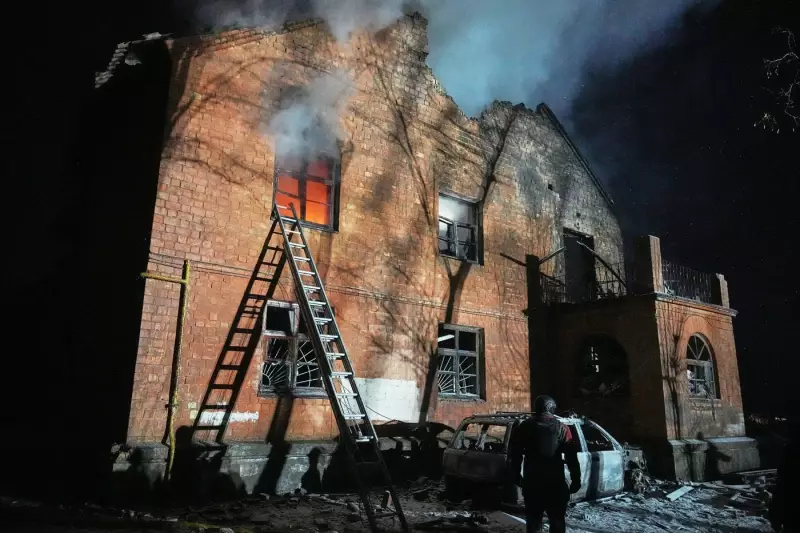
One of the starkest examples of this violence occurred just days before the report's publication. On Friday, January 9, 2026, a Russian strike hit a residential building in the capital city of Kyiv. Associated Press photographer Efrem Lukatsky captured the aftermath, showing the structure engulfed in flames, a visceral symbol of the war's brutality on everyday life.

Context and International Response
The UN's announcement comes amidst a complex international backdrop. On the same day, the Canadian federal government joined other nations in condemning the Iranian regime for killing protesters, highlighting global concerns over human rights and state violence. Furthermore, discussions in Ottawa have focused on reducing trade reliance on the United States, with Canada eyeing China as a potential key partner.
While the world's attention is divided among numerous crises, the UN report serves as a crucial reminder of the unrelenting tragedy in Ukraine. The rising death toll in 2025 indicates that diplomatic and military dynamics have shifted in ways that have placed civilians at greater risk, despite international calls for protection and peace.
The Human Cost Continues to Mount
The report does not provide a specific numerical figure in the available excerpt, but its conclusion is clear: the past year was the deadliest for Ukrainian civilians since the initial, large-scale invasion began. This trend contradicts hopes that the conflict would de-escalate and suggests a prolonged and increasingly brutal phase of warfare.
The attack in Kyiv on January 9th is not an isolated incident but rather a testament to the ongoing strategy that has led to this grim statistical peak. The international community continues to monitor the situation, with aid organizations struggling to provide support amidst the heightened danger.
The UN's documentation of these casualties is a critical tool for accountability and historical record. As the war extends further into the decade, understanding its human impact remains paramount for shaping future humanitarian responses and peace efforts.