The United States has significantly bolstered its military presence in the Caribbean Sea with the arrival of its most advanced aircraft carrier, a move that underscores heightened geopolitical tensions in the region.
A Symbol of American Power Projects Strength
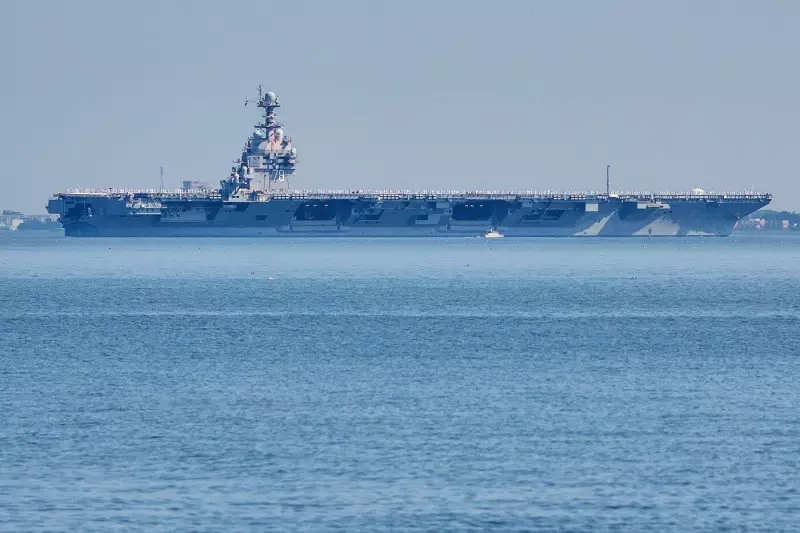
The USS Gerald R. Ford, the lead ship of its class and the world's largest aircraft carrier, has been deployed to waters near Venezuela. This deployment, confirmed on November 16, 2025, represents a substantial show of force by the U.S. military in a region of strategic importance.
The nuclear-powered carrier had previously departed from its homeport at Naval Station Norfolk in Virginia on June 23, 2025, as documented by Associated Press photography. Its journey to the Caribbean marks a pivotal moment in regional security dynamics.

Context of the Strategic Deployment
While the official announcement did not specify the exact reasons for the buildup, the positioning of a major naval asset like the Gerald R. Ford near Venezuela is a clear signal of Washington's focus on the region. Military analysts often view such deployments as demonstrations of capability and commitment to maintaining stability and protecting national interests.
The arrival of the carrier strike group, which typically includes escort ships and aircraft, provides the U.S. with a formidable platform for power projection, surveillance, and rapid response capabilities across the Caribbean and eastern Pacific.
Regional and Global Implications
This military movement occurs amidst a complex global landscape and will likely be closely monitored by regional partners and adversaries alike. The presence of the U.S. Navy's newest and most technologically advanced carrier serves as a reminder of the nation's global reach and its ongoing strategic commitments in the Western Hemisphere.
Such a major buildup near Venezuela is poised to influence diplomatic and security calculations throughout Latin America and the Caribbean, potentially reshaping regional power balances and dialogue.