Former Canadian Foreign Affairs Minister Peter MacKay has highlighted a pivotal and tense moment for the Arctic region, suggesting the United States is actively pursuing plans for a "permanent presence" in the North, with strategic interests firmly set on Greenland.
Rising Stakes in a Melting Arctic
In a recent interview with the Financial Post's Larysa Harapyn, MacKay characterized the current geopolitical climate in the Arctic as a "heady time." The conversation, published on January 9, 2026, centered on the escalating international competition for influence and access in the rapidly changing region. As climate change opens new sea lanes and reveals untapped resources, global powers are recalibrating their northern strategies.
MacKay, who served as foreign minister under the Conservative government, pointed directly to Washington's ambitions. He argued that the U.S. is not merely increasing its seasonal or rotational activities but is laying the groundwork for enduring, permanent installations across the Arctic, including within Greenland.

Greenland: The Strategic Prize
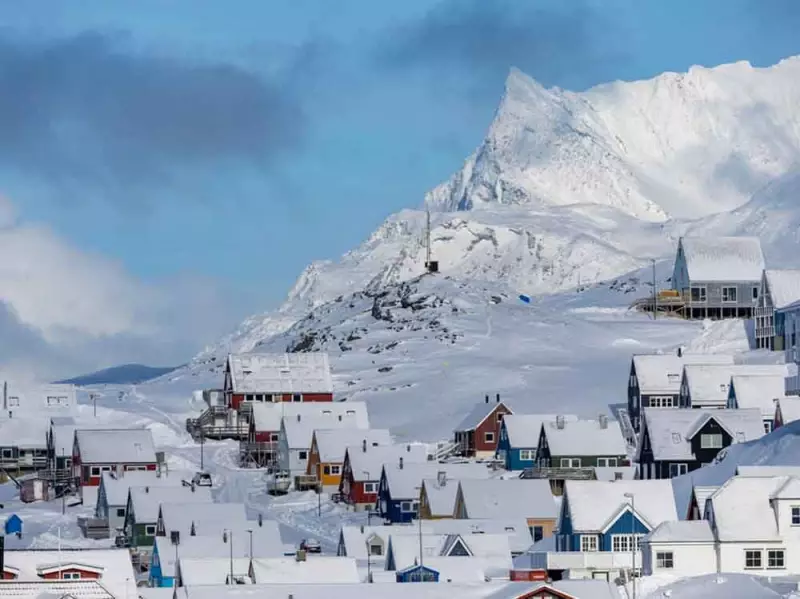
The autonomous Danish territory of Greenland has long been a focal point of this renewed great-power interest. MacKay's analysis references the strained relations between the United States and Denmark during the presidency of Donald Trump, who repeatedly signaled a desire for U.S. control over the vast island.
This historical context, coupled with Greenland's immense geographic and resource significance, underpins the current strategic calculations. A permanent U.S. presence in Greenland would represent a monumental shift in the Arctic balance of power, offering unparalleled surveillance capabilities, logistical hubs for both military and commercial ventures, and a dominant position relative to northern sea routes.
Implications for Canada and Beyond
For Canada, a nation with vast Arctic sovereignty claims, these developments carry profound implications. MacKay's warnings suggest that Ottawa must navigate an increasingly complex and crowded northern theater. The prospect of a major ally establishing a permanent foothold in Greenland presents both partnership opportunities and sovereignty challenges, requiring deft diplomacy and clear strategic vision.
The situation underscores a broader global reality: the Arctic is no longer a frozen periphery but a central stage for 21st-century geopolitics. The moves by the United States, as interpreted by seasoned observers like Peter MacKay, indicate that the race for position and influence in the High North is accelerating, with lasting consequences for international security, environmental stewardship, and economic development.