U.S. Naval Forces Seize Iranian Cargo Ship in Gulf of Oman, Heightening Regional Tensions
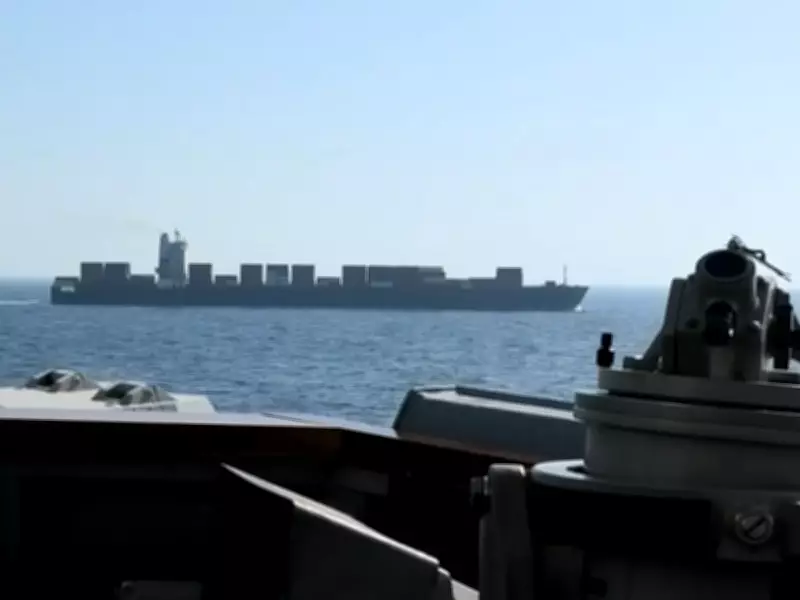
In a significant escalation of military tensions, United States naval forces operating in the Arabian Sea have fired upon and boarded an Iranian-flagged cargo vessel attempting to sail toward an Iranian port. This marks the first seizure under the U.S. naval blockade of the strategically vital Strait of Hormuz, a critical waterway for global energy shipments that remained closed to commercial traffic early Monday.
Conflicting Statements Cast Uncertainty Over Peace Negotiations
President Donald Trump and Iranian officials have presented dramatically different perspectives on the current state of diplomatic relations, creating substantial uncertainty about whether the two nations will proceed with scheduled peace talks. The confusion comes as a fragile fourteen-day ceasefire agreement is set to expire on Tuesday, with both sides offering contradictory assessments of negotiation prospects.
President Trump, who on Friday indicated that a deal with Iran was nearly finalized, issued a stark ultimatum on Sunday, threatening to destroy every power plant and bridge in Iran if diplomatic efforts collapse. This aggressive rhetoric contrasts sharply with Iranian denials that they have conceded to key U.S. demands, including dismantling their nuclear program and transferring stockpiles of enriched uranium to American control.

Market Volatility and Diplomatic Confusion
The combination of military escalation and diplomatic uncertainty has triggered significant financial market reactions:
- U.S. stock futures declined substantially as investors reacted to the heightened geopolitical risk
- Global crude oil benchmark Brent surged over seven percent to approximately $96.80 per barrel
- Energy markets remain particularly sensitive to disruptions in the Strait of Hormuz, through which approximately one-fifth of global oil shipments typically transit
The weekend developments revealed the erratic nature of both military operations and diplomatic communications, with Trump and Iranian officials making contradictory statements within hours of each other. According to Iranian State Television, "U.S. overreach, unreasonable and unrealistic demands, frequent changes in positions, continuous contradictions, and the continuation of the so-called naval blockade, which is considered a violation of the ceasefire agreement, along with threatening rhetoric, have so far hindered the progress of the negotiations."
Military Operation Details and Upcoming Diplomatic Efforts
U.S. Central Command, which oversees military operations in the Middle East, provided specific details about the naval seizure. The Iranian vessel, identified as Touska, reportedly failed to comply with warnings to stop for six hours before U.S. Navy personnel ordered the evacuation of its engine room. Military forces then fired several rounds from a 5-inch MK45 gun into the engine room to disable the ship, after which U.S. Marines boarded and took control of the vessel.
Diplomatic efforts face additional uncertainty as it remains unclear whether Iranian and U.S. officials will meet in Islamabad, Pakistan before the ceasefire expiration. U.S. Vice President JD Vance, special envoy Steve Witkoff, and presidential son-in-law Jared Kushner are scheduled to depart for Islamabad Monday night for potential Tuesday talks, according to White House officials.
Iranian representatives have denied any intention to participate in Islamabad talks, further complicating diplomatic prospects. Meanwhile, regional conflicts continue as Israel maintains military operations in Lebanon despite last week's announced ceasefire, adding another layer of complexity to Middle Eastern stability.
The blockade enforcement and contradictory diplomatic signals illustrate the volatile nature of U.S.-Iran relations, with military actions and peace negotiations proceeding on parallel but conflicting tracks. As the ceasefire deadline approaches, international observers remain concerned about potential escalation and its implications for global energy markets and regional security.