U.S. and Iran Exchange Attacks as Gulf War Escalates
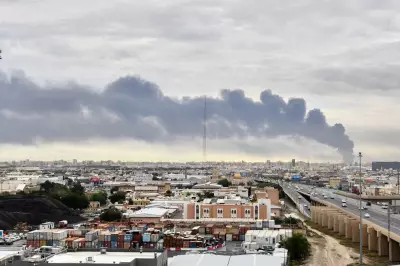
The United States launched a strike on the central Iranian city of Isfahan early Tuesday, producing a massive fireball visible in the night sky. Simultaneously, Iran targeted a fully loaded Kuwaiti oil tanker in the Persian Gulf, igniting a blaze that was later extinguished. These attacks underscore the intensifying conflict that began on February 28 when the U.S. and Israel initiated military operations against Iran.
Global Oil Markets in Turmoil
The war has severely impacted global energy markets, with Iran maintaining a chokehold on the Strait of Hormuz. This vital waterway, through which one-fifth of the world's oil flows during peacetime, has been effectively closed, causing Brent crude spot prices to surge to around $107 per barrel—a 45% increase since the conflict started. U.S. gas prices have also climbed, surpassing an average of $4 per gallon for the first time since 2022.
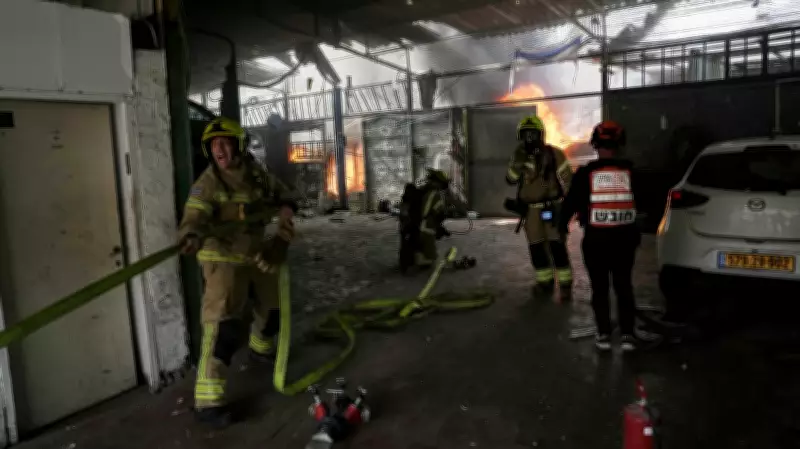
Iran's attacks on Gulf regional energy infrastructure, including the Kuwaiti tanker in Dubai waters, have further driven up oil prices. In Dubai, debris from an intercepted drone wounded four people in a residential area, and loud explosions were reported from additional attacks on the city.

Diplomatic Efforts Amid Military Actions
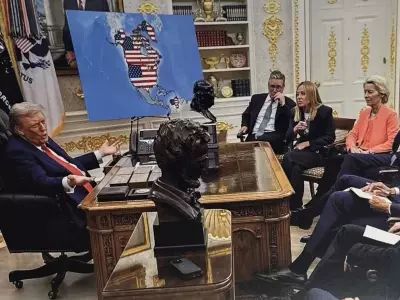
U.S. President Donald Trump shared video of the Isfahan attack, highlighting fiery explosions near Mount Soffeh. He has insisted that progress is being made in diplomatic talks toward a ceasefire, but warned that if a deal is not reached shortly and the Strait of Hormuz remains closed, the U.S. would broaden its offensive. Potential targets include power plants, oil wells, Kharg Island—Iran's main oil export hub—and desalination plants.
Iranian Foreign Minister Abbas Araghchi claimed that Tehran's operations are solely aimed at U.S. forces, stating on social media, "High time to eject U.S. forces." However, attacks on civilian targets have continued, contradicting these assertions.
Regional Security Threats Expand
The conflict has spilled over into neighboring regions, with Israel reporting four more soldiers killed in its invasion of Lebanon, where it is battling Iran-backed Hezbollah. Two United Nations peacekeepers were also killed, prompting the U.N. Security Council to schedule an emergency session for Tuesday.
In the Gulf, air raid sirens sounded in Bahrain, while Saudi Arabia intercepted three ballistic missiles launched toward Riyadh. Falling debris from a drone intercepted southeast of the capital caused minor damage to six homes.
Nuclear Concerns and Military Buildup
Isfahan is home to one of three sites previously attacked by the U.S. military in June and is suspected to store or bury some of Iran's highly enriched uranium. Satellite imagery from before the June conflict suggests Tehran transferred a truckload of uranium enriched up to 60% purity to the Isfahan Nuclear Technology Center, a step close to weapons-grade levels.
The U.S. has ordered an additional 5,000 Marines and 1,000 paratroopers to the region, joining tens of thousands of troops already deployed. Trump has openly discussed the possibility of seizing Kharg Island, while Iran has threatened to mine the Persian Gulf and launch a ground invasion of Gulf Arab countries if U.S. troops enter its territory.
Mounting Casualties and Displacement
Casualty figures continue to rise, with Iranian authorities reporting over 1,900 deaths, while 19 have been reported dead in Israel. In Lebanon, officials state more than 1,200 people have been killed, and over 1 million have been displaced. The conflict has also resulted in 10 Israeli soldier deaths in Lebanon and 13 U.S. service member fatalities overall.
As diplomatic talks proceed amidst ongoing hostilities, the situation remains volatile, with global markets and regional stability hanging in the balance.