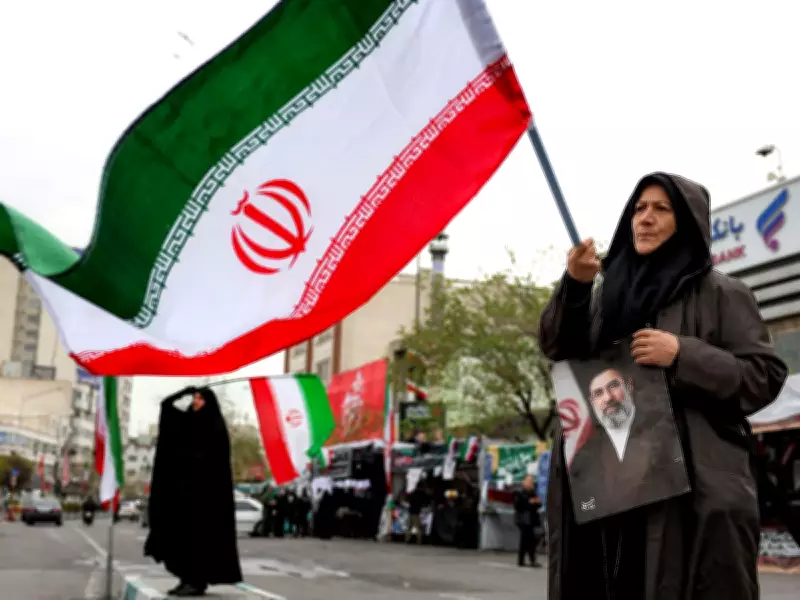
Iran Outlines Demands for Peace While Rebuffing U.S. Negotiation Efforts
The White House maintains that peace discussions with Iran are actively proceeding, even as Tehran openly dismisses American diplomatic advances and articulates a new set of prerequisites to conclude a conflict that has inflicted severe disruption across the Middle East and international markets.
Contradictory Statements from Washington and Tehran
President Donald Trump asserted that Iran is eager to secure an agreement to terminate the hostilities, which have persisted for nearly a month. "They want to make a deal so badly, but they're afraid to say it," Trump communicated to congressional Republicans during a Wednesday evening gathering in Washington.
White House Press Secretary Karoline Leavitt informed reporters earlier that day, "The United States has been engaged over the last three days in productive conversations. You're beginning to see the regime look for an exit ramp."

These declarations starkly contrast with Iran's official position, conveyed through state-operated media, which publicly rebuffs Trump's initiative for dialogue. Tehran is simultaneously pursuing specific assurances, as reported by state-owned Press TV:
- A guarantee that the United States and Israel will cease their military assaults
- Compensation for damages incurred during the war
- Formal acknowledgment of Iran's sovereign control over the Strait of Hormuz
Uncertain Negotiations as Deadline Approaches
With Trump's Friday deadline for Iran to engage in negotiations rapidly approaching, significant ambiguity surrounds the current state of discussions and the potential for a diplomatic resolution. The United States has assembled a comprehensive 15-point peace proposal, which was delivered to the Islamic Republic via Pakistan, according to informed sources. This action underscores the pressing need within the Trump administration to resolve a conflict initiated jointly with Israel approximately four weeks ago.
Leavitt acknowledged on Wednesday that there are "elements of truth" to the reported U.S. proposal but advised against speculation based on anonymously sourced plans. Additionally, CNN reported that Vice President JD Vance might travel to Pakistan this weekend to participate in Iran-related talks. Leavitt responded to this report by stating, "This is a fluid situation, and speculation about meetings should not be deemed as final until they are formally announced by the White House."
Continued Hostilities and Regional Impact
As the conflict nears the four-week milestone, both sides have sustained offensive operations despite renewed efforts to negotiate a settlement. Iran's state-run Press TV disclosed that the Bushehr Nuclear Power Plant was targeted by an attack. Iran demonstrates minimal indications of retreating in the face of persistent Israeli and American bombardment.
The United Arab Emirates reported that its air defense systems were activated in response to Iranian missile and drone threats overnight on Thursday, while Bahrain confirmed that an Iranian assault ignited a fire at a facility in Muharraq.
Iran has effectively closed the Strait of Hormuz, a critical maritime passage responsible for transporting approximately one-fifth of the world's oil and liquefied natural gas, precipitating a global supply crisis. The ongoing conflict has resulted in:
- Skyrocketing fuel and fertilizer prices
- Commercial tankers avoiding transit through the strait
- Damage to energy infrastructure from Iranian attacks
- Heightened concerns about an inflationary crisis and potential worldwide food shortages
The situation remains highly volatile, with diplomatic efforts struggling to gain traction amid continued military engagements and escalating economic consequences.