Poilievre Urges Liberals to Reverse Food Taxes, Proposes Affordability Plan
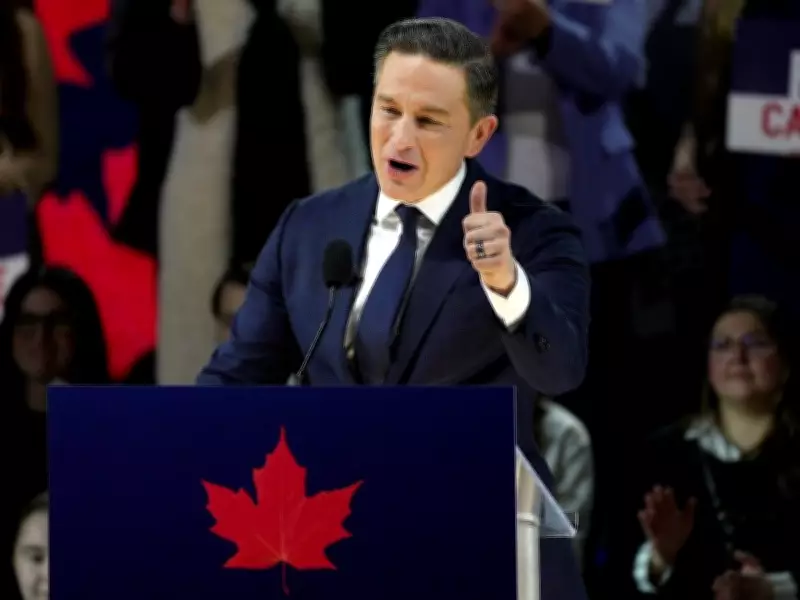
Conservative leader Pierre Poilievre is calling on Prime Minister Mark Carney's Liberal government to reverse taxes on food while proposing a comprehensive plan to tackle soaring grocery prices. In a letter sent to the prime minister on Tuesday, Poilievre outlined a food affordability strategy aimed at boosting competition among grocery stores and eliminating hidden taxes on food production and packaging.
Addressing the Food Inflation Crisis
"This week, Canadians will go to the grocery store to stock their fridges and pantries with food to feed their families," Poilievre wrote in the letter, which was shared on social media. "But as they navigate through the aisles, they will be confronted with higher prices than ever before, as food costs have skyrocketed by 7.3% over the last year."
Poilievre emphasized that Canada has experienced the worst food inflation among G7 nations in recent years. According to Statistics Canada data, coffee prices have surged by 30% compared to January 2025, while beef prices have increased by nearly 19%. The Bank of Canada reported earlier this month that grocery prices accelerated in 2025, primarily due to imported goods. Since 2022, grocery prices have risen by approximately 22%, while other consumer prices have increased by an average of 13%.

Impact on Daily Life
"The sticker shock has become a weekly occurrence and isn't just limited to the grocery aisle," Poilievre stated. "Canadians hoping to pick up a fast-food lunch or takeout dinner are paying 14% more, while those opening a restaurant menu are instantly hit with costs 12.3% higher than just 12 months ago."
The Opposition Leader argued that the only consistency in food costs has been the relentless price increases. He also challenged Carney's assertion that Conservative "obstructionism" is responsible for the decline of the Canadian dollar under Justin Trudeau's government.
Proposed Food Affordability Plan
Poilievre's proposed food affordability plan focuses on increasing competition within the grocery sector, which is currently dominated by Loblaw Companies Ltd., Empire Company Ltd. (Sobeys), and Metro Inc., along with American retail giants Costco and Walmart. Additionally, the plan calls for the removal of several taxes affecting food production, including:
- The industrial carbon tax on farm equipment, fertilizer, and food processors.
- The fuel standards tax, which is set to rise from seven cents a litre to 17 cents and impacts transportation costs.
- A food packaging tax that Poilievre claims will cost Canadians $1.3 billion.
"It is time for your government to take decisive action before the situation gets even worse for Canadian families," Poilievre wrote. "We are ready to work with you to make this happen with a plan that reduces taxes affecting the price of food and increases competition to restore nutritious, affordable meals for Canadians."
Government Response and Broader Context
In late January, Prime Minister Carney introduced measures aimed at making groceries and other essential items more affordable for Canadians. These included rebranding the GST Credit as the new Canada Groceries and Essentials Benefit, along with a one-time top-up designed to support over 12 million residents. Other measures announced by the federal government focused on addressing food insecurity, supporting producers, and strengthening supply chains.
Poilievre, however, remains critical of these efforts, describing the ongoing food affordability crisis as a "years-long failure" that has led to a doubling of food bank lineups. He urged the government to adopt his plan to provide immediate relief to struggling families across the country.