Alberta Electoral Boundaries Commission Minority Report Faces Allegations of UCP Bias
Recent developments in Alberta's electoral boundary review process have sparked significant controversy, with critics accusing the minority report from the Electoral Boundaries Commission of displaying clear bias toward the United Conservative Party (UCP). The debate centers on proposed riding changes that some argue were created without adequate public scrutiny and consultation.
Edmonton-Riverview Dissolution Controversy
One of the most contentious elements in both the majority and minority reports is the proposed dissolution of Edmonton-Riverview. During public hearings for the interim report, numerous citizens voiced opposition to eliminating this riding. Critics argued that dissolving Edmonton-Riverview would not serve residents' best interests and would dilute voting power in newly created ridings, particularly given the area's population growth and established community identity.
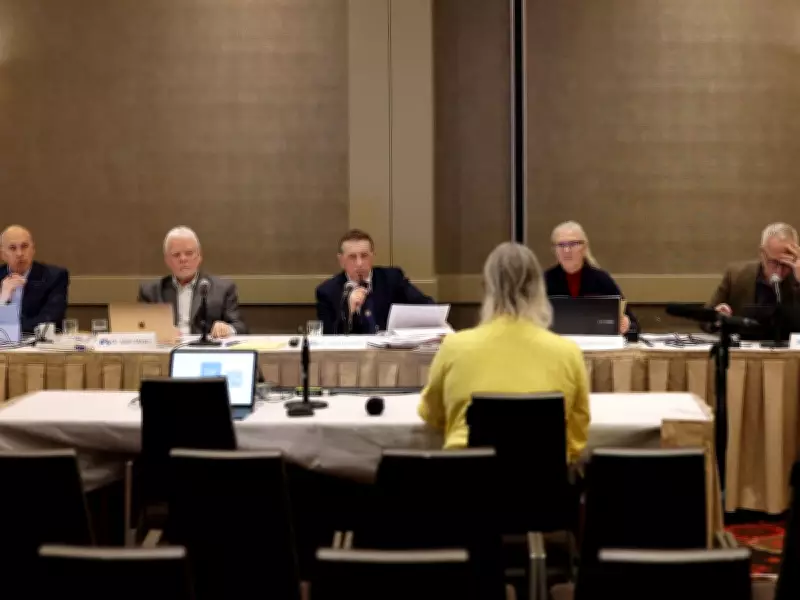
The commission members, including Greg Clark, Dr. Julian Martin, Justice Dallas Miller, Susan Samson, and John Evans, heard these concerns during public meetings held across the province, including at the Sheraton Cavalier Hotel in northeast Calgary in January 2026. Despite public opposition, both reports maintained the recommendation to eliminate Edmonton-Riverview.

Stark Contrast in Public Consultation Approaches
What distinguishes the minority report from the majority version, according to critics, is the approach to public consultation. During interim hearings, one individual suggested incorporating Devon into an Edmonton riding because "we all work there." This single comment appears to have directly influenced the minority report, which now includes the proposed Edmonton-Enoch-Devon riding.
Sean McQuillan of Edmonton, who spoke at the public hearings, expressed concern about this development. "I flagged that particular suggestion as being biased during the hearings," McQuillan stated. "Now we see Edmonton-Enoch-Devon in the minority report, seemingly brought into existence based on a single comment without broader public support or scrutiny."
Allegations of Gerrymandering and Partisan Influence
The minority report's proposed boundary maps differ substantially from both the interim report and existing electoral boundaries. Critics argue these changes appear designed to create hybrid urban-rural ridings that would disproportionately benefit the political party that appointed the two minority commission members.
"These maps are wildly different from the interim report," McQuillan explained. "When you examine polling data, they appear to be a blatant attempt to create electoral advantages through boundary manipulation. The re-drawings are so vastly different from existing boundaries that they almost seem like a wish list created without genuine public consultation."
McQuillan emphasized that the minority report should not be implemented without reopening public consultations. "I cannot fathom a world where the minority report is brought into reality without the public ever having a say. If they want to pass the minority report, they must reopen public consultations—this surprise map shouldn't be considered without proper public input."
Calls to Reject Gerrymandering and Uphold Democratic Traditions
Other Albertans have joined the criticism, with Ken Robinson of Edmonton describing gerrymandering as "voter suppression" and expressing concern about the provincial government considering "all options" in implementing the Boundaries Commission Report.
"Are we Texas now?" Robinson questioned. "The majority report has always been accepted as the blueprint for new electoral boundaries. Tradition stands because it works. I urge the government to keep with tradition and honour our democracy."
Supporters of the majority report argue that Alberta must maintain its bipartisan, independent process for public consultation on boundary changes. They emphasize that the Americanization of electoral district manipulation through gerrymandering must be firmly rejected in Alberta.

"In this world where institutions, precedence, laws and regulations are being degraded daily, we must not let this happen in Alberta," stated another concerned citizen. "We must all urge our government to accept the majority report of this committee in its entirety, as this represents the fairest and most democratic process available to us."
The controversy highlights ongoing tensions between political interests and democratic principles in Alberta's electoral boundary review process, with critics demanding transparency, genuine public consultation, and adherence to established democratic traditions.