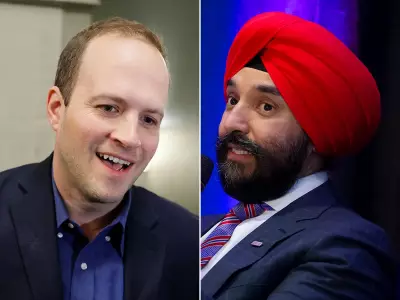
Conservative Leader Pierre Poilievre faces a pivotal political decision that could determine Canada's economic direction for years to come. With Finance Minister Mark Carney's budget projecting a massive $78 billion deficit, the opposition must decide whether forcing an election represents a worthwhile gamble.
The Budget Numbers Don't Add Up
The federal government's latest budget forecasts a $78 billion deficit for the current fiscal year, with projections showing this amount gradually decreasing to $57 billion over subsequent years. However, budget analysts question the reliability of these forecasts, given the government's track record of consistently exceeding its deficit targets in previous budgets.
Meanwhile, the cost of conducting a federal election stands at approximately $550 million. From a purely mathematical perspective, triggering an election to prevent what many conservatives consider fiscally irresponsible spending appears justified. The potential savings from implementing significant spending cuts under a Conservative government could easily offset the election's price tag.

Political Calculations and Conservative Caution
Current polling data reveals a tight race between the Liberals and Conservatives, introducing substantial political risk for Pierre Poilievre. An election call combined with campaign missteps or unfavorable circumstances could potentially reduce Conservative representation in Parliament rather than increase it. The worst-case scenario might even deliver a Liberal majority government, undermining the very purpose of forcing an election.
While the Conservative Party found its political footing during the summer months, particularly on immigration and crime policy, questions remain about whether the party possesses the political courage to center these issues in a national campaign. The party's immigration platform includes ending birthright citizenship for temporary residents to prevent what critics call "anchor-baby abuse" and adopting what they term a "common-sense approach" to Canadian identity.
Missing Conservative Policy Ambition
Beyond immigration, the Conservative platform appears notably lacking in ambitious policy proposals. There has been no discussion of repealing the Employment Equity Act, federal legislation that establishes employment quotas based on demographic characteristics. The administration of this legislation costs taxpayers millions of dollars annually, though precise figures remain undisclosed.
Similarly absent from Conservative discourse is any mention of repealing Gladue sentencing principles, which provide sentencing considerations for Indigenous offenders. Many legal observers argue these principles have created perceptions of unfairness within Canada's justice system. The Conservative approach to criminal justice remains focused on safer, more mainstream ideas like reverse onus bail requirements.
Property rights represent another area where Conservative ambition appears limited. Despite concerns from Aboriginal law specialists about potential threats to property ownership posed by expanding interpretations of Aboriginal title, Pierre Poilievre's response has been limited to calling for appeals of specific court decisions rather than proposing constitutional amendments to protect fee simple property rights.
The political landscape presents Pierre Poilievre with a classic high-risk, high-reward scenario. While the budget's massive deficit provides strong justification for triggering an election, the Conservative Party's cautious policy approach and narrow polling advantage create substantial uncertainty about the outcome.