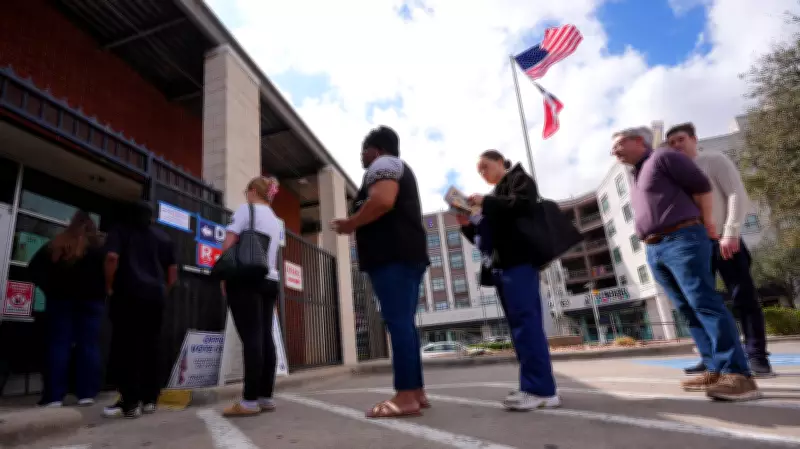
Hundreds of voters across two major Texas counties reported being turned away from polling stations and forced to seek alternative locations during Tuesday's primary elections. Many experienced significant delays, enduring hours-long lines, while others remain uncertain if their ballots will ultimately be counted. These widespread issues stemmed directly from procedural changes implemented by local Republican officials.
Shift to Precinct-Specific Voting Creates Confusion
Previously, voters in both Dallas and Williamson counties enjoyed the flexibility of casting ballots at any polling station within their county. This year, however, new rules required them to vote at precinct-specific locations exclusively for the primaries. This fundamental shift left countless voters confused about their designated polling places, resulting in many arriving at incorrect locations and needing to relocate. The change also meant overcrowded stations had no alternative sites to redirect voters stuck in extensive queues.
"Voters were expecting to take an hour to vote, and having to leave without casting a ballot because of the absurd wait time," explained Emily Eby French, an attorney for Common Cause Texas. "There was confusion about what precinct folks were in, because redistricting shuffled everything. It was just a complete nightmare."

Voter Experiences Highlight Systemic Problems
Eby French detailed one particularly frustrating case where a voter contacted Common Cause's primary day hotline after being turned away from their initial polling station and directed to a second location. After waiting patiently at the second site, the voter was informed that the first location had actually been correct all along. This type of confusion became emblematic of the day's challenges.
The attorney characterized these changes as part of broader Republican efforts to increase voting hurdles. "We do get big evil voting changes, right? We get big sweeping voter ID laws," she noted. "But I would say more than that. More than anything, we just get small inconveniences, small underfundings that make it harder to vote."
Partisan Blame Game Erupts Over Election Administration
Democratic state Representative Ana-María Rodríguez Ramos responded forcefully on social media, declaring "This is the GOP voter suppression that Dems must come together to overcome in November." Local Republicans countered by blaming Democrats for the confusion, accusing them of attempting to scapegoat the GOP.
"That's on them. You didn't see us asking for an injunction. We did a good job of explaining the process to our voters," asserted Dallas County GOP Chair Allen West. Williamson County GOP Chair Michelle Evans echoed this sentiment, claiming Democrats had "thrown every barrier in our way to ensure that Republican voters would be disadvantaged by refusing to share polling locations, misrouting voters, and blaming Republicans for the lack of Democrat polling sites."
Legal Battles and Ballot Uncertainty
Due to the widespread confusion, judges extended polling hours at some stations in both counties. Texas Attorney General Ken Paxton's office contested these rulings, claiming insufficient notice. Consequently, ballots cast by voters who waited in line after originally scheduled closures now face uncertain status. The Texas Supreme Court suspended the extension rulings and directed officials to segregate those ballots temporarily.
Voting rights advocates express concern about potential repeats of Tuesday's chaos during the state's May runoffs. However, this specific precinct-specific voting issue isn't expected to affect midterm elections, as the procedural change applied only to primaries. Advocates plan to monitor other potential voting restrictions, including proof-of citizenship requirements, law enforcement deployments at polls, and mail-in ballot limitations.
"Tuesday showed what can happen when state and local leaders implement policies that burden voting rights and restrict opportunities to vote," warned Miranda van Dijk, a legal fellow with the Texas Civil Rights Project. "These policies lead to confusion, frustration and often disenfranchisement."